Skip to content
Tuner
A stylish, auditory neo-noir draped in tactile urban warmth, Tuner captures the quiet agony of sensory overload and the tender yearning for connection, balancing delicate piano wire against cold, metallic suspense.
Tuner

Tuner

"Everybody has one hidden talent."

21 May 2026 Canada 108 min 7.1 (245)

Director: Daniel Roher

Cast: Leo Woodall, Havana Rose Liu, Lior Raz, Tovah Feldshuh, Gil Cohen

Drama Crime Thriller Sensory Perception, Hyperacusis, and Isolation The Philosophy of Craft vs. Exploitative Utility Mentorship, Aging, and Surrogate Paternity Artistic Envy, Vulnerability, and Romance Moral Erosion and the Illusion of 'Clean' Crime
Budget: $7,000,000
Box Office: $13,410,842

Overview

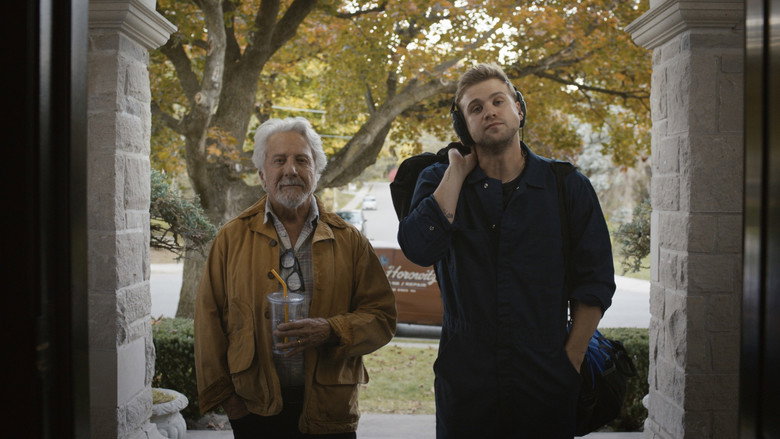
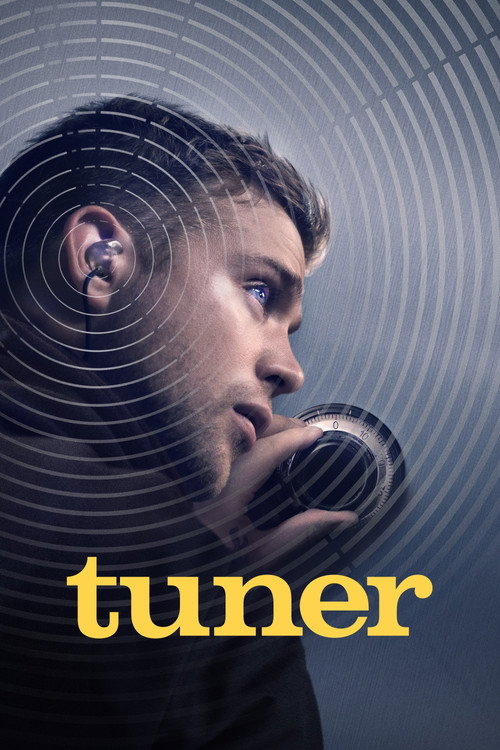
Directed by Academy Award-winning documentarian Daniel Roher in his narrative debut and co-written with Robert Ramsey, Tuner follows Niki White (Leo Woodall), an exceptionally gifted former child piano prodigy. After developing hyperacusis—a rare condition causing hypersensitivity and physical pain from everyday sound frequencies—Niki withdrew from live performance to live a cloistered life. Channeling his absolute pitch, he works as an apprentice piano tuner for veteran craftsman Harry Horowitz (Dustin Hoffman).

When Harry faces cognitive memory decline and mounting financial burdens, Niki takes on solo client calls. During a tuning job, Niki interrupts a group of locksmiths-turned-thieves led by the charismatic Uri (Lior Raz) and instinctively cracks a mechanical safe in seconds using his acute acoustic perception. This unveils a lucrative yet perilous underground demand for his talent.

As Niki enters high-stakes criminal jobs to fund Harry's care, he meets Ruthie (Havana Rose Liu), a conservatory composition student preparing for a fellowship. Torn between an escalating criminal underworld and a burgeoning romance, Niki is forced to confront the artistic life he thought he had left behind.

Core Meaning

The core meaning of Tuner explores how individuals navigate sensory, physical, and psychological vulnerability in a world dominated by relentless noise. The film posits that perfection is an illusion; just as piano tuning requires accepting imperfection to create harmony out of chaos, living requires embracing flawed realities. It also examines the moral boundaries crossed for loyalty and love, questioning what one is willing to sacrifice to protect surrogate family.

Thematic DNA

Sensory Perception, Hyperacusis, and Isolation 30%
The Philosophy of Craft vs. Exploitative Utility 25%
Mentorship, Aging, and Surrogate Paternity 20%
Artistic Envy, Vulnerability, and Romance 15%
Moral Erosion and the Illusion of 'Clean' Crime 10%

Sensory Perception, Hyperacusis, and Isolation

Explores sound as both an aesthetic medium and a source of physical trauma, showing how Niki's hyperacusis isolates him from society and turns urban environments into acoustic minefields.

The Philosophy of Craft vs. Exploitative Utility

Contrasts the devoted, patient artistry of acoustic piano tuning against the illicit utility of safecracking, highlighting how identical mechanical intuition can either enrich culture or extract wealth.

Mentorship, Aging, and Surrogate Paternity

Centers on the dynamic between Harry and Niki, where Harry's cognitive decline initiates a role reversal, forcing Niki to become the protector of his mentor.

Artistic Envy, Vulnerability, and Romance

Revealed through Niki's relationship with Ruthie, which sparks romantic intimacy while confronting him with the concert career stolen by his hearing disorder.

Moral Erosion and the Illusion of 'Clean' Crime

Depicts Niki's initial rationalization of safecracking as a bloodless craft to pay medical bills, which gradually crumbles as he faces criminal extortion and entrapment.

Character Analysis

Niki White

Leo Woodall

Archetype: Reluctant Specialist / Tragic Virtuoso Key Trait: Hyperacusis with absolute pitch; meticulous quietude.

Motivation

To secure funds for Harry's medical care and navigate his painful relationship with sound and music.

Character Arc

Transitions from an emotionally guarded, isolated tuner into an audacious safecracker, ultimately confronting his musical past while becoming trapped in a criminal syndicate.

Harry Horowitz

Dustin Hoffman

Archetype: Loving Mentor / Fading Master Key Trait: Irreverent warmth, avuncular humor, fading acuity.

Motivation

To pass on his tuning legacy, maintain dignity, and protect Niki.

Character Arc

Gradually loses his cognitive acuity and physical health, serving as the moral and emotional anchor for Niki.

All 5 characters and cast

Symbols & Motifs

Noise-Canceling Headphones and Earplugs

Meaning:

Represents Niki's self-protective barrier and emotional detachment from the outside world; removing them symbolizes vulnerability, danger, and intimacy.

Context:

Worn constantly by Niki in public spaces to shield against sensory assault and removed in moments of intimate connection.

Internal Mechanics of Pianos and Safes

Meaning:

Represents two diverging paths for identical acoustic precision—one creating art and harmony, the other illicitly unlocking wealth.

Context:

Featured in macro close-ups comparing hammer felts striking strings against brass tumblers aligning in lock casings.

The Tuning Fork / Pitch Pipes

Meaning:

Embodies the ideal of pure, objective truth contrasted against the subjective, messy reality of practical human harmony.

Context:

Used during Niki's tuning demonstrations to explain the craft's philosophical approach to imperfection.

The Closed Safe in Harry's Workshop

Meaning:

Represents Harry's fading memory and lost identity as his cognitive state declines.

Context:

Harry forgetting his own safe combination serves as the catalyst that prompts Niki to apply his auditory gift to locks.

Memorable Quotes

Tuners don't really use the 'p-word' [perfect]... Tuning your piano is about creating harmony out of chaos. To do that, you gotta be okay with imperfection.
— Niki White

Context

Spoken quietly to Ruthie while explaining the nature of his tuning craft.

Meaning

Articulates the central philosophy of the film regarding acceptance of life's flaws.

I don't want dementia!
— Harry Horowitz

Context

Delivered as an irreverent quip when asked what he wants for lunch.

Meaning

Combines dark humor with the poignant tragedy of his cognitive decline.

All 3 quotes

Philosophical Questions

Can physical imperfection coexist with true artistry?

The film investigates whether true beauty arises from sterile precision or from the harmonic balance of organic, flawed elements.

Is moral compromise ever fully contained?

Explores whether an individual can commit crimes for noble intentions without being permanently entrapped by the consequences.

How does our sensory perception shape our reality?

Examines how living with heightened or altered sensory thresholds shifts an individual's boundaries and connection to the world.

Alternative Interpretations

The film invites distinct readings: The Tragic Faustian Trap suggests Niki has irreversibly compromised his future, becoming a permanent asset to Uri's syndicate. Conversely, The Tonal Liberation view suggests that safecracking empowers Niki to stop hiding from sound, ultimately reclaiming his agency and musical voice.

Full ending explanation

Cultural Impact

Premiering at festivals including Telluride and Sundance prior to its May 2026 release by Black Bear Pictures, Tuner earned critical acclaim (holding a 94% approval rating on Rotten Tomatoes). It has been praised as a rare mid-budget character-driven neo-noir and recognized for portraying sensory disability as a complex narrative catalyst rather than a superficial trope.

Audience Reception

Critical reception has been overwhelmingly positive, praising Johnnie Burn's immersive sound design, the warm chemistry between Leo Woodall and Dustin Hoffman, and strong lead acting. Minor criticisms noted familiar crime thriller beats and a somewhat rushed third-act subplot featuring Jean Reno, but overall acclaim highlighted its thoughtful craft and empathetic storytelling.

Interesting Facts

  • Tuner marks the narrative fiction feature directorial debut of Oscar-winning documentarian Daniel Roher (Navalny).
  • Director Daniel Roher conceived the story after sitting next to a professional piano tuner at an industry dinner.
  • Both Leo Woodall and Havana Rose Liu took intensive piano lessons to execute their musical performances on screen.
  • The film's sound design and hyperacusis point-of-view mixes were created by Oscar-winner Johnnie Burn.
  • Despite being set in Manhattan and Brooklyn, principal photography took place primarily in Toronto, Canada.
  • The movie features Dustin Hoffman in a rare lead dramatic role at age 88.

Easter Eggs

Cameo by Herbie Hancock

The legendary jazz pianist appears as himself, adding authenticity to the conservatory setting.

Cinematic Heist Homages

Features stylistic and tactile homages to Michael Mann's Thief (1981) and the pacing of Steven Soderbergh's capers.

Dustin Hoffman Nostalgia

Harry's dialogue and mannerisms subtly echo Hoffman's classic New York performances, such as Ratso Rizzo in Midnight Cowboy.

Mussorgsky Reference

Niki detects an unconscious melodic motif from Modest Mussorgsky's Pictures at an Exhibition within Ruthie's original composition.

Frequently Asked Questions

Explore More About This Movie

Dive deeper into specific aspects of the movie with our detailed analysis pages

Comments (0)

Leave a comment

No comments yet. Be the first to share your thoughts!

Similar Movies