The central twist of "Castaway on the Moon" is not a single event, but the gradual transformation of Seong-geun's perspective. His initial 'HELP' message written in the sand, a desperate plea for rescue, eventually becomes a 'HELLO,' a confident greeting to the world he now observes from a safe distance. He no longer wants to be saved. This is proven when Jung-yeon, in a misguided act of kindness, orders a bowl of jajangmyeon to be delivered to him via a tourist boat. Instead of being grateful, Seong-geun is horrified and rejects the noodles, as accepting this 'cheat' would invalidate the purpose and meaning he has painstakingly built for himself. The ultimate climax is triggered by a torrential storm that completely destroys the farm and home he has created. This 'act of God' leads to his discovery by a cleanup crew, who forcibly 'rescue' him and clean the island, erasing his existence. This is the film's most heartbreaking turn, as his self-made paradise is obliterated, and he is thrust back into the world that he tried to escape. Depressed once more, he boards a bus to the 63 Building to finish his suicide attempt. The final, uplifting twist is Jung-yeon's heroic act. Overcoming her agoraphobia, she runs through the city during an air-raid drill—a time when everyone else is forced to stop—to find him. Her frantic journey mirrors his internal struggle. When she finally boards his bus and introduces herself, it signifies that their connection was real enough to pull them both back into the world, not as defeated individuals, but as a new, hopeful unit. The ending confirms that while solitude can be healing, human connection is ultimately what saves them both.

A poignant comedic drama that finds unexpected connection in urban isolation, painting a vivid metaphor of hope against the lonely cityscape.
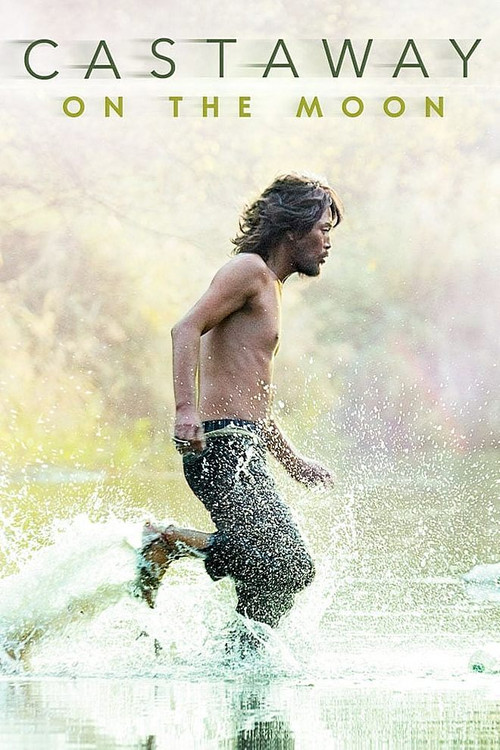
Castaway on the Moon
김씨 표류기
"Once in a life time, There comes a moment that you live in HOPE."
14 May 2009
South Korea
119 min
7.9
(704)
Director: Lee Hae-jun
Cast: Jung Jae-young, Jung Ryeo-won, Yang Mi-kyung, Lee Sang-hun, Jang So-yeon
Drama
Comedy
Romance
Isolation and Loneliness in the Modern World
The Nature of Hope
Critique of Capitalism and Consumerism
Human Connection and Communication
Castaway on the Moon — Ending Explained
⚠️ Spoiler Analysis
Alternative Interpretations
While the film is largely seen as a hopeful romantic comedy, some viewers and critics have offered alternative readings of its narrative and ending.
- The Ending as Hallucination: One darker interpretation posits that the ending is a fantasy in Seong-geun's mind. After the devastating typhoon destroys his entire world on the island, he is forcibly removed. This theory suggests that he either successfully commits suicide at the 63 Building or dies from despair, and the reunion with Jung-yeon is a final, imagined moment of hope.
- A Metaphor for Mental Illness: The entire film can be viewed as an extended metaphor for battling depression. Seong-geun's island is his depressive state—isolated and seemingly inescapable. His methodical process of building a life there mirrors the small, incremental steps needed to recover, with the jajangmyeon representing a reason to keep going. Jung-yeon's journey represents overcoming social anxiety. Their connection is not just romantic but therapeutic, as they essentially help each other heal and re-enter the world.
- The Island as True Paradise: An alternative reading of Seong-geun's character arc is that his 'rescue' is the true tragedy. On the island, he had found a fulfilling, self-sufficient life free from the pressures that drove him to suicide. Being forced back into the society he rejected is a violation, and the ending is not a purely happy one, but a bittersweet compromise where he must now find a way to live in a world that nearly destroyed him, albeit with a new companion.
Explore More About This Movie
Dive deeper into specific aspects of the movie with our detailed analysis pages