Castle in the Sky
A steampunk-infused adventure that soars with breathless wonder, exploring the delicate balance between technological ambition and the enduring power of nature.
Castle in the Sky
Castle in the Sky

天空の城ラピュタ

"One day, a girl came down from the sky…"

02 August 1986 Japan 125 min ⭐ 8.0 (4,451)
Director: Hayao Miyazaki
Cast: Keiko Yokozawa, Mayumi Tanaka, Minori Terada, Kotoe Hatsui, Fujio Tokita
Animation Family Fantasy Action Adventure
Nature vs. Technology The Perils of Greed and Power The Innocence and Resilience of Youth The Allure of Flight and Adventure
Budget: $3,000,000
Box Office: $5,228,752

Castle in the Sky - Ending Explained

⚠️ Spoiler Analysis

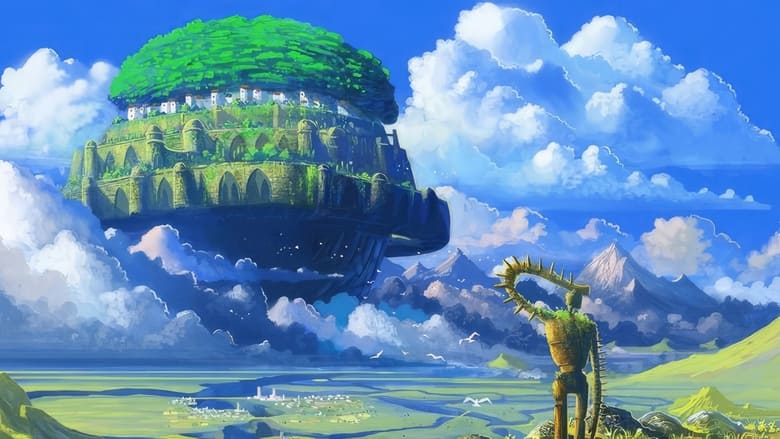
The central mystery of "Castle in the Sky" revolves around the true nature of Laputa and Sheeta's connection to it. It is revealed that Sheeta is not just a girl with a magical pendant, but Princess Lusheeta Toel Ul Laputa, the rightful heir to the throne of the ancient civilization. The antagonist, Muska, is also a descendant of Laputian royalty, from a separate branch of the family, which fuels his obsession with finding and controlling the castle.

The climax reveals Laputa's greatest secret: it houses not only beautiful gardens and benevolent robots but also a superweapon of immense destructive capability, powered by the giant Aetherium crystal at its core. Muska successfully seizes control of this power and demonstrates its might by obliterating a portion of the army's fleet. The final twist comes when Sheeta, recalling a spell of destruction taught by her grandmother, realizes that she and Pazu must destroy Laputa to prevent Muska from using its power to dominate the world. By uttering the word "Balse," they trigger the collapse of the castle's technological infrastructure. Muska is blinded by the light and falls to his death. The ending shows that the spell did not destroy the entire island; the giant tree, with its ecosystem and the city's upper gardens, is freed from the technological core and peacefully ascends higher into Earth's orbit, leaving the destructive power behind forever.

Alternative Interpretations

While the film's primary message is quite direct, some alternative readings exist. One interpretation focuses on the ending as a more somber or unsettling view of humanity's relationship with nature. When Laputa, freed of its destructive technology, ascends into space with its ecosystem intact, it could be seen as nature literally removing itself from the corrupting influence of humankind, suggesting that humanity may not be worthy of coexisting with such a pristine world.

Another perspective could analyze the film through a post-colonial lens. Laputa represents a powerful, advanced civilization that has vanished, leaving behind its potent technology. The modern world's military and political powers scramble to claim and control this legacy for their own imperialistic ambitions. Sheeta's decision to destroy Laputa's technological core can be interpreted as a rejection of this colonialist impulse, choosing to let the past rest rather than allowing its power to be used for further conquest and destruction.