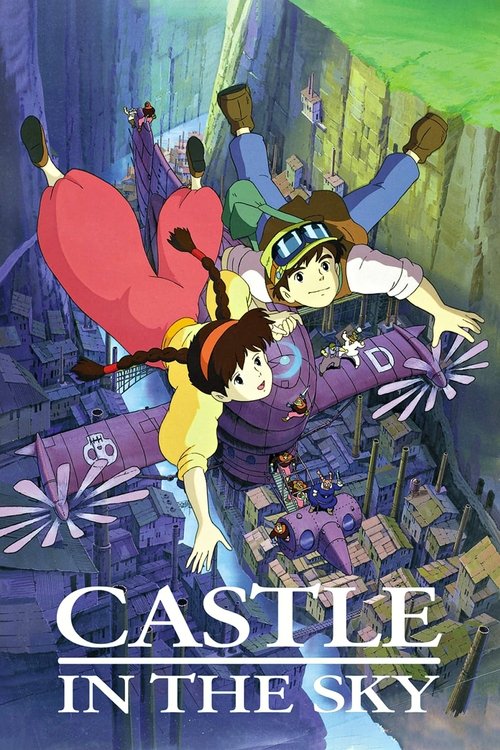
天空の城ラピュタ
"One day, a girl came down from the sky…"
Castle in the Sky - Symbolism & Philosophy
Symbols & Motifs
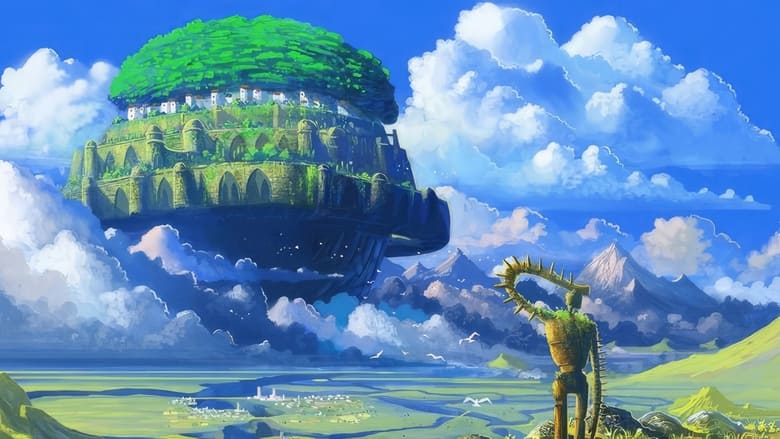
Laputa, the Castle in the Sky
Laputa symbolizes the duality of human civilization and technology. It is a place of incredible beauty and advanced knowledge, but also one of immense destructive power. Its abandoned state, with nature reclaiming the technological marvels, represents the potential consequences of humanity's hubris and the enduring power of the natural world.
The entire film revolves around the search for this legendary floating island. It is the object of desire for all the main factions, each for their own reasons: Pazu to prove his father's story, Sheeta to understand her heritage, and Muska and the military to exploit its power.
Sheeta's Aetherium Crystal
The crystal is a symbol of both heritage and immense power. It is the key to unlocking the secrets and technology of Laputa. It represents a connection to the natural world, as it is made of the glowing Aetherium found deep within the earth. The crystal's power can be used for both good and evil, highlighting the responsibility that comes with great power.
The crystal is worn by Sheeta as a necklace and is the catalyst for the entire plot, as various groups pursue her to obtain it. It has the power to levitate, guide the way to Laputa, and activate the castle's ancient technology.
The Giant Tree of Laputa
The giant tree at the center of Laputa represents the life-giving and resilient force of nature. It has preserved the heart of the castle even after its inhabitants disappeared. The tree's roots run deep throughout the structure, symbolizing the inextricable link between the natural and the man-made. Ultimately, it is the tree that saves the most vital part of Laputa, allowing it to ascend peacefully into space, free from human corruption.
The tree is discovered when Pazu and Sheeta finally reach the upper gardens of Laputa. In the film's climax, after the destructive technology of Laputa is cast away, the tree and the surrounding ecosystem are what remain, ascending into the upper atmosphere.
Philosophical Questions
What is the proper relationship between technology and nature?
The film delves into this question by presenting Laputa as a case study. The advanced civilization of Laputa ultimately destroyed itself, suggesting that technology without wisdom or a respect for nature is unsustainable. However, the film doesn't condemn technology outright. Pazu is a skilled mechanic, and the benevolent robots on Laputa demonstrate that technology can coexist peacefully with nature. The film proposes that the morality of technology is determined by the intentions of its users, advocating for a balanced and harmonious integration of human ingenuity with the natural world.
Is it better to destroy immense power than to risk it falling into the wrong hands?
This is the central ethical dilemma faced by Sheeta in the climax. Muska, representing the worst of human ambition, seeks to control Laputa's devastating weapons. Rather than trying to control this power for good, Sheeta and Pazu make the ultimate decision to destroy it completely with the "Spell of Destruction." This act suggests a profound skepticism about humanity's ability to wield such power responsibly and posits that some knowledge and technology are too dangerous to exist.
Core Meaning
At its core, "Castle in the Sky" is a cautionary tale about the relationship between humanity, technology, and nature. Director Hayao Miyazaki explores the idea that technological advancement, when driven by greed and a desire for power, leads to destruction. Laputa itself is a powerful symbol of this duality: a technologically advanced civilization that ultimately fell because its power was misused. The film suggests that true strength and a sustainable future lie not in dominating nature with technology, but in living in harmony with it. It champions the innocence and courage of its young protagonists, suggesting that the hope for a better world rests in the hands of those who value love, friendship, and respect for the natural world over power and greed.