"The true story of a real fake."
Catch Me If You Can - Symbolism & Philosophy
Symbols & Motifs
Uniforms
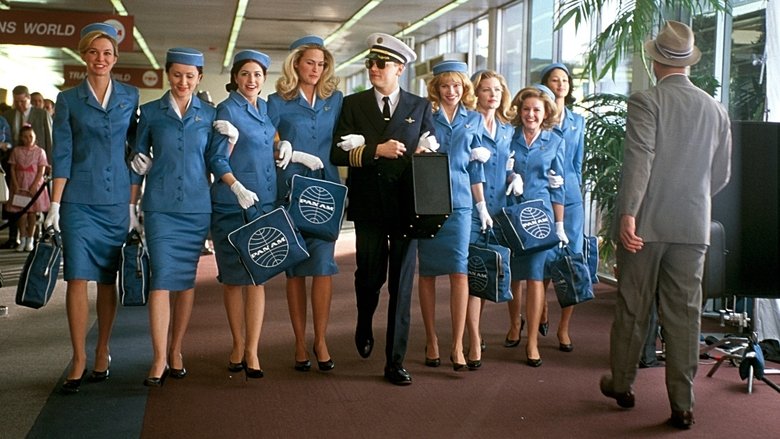
Uniforms represent instant legitimacy, authority, and identity. For Frank, a pilot's uniform or a doctor's coat is a passport to credibility, allowing him to bypass scrutiny and command respect. They are the primary tools of his deception, symbolizing how easily society is swayed by appearances over substance.
Frank's criminal career truly takes off once he acquires a Pan Am pilot's uniform, which grants him immense social power. He uses this and other professional attire throughout the film to gain access, trust, and the status his father lost.
Christmas Eve
Christmas Eve symbolizes Frank's profound loneliness and isolation. As a holiday centered around family, it starkly reminds Frank of the broken home he fled. It becomes the one time of year his cheerful facade cracks, revealing the scared, lonely boy underneath.
Every Christmas Eve, Frank initiates a phone call to Carl Hanratty. This ritual highlights their paradoxical bond; Frank reaches out to his hunter because Carl is the only person who knows his real identity and, in a way, is the closest thing he has to a stable figure in his life.
The Two Mice Story
Frank Sr.'s story of the two mice in a bucket of cream—one who gives up and drowns, the other who churns the cream to butter and escapes—serves as a core philosophy for Frank Jr. It symbolizes resilience, relentless effort, and the refusal to surrender, becoming the justification for his increasingly elaborate schemes.
Frank Sr. tells this story at a Rotary Club meeting to project an image of success despite his failures. Frank Jr. internalizes this lesson and later retells it at his fiancée's family dinner, demonstrating how his father's worldview has become his own operating principle.
Watches
Watches in the film symbolize time, status, and legitimate life milestones. They represent a traditional path of earning respect and marking achievements, a path that Frank circumvents with his cons. They are tokens of paternal affection and, eventually, a restoration of identity.
Frank Sr. gives his son a watch for his 16th birthday. Later, Frank Jr. attempts to gift his father an expensive watch, which Frank Sr. cannot accept, symbolizing his fallen status. At the end of the film, Carl returns Frank's own watch to him, a gesture that signifies Frank is no longer a prisoner of his past and can reclaim his own time and identity.
Philosophical Questions
What is the nature of identity, and can it be entirely self-created?
The film probes whether identity is an inherent quality or a performance. Frank Abagnale Jr. demonstrates that, to a large extent, identity can be constructed through convincing performance and external symbols. His story forces the question of what makes a pilot a pilot, or a doctor a doctor—is it the internal knowledge and experience, or the external validation granted by others? The film suggests that while you can fake an identity, you cannot fake the human need for authentic connection that comes from a true self.
Is it possible to live a fulfilling life built on deception?
Through Frank's journey, the film explores the existential cost of a life of lies. While he gains wealth, freedom, and adventure, he is plagued by profound loneliness and the inability to form genuine relationships. His love for Brenda fails because it's built on a false persona. The narrative ultimately argues that a fulfilling life requires authenticity and meaningful connections, something Frank only begins to find when he starts working with Carl Hanratty, the one person who knows the truth about him.
Does the end justify the means if the motivation is rooted in love and family?
Frank's criminal actions are framed by his desire to repair his broken family. He's not motivated by greed in a vacuum, but by a misguided hope to restore his parents' happiness. The film doesn't condone his crimes, but it does create sympathy for his motivations, asking the audience to consider the complex moral gray area where noble intentions lead to illegal and harmful actions. It questions whether a 'good' motive mitigates a 'bad' act.
Core Meaning
At its core, Catch Me If You Can is a deeply personal film for director Steven Spielberg, exploring the profound impact of a broken home on a child's identity. Frank's incredible series of cons is not driven by pure criminality, but by a desperate, adolescent longing to restore his shattered family life and regain the idyllic past he lost. Each persona he adopts—pilot, doctor, lawyer—represents a pillar of stability and respectability, an attempt to rebuild the world and the father-figure he idolized. The film poignantly suggests that Frank is running not just from the law, but from the crushing loneliness of his reality. Ultimately, the central message is about finding one's true self, not through reinvention and illusion, but through genuine human connection, ironically forged with the very man determined to catch him.