
Catch Me If You Can
A slick, jazz-infused caper gliding on melancholy wings, this chase film paints a vibrant 1960s dreamscape where a boy's desperate search for a family portrait becomes a masterclass in illusion.
Catch Me If You Can

Catch Me If You Can

"The true story of a real fake."

16 December 2002 United States of America 141 min ⭐ 8.0 (16,408)
Director: Steven Spielberg
Cast: Leonardo DiCaprio, Tom Hanks, Christopher Walken, Martin Sheen, Nathalie Baye
Drama Crime
The Broken Home and Father-Son Relationships Identity, Performance, and Deception Loneliness and the Search for Connection The Illusion of the American Dream
Budget: $52,000,000
Box Office: $352,114,312

Overview

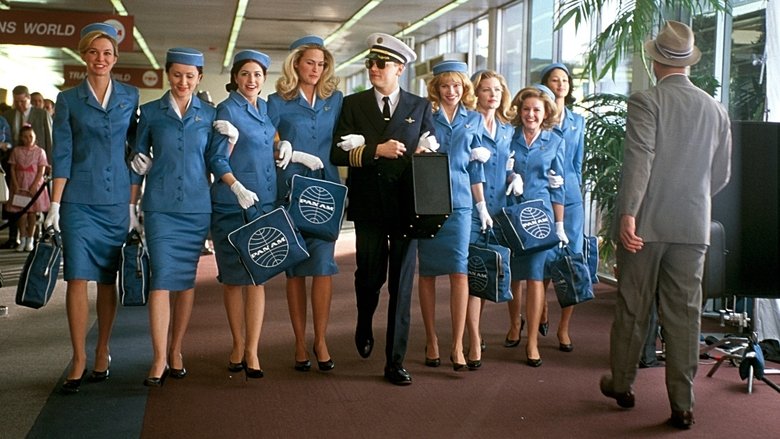
Based on a sensational true story, Catch Me If You Can charts the dazzling criminal career of Frank Abagnale Jr. (Leonardo DiCaprio), a precocious teenager who, in the wake of his parents' painful divorce, runs away from home. Armed with boyish charm and an uncanny gift for deception, Frank successfully impersonates a Pan American pilot, a Georgia doctor, and a Louisiana parish prosecutor, forging millions of dollars in checks along the way. His primary motivation isn't just wealth, but a desperate, youthful fantasy to mend his broken family and win back the approval of his charismatic but down-on-his-luck father, Frank Sr. (Christopher Walken).

Relentlessly pursuing Frank across the globe is the stoic, by-the-book FBI agent Carl Hanratty (Tom Hanks). What starts as a standard case of fraud evolves into a complex and surprisingly personal cat-and-mouse game. As Frank's cons grow more audacious, an unlikely bond forms between the pursuer and the pursued, built on mutual respect and a shared sense of loneliness. The film is a stylish, energetic, and ultimately poignant journey through the optimistic landscape of 1960s America, exploring the dizzying heights of deception and the emotional cost of running from oneself.
Core Meaning

At its core, Catch Me If You Can is a deeply personal film for director Steven Spielberg, exploring the profound impact of a broken home on a child's identity. Frank's incredible series of cons is not driven by pure criminality, but by a desperate, adolescent longing to restore his shattered family life and regain the idyllic past he lost. Each persona he adopts—pilot, doctor, lawyer—represents a pillar of stability and respectability, an attempt to rebuild the world and the father-figure he idolized. The film poignantly suggests that Frank is running not just from the law, but from the crushing loneliness of his reality. Ultimately, the central message is about finding one's true self, not through reinvention and illusion, but through genuine human connection, ironically forged with the very man determined to catch him.

Thematic DNA

The Broken Home and Father-Son Relationships 35%
Identity, Performance, and Deception 30%
Loneliness and the Search for Connection 20%
The Illusion of the American Dream 15%

The Broken Home and Father-Son Relationships

The entire narrative is propelled by Frank's reaction to his parents' divorce. His criminal enterprise is a misguided attempt to earn enough money and prestige to reunite his mother and father. His relationship with his father, Frank Sr., is central; he learns the art of the con from him and desperately seeks his approval. In contrast, the dogged FBI agent Carl Hanratty slowly evolves into a surrogate father figure, offering Frank the structure, moral guidance, and stability his own father could not provide, ultimately leading to his redemption.

Identity, Performance, and Deception

The film delves into the fluid nature of identity. Frank discovers that by simply looking the part and performing with confidence, society will accept his assumed roles without question. His various uniforms are keys that unlock worlds of respect and authority. This theme questions what truly defines a person, suggesting that identity can be a carefully constructed performance. However, living these lies leads to profound loneliness, as no one knows the real Frank Abagnale Jr.

Loneliness and the Search for Connection

Despite the glamour and success of his cons, Frank is deeply lonely. This is most evident in his annual Christmas Eve phone calls to Carl Hanratty. With his own family fractured, Frank reaches out to the only other person who has a consistent presence in his life—his pursuer. Carl, a divorced workaholic, shares this isolation. Their strange bond becomes the most authentic relationship in the film, highlighting the fundamental human need for connection over any material or fraudulent success.

The Illusion of the American Dream

Set against the optimistic backdrop of the 1960s, the film critiques the superficiality of the American Dream. Frank Sr. teaches his son that appearances are everything, a lesson Frank Jr. takes to its logical extreme. He achieves all the trappings of success—money, status, beautiful women—not through hard work, but through pure artifice. This suggests that the dream itself can be a con, an illusion that can be forged just as easily as a check.

Character Analysis

Frank Abagnale Jr.

Leonardo DiCaprio

Archetype: The Charming Anti-Hero
Key Trait: Adaptive Charisma

Motivation

His primary motivation is the adolescent fantasy of reuniting his broken family. He believes that if he can accumulate enough money and status, he can reverse his parents' divorce and restore his father's lost honor, thus returning to the idyllic childhood he remembers.

Character Arc

Frank begins as a heartbroken teenager who turns to deception as a coping mechanism for his parents' divorce. He evolves into a confident master forger, reveling in the freedom and glamour of his criminal life. However, his journey reveals a deepening isolation, and he ultimately realizes that his cons cannot fix his family or provide true happiness. Through his relationship with Carl Hanratty, he transitions from a perpetual runaway to a man who accepts responsibility, finds a legitimate purpose for his talents, and finally stops running.

Carl Hanratty

Tom Hanks

Archetype: The Pursuer / The Mentor
Key Trait: Dogged Integrity

Motivation

Initially motivated by a rigid sense of duty to uphold the law, Carl's motivation shifts as he develops a grudging respect and then a genuine concern for Frank's welfare. He becomes driven not just to capture Frank, but to save him from a self-destructive and lonely path.

Character Arc

Carl starts as a humorless, dedicated, and somewhat socially awkward FBI agent obsessed with his work. His pursuit of Frank is initially purely professional, but it slowly becomes personal as he recognizes the lonely boy behind the master criminal. He transitions from Frank's adversary to his only trusted confidant and, ultimately, a paternal figure who offers him a path to redemption and becomes the stable anchor in his life.

Frank Abagnale Sr.

Christopher Walken

Archetype: The Fallen Idol / The Tragic Figure
Key Trait: Faded Charisma

Motivation

Motivated by a desperate need to reclaim his lost dignity and status, Frank Sr. clings to the belief that image is everything. He encourages his son's deceptive talents, viewing them as a way to fight back against a system that he feels has wronged him, all while sinking deeper into failure and denial.

Character Arc

Frank Sr. begins as his son's charismatic idol, a man who believes in the power of appearance and charm. After losing his business to the IRS and his wife to his best friend, his arc is one of tragic decline. He becomes a broken, disillusioned man who lives vicariously through his son's fraudulent success, unable to offer moral guidance. Each time Frank Jr. visits him, he appears more diminished, representing the slow death of the dream Frank Jr. is trying to reclaim.

Symbols & Motifs

Uniforms

Meaning:

Uniforms represent instant legitimacy, authority, and identity. For Frank, a pilot's uniform or a doctor's coat is a passport to credibility, allowing him to bypass scrutiny and command respect. They are the primary tools of his deception, symbolizing how easily society is swayed by appearances over substance.

Context:

Frank's criminal career truly takes off once he acquires a Pan Am pilot's uniform, which grants him immense social power. He uses this and other professional attire throughout the film to gain access, trust, and the status his father lost.

Christmas Eve

Meaning:

Christmas Eve symbolizes Frank's profound loneliness and isolation. As a holiday centered around family, it starkly reminds Frank of the broken home he fled. It becomes the one time of year his cheerful facade cracks, revealing the scared, lonely boy underneath.

Context:

Every Christmas Eve, Frank initiates a phone call to Carl Hanratty. This ritual highlights their paradoxical bond; Frank reaches out to his hunter because Carl is the only person who knows his real identity and, in a way, is the closest thing he has to a stable figure in his life.

The Two Mice Story

Meaning:

Frank Sr.'s story of the two mice in a bucket of cream—one who gives up and drowns, the other who churns the cream to butter and escapes—serves as a core philosophy for Frank Jr. It symbolizes resilience, relentless effort, and the refusal to surrender, becoming the justification for his increasingly elaborate schemes.

Context:

Frank Sr. tells this story at a Rotary Club meeting to project an image of success despite his failures. Frank Jr. internalizes this lesson and later retells it at his fiancée's family dinner, demonstrating how his father's worldview has become his own operating principle.

Watches

Meaning:

Watches in the film symbolize time, status, and legitimate life milestones. They represent a traditional path of earning respect and marking achievements, a path that Frank circumvents with his cons. They are tokens of paternal affection and, eventually, a restoration of identity.

Context:

Frank Sr. gives his son a watch for his 16th birthday. Later, Frank Jr. attempts to gift his father an expensive watch, which Frank Sr. cannot accept, symbolizing his fallen status. At the end of the film, Carl returns Frank's own watch to him, a gesture that signifies Frank is no longer a prisoner of his past and can reclaim his own time and identity.

Memorable Quotes

Two little mice fell in a bucket of cream. The first mouse quickly gave up and drowned. The second mouse, wouldn't quit. He struggled so hard that eventually he churned that cream into butter and crawled out. Gentlemen, as of this moment, I am that second mouse.

— Frank Abagnale Sr.

Context:

Frank Sr. delivers this speech at a Rotary Club event early in the film, trying to project an image of resilience and success even as his personal and financial life is collapsing. The quote establishes the thematic foundation for his son's incredible story of survival and reinvention.

Meaning:

This anecdote becomes the central metaphor for the Abagnale philosophy of relentless striving against impossible odds. It encapsulates the idea of creating one's own success through sheer persistence, a lesson Frank Jr. applies to his life of crime. It is both an inspiring motto and a justification for never giving up the con.

You know why the Yankees always win, Frank? 'Cause they have Mickey Mantle? No, it's 'cause the other teams can't stop staring at those damn pinstripes.

— Frank Abagnale Sr.

Context:

Frank Sr. says this to his son outside a bank just before he unsuccessfully tries to get a loan. It's a moment where he passes on his cynical but pragmatic worldview about how society operates, a lesson Frank Jr. will soon master.

Meaning:

This quote is a lesson in the power of image and perception. Frank Sr. teaches his son that the appearance of power and success (the 'pinstripes') is often more intimidating and effective than actual substance. This becomes a foundational principle for Frank Jr.'s career as a con artist, who learns to rely on uniforms and confident performances to deceive people.

Stop chasing me! I can't stop, it's my job.

— Frank Abagnale Jr. & Carl Hanratty

Context:

This conversation happens during one of their many phone calls. Frank, feeling the pressure of the constant pursuit and his own loneliness, pleads with Carl. The line is a moment of raw vulnerability, stripping away the artifice of their cat-and-mouse game.

Meaning:

This exchange perfectly encapsulates the dynamic of their relationship while also revealing Frank's exhaustion. The glamorous chase has become a burden, and for the first time, he sounds less like a suave con man and more like a desperate kid. Carl's simple, factual response highlights his unwavering duty but also the impersonal nature of the system Frank is up against.

I'm going to let you fly tonight, Frank. I'm not even going to try to stop you. That's because I know you'll be back on Monday... Nobody's chasing you.

— Carl Hanratty

Context:

Towards the end of the film, Frank, now working for the FBI, is tempted to run away one last time. Carl confronts him at the airport but doesn't arrest him. Instead, he presents Frank with the freedom to choose his own path, effectively ending their long-running chase and solidifying their father-son bond.

Meaning:

This is the climax of Carl's transformation from pursuer to mentor. He offers Frank a choice, not a command, demonstrating trust and a belief in his redemption. He understands that for Frank to truly change, he must stop running on his own accord, finally letting go of the chase that has defined his life.

Philosophical Questions

What is the nature of identity, and can it be entirely self-created?

The film probes whether identity is an inherent quality or a performance. Frank Abagnale Jr. demonstrates that, to a large extent, identity can be constructed through convincing performance and external symbols. His story forces the question of what makes a pilot a pilot, or a doctor a doctor—is it the internal knowledge and experience, or the external validation granted by others? The film suggests that while you can fake an identity, you cannot fake the human need for authentic connection that comes from a true self.

Is it possible to live a fulfilling life built on deception?

Through Frank's journey, the film explores the existential cost of a life of lies. While he gains wealth, freedom, and adventure, he is plagued by profound loneliness and the inability to form genuine relationships. His love for Brenda fails because it's built on a false persona. The narrative ultimately argues that a fulfilling life requires authenticity and meaningful connections, something Frank only begins to find when he starts working with Carl Hanratty, the one person who knows the truth about him.

Does the end justify the means if the motivation is rooted in love and family?

Frank's criminal actions are framed by his desire to repair his broken family. He's not motivated by greed in a vacuum, but by a misguided hope to restore his parents' happiness. The film doesn't condone his crimes, but it does create sympathy for his motivations, asking the audience to consider the complex moral gray area where noble intentions lead to illegal and harmful actions. It questions whether a 'good' motive mitigates a 'bad' act.

Alternative Interpretations

One alternative reading of the film views Frank's escapades as a form of adolescent wish-fulfillment on a grand scale. His ability to effortlessly transform into figures of authority can be interpreted not as a literal account, but as a heightened fantasy of a boy trying to reclaim power and control after his family life collapses. His cons are the ultimate escape from the painful powerlessness of childhood.

Another interpretation views the film as a subtle critique of social and institutional structures. Frank's success exposes the gullibility of large, bureaucratic systems—banks, airlines, hospitals—which are shown to be overly reliant on superficial symbols of authority like uniforms and forged documents. From this perspective, Frank's crimes are less an indictment of his own morality and more an exposé of the fragile and often absurd nature of institutional trust and the so-called 'experts' who run them.

Cultural Impact

Released in 2002, Catch Me If You Can was a critical and commercial success, grossing over $352 million worldwide and earning praise as one of Steven Spielberg's most effortlessly entertaining films. It seamlessly blended comedy, drama, and suspense, reaffirming Spielberg's versatility. The film sparked renewed public fascination with the real Frank Abagnale Jr.'s story, cementing it as a modern folk tale of audacity and reinvention. Its stylish production design and John Williams's saxophone-heavy score perfectly captured the jet-set glamour of the 1960s, influencing a retro aesthetic in film. The movie is often cited for the sparkling chemistry between Leonardo DiCaprio and Tom Hanks, and it provided a breakout role for Amy Adams and earned Christopher Walken an Academy Award nomination. It remains a beloved film, appreciated for its breezy pace, sharp script, and the poignant emotional core beneath its caper surface.

Audience Reception

Catch Me If You Can was warmly received by audiences, who largely praised it as a highly entertaining and stylish film. The performances of the lead actors are consistently highlighted as a major strength, particularly the charismatic turn by Leonardo DiCaprio and the compelling chemistry between him and Tom Hanks. Christopher Walken's poignant performance also garnered significant praise. Viewers frequently commend the film's breezy pacing, witty script, and engaging cat-and-mouse narrative. Criticisms are generally minor but sometimes point to the film's lengthy runtime, feeling that the plot becomes slightly repetitive in the middle. A few viewers also expressed discomfort with the lighthearted portrayal of a criminal, particularly his impersonation of a doctor where lives could have been at stake. Overall, however, it is widely regarded as a fun, sophisticated, and emotionally satisfying movie that stands as one of Spielberg's most enjoyable works.

Interesting Facts

  • The real Frank Abagnale Jr. makes a cameo appearance as the French police officer who arrests Leonardo DiCaprio's character.
  • The film was shot in over 140 locations in just 52 days, reflecting Spielberg's famously efficient directing style.
  • The role of Carl Hanratty is based on a real FBI agent named Joseph Shea. His name was changed for the film because Shea did not want his real name used.
  • Before Steven Spielberg decided to direct, other acclaimed directors like David Fincher, Gore Verbinski, Lasse Hallström, and Cameron Crowe were considered for the project.
  • Leonardo DiCaprio spent time with the real Frank Abagnale Jr. to study his mannerisms and personality for the role.
  • Christopher Walken improvised the emotional moment in the bar scene where his character gets choked up while talking about his wife. The raw take surprised Leonardo DiCaprio and was kept in the final cut.
  • The character of Brenda Strong (played by Amy Adams) was a composite character, based on several of the real Abagnale's girlfriends.
  • Frank Abagnale Jr.'s book was in development hell for over two decades before the film was finally made, with the rights being sold multiple times since 1980.

Easter Eggs

Frank Abagnale Jr.'s Cameo

The real-life con man, Frank Abagnale Jr., plays the French police officer who arrests his on-screen counterpart, played by Leonardo DiCaprio. This meta-cameo provides a clever, ironic nod to the film's source.

Barry Allen (The Flash) Alias

When Frank first bluffs his way out of being caught by Carl Hanratty in a hotel room, he identifies himself as Secret Service agent 'Barry Allen'. Earlier in the film, a stack of The Flash comic books can be seen on Frank's bedside table, revealing where the young con artist got the name for his quick-thinking escape.

The Floating Money

In the scene where Carl Hanratty almost catches Frank in the hotel room, money begins to float out from under the door. Some viewers have interpreted this as a visual homage by Spielberg to the iconic floating feather scene in Tom Hanks's previous blockbuster, Forrest Gump (1994).

'Embraceable You' Song

The song 'Embraceable You' is used twice in the film. First, Frank watches his own parents dance to it during happier times. Later, he watches his fiancée Brenda's parents dance to the same song, highlighting his longing to recreate the idealized family life he lost.

⚠️ Spoiler Analysis

Click to reveal detailed analysis with spoilers

Frequently Asked Questions

Explore More About This Movie

Dive deeper into specific aspects of the movie with our detailed analysis pages

Comments (0)

Leave a comment

No comments yet. Be the first to share your thoughts!