Central do Brasil
"Between hope and solitude, two lives cross and reinvent themselves"
Central Station - Symbolism & Philosophy
Symbols & Motifs
The Letters
The letters symbolize human connection, hope, and memory. For the illiterate clients, they are the only link to distant loved ones. For Dora, they initially represent a cynical business transaction. Her decision to discard or mail them is a measure of her soul's condition. By the end, when she mails the letters from the pilgrimage and leaves behind the crucial letters for Josué's family, they signify her redemption and her newfound respect for the bonds between people.
The film is framed by the act of letter-writing. It begins with Dora plying her trade in the station, viewing her clients with contempt. A turning point occurs during a religious pilgrimage when she and Josué set up a letter-writing stall to earn money; this time, she approaches the task with empathy. The film concludes with her leaving behind two key letters that will finally connect Josué to his family's story.
Central Station
The station (Central do Brasil) represents a microcosm of Brazilian society. It is a place of transit, of arrivals and departures, where diverse social classes, hopes, and despairs converge. It is depicted as a harsh, impersonal, and dangerous place—a symbol of the urban decay and social indifference that has fostered Dora's cynicism. Leaving the station is the beginning of the journey toward redemption and a reconnection with a more authentic, rural Brazil.
The first act of the film is set almost entirely within the chaotic environment of Rio's Central Station. This is where Dora works, where Josué's mother is killed, and where the boy is left orphaned. The cold, muted cinematography in these early scenes reflects the station's—and Dora's—lack of warmth and humanity.
The Road/Journey
The physical journey across Brazil is a classic road movie trope that symbolizes an inner, spiritual journey. It represents a departure from a stagnant, cynical life towards the possibility of change and self-discovery. For Dora, the road forces her to shed her emotional armor and open herself to another person. For Josué, it is a path toward his roots and identity. The journey itself, with its challenges and encounters, becomes more important than the final destination.
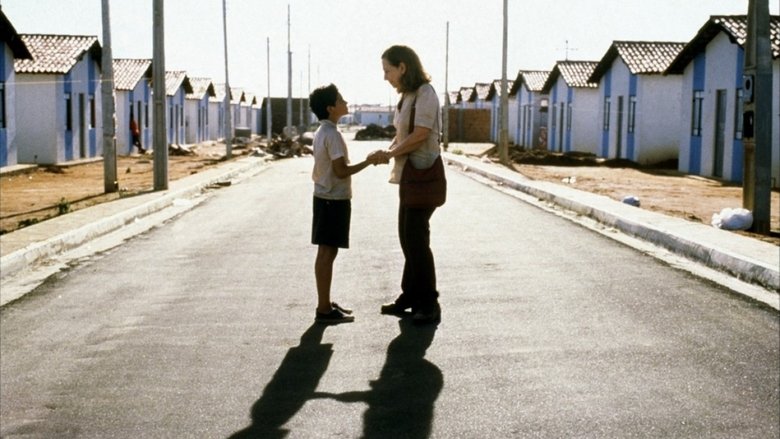
After rescuing Josué from traffickers, Dora and the boy board a bus and leave Rio. Their travels take them through the vast, sun-drenched landscapes of the Brazilian sertão, hitching rides with truckers and taking various buses. The visual palette of the film shifts from the drab greys of the city to the warm, golden hues of the countryside, mirroring Dora's internal transformation.
Photographs
Photographs represent identity, memory, and the longing for connection to an absent past. The small portrait of Josué and his mother, and later the one of him with Dora, are tangible links to loved ones. They are objects that hold memories and confirm relationships. In a world where people are separated and illiterate, a photograph is a powerful and direct form of communication and remembrance.
Josué's mother gives Dora a photo of him to send to his father. Later, Josué and Dora have a small portrait taken together at a town fair, a memento of their own developing bond. In her final letter to him, Dora tells Josué to look at their "little portrait" if he ever misses her, cementing the photograph as a symbol of their enduring connection.
Philosophical Questions
Can a person truly rediscover their humanity after a lifetime of cynicism?
The film's central narrative is a deep exploration of this question through the character of Dora. She is presented as a soul-sick individual, hardened by loneliness and disappointment to the point of profound amorality. The film posits that redemption is possible not through a sudden epiphany, but through a difficult, incremental journey prompted by forced responsibility for another. Josué's persistent need and unwavering hope act as a constant force against her cynicism, slowly breaking down her defenses. Her transformation suggests that our humanity is not something that can be erased, but rather buried, and that it can be unearthed through selfless connection with others.
What constitutes a 'family'?
"Central Station" challenges traditional notions of family. Josué begins his journey searching for a nuclear family defined by blood—a mother and a father. What he finds is far more complex. His mother is lost, his father is absent, but he discovers brothers he never knew. More importantly, he forges a powerful, maternal bond with Dora, a complete stranger. Their relationship, built on shared experience and reluctant affection, becomes the film's emotional core. The film suggests that family is not merely a matter of biological ties, but is ultimately defined by love, mutual care, and the profound bonds we choose to form.
In an indifferent world, is faith a necessity or a delusion?
The film examines faith in both a religious and secular sense. Josué's quest is an act of pure faith in a father he has never met. His brothers live a life defined by the faithful belief that their father will return. This is contrasted with Dora's complete lack of faith in anything or anyone. The narrative seems to conclude that faith—whether in a person, a higher power, or simply in the possibility of human goodness—is what provides meaning and purpose in a world filled with hardship. Dora's journey is one of acquiring faith, not necessarily in God, but in the value of human connection itself.
Core Meaning
At its heart, "Central Station" is a story of redemption and the rediscovery of humanity. Director Walter Salles explores the search for identity, both on a personal and national level. Dora's physical journey with Josué across Brazil is a metaphor for her internal journey from profound cynicism and emotional isolation to empathy and love. She starts as a woman who has lost her capacity to connect with others but, through her responsibility to Josué, is forced to abandon her self-contained existence and re-engage with the world. The film suggests that human connection, solidarity, and shared experience are essential for survival and for finding one's purpose. Josué's quest for his father (pai) also serves as an allegory for Brazil's search for its roots and national identity (país) in a time of social and economic upheaval.