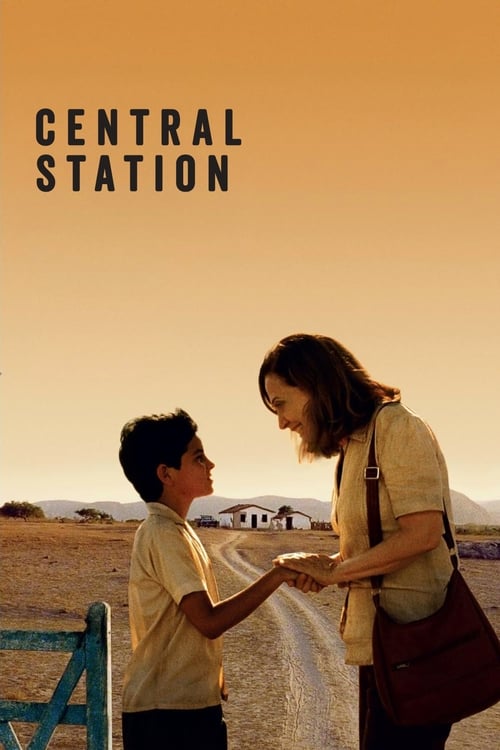
Central Station
A heart-wrenching road drama where Brazil's sun-scorched landscapes mirror a woman's thawing cynicism as she guides an orphan boy on a quest for his father, forging an unlikely bond.
Central Station

Central Station

Central do Brasil

"Between hope and solitude, two lives cross and reinvent themselves"

03 April 1998 Brazil 110 min ⭐ 8.1 (987)
Director: Walter Salles
Cast: Fernanda Montenegro, Vinícius de Oliveira, Marília Pêra, Othon Bastos, Otávio Augusto
Drama
Redemption and Transformation The Search for the Father Figure Cynicism vs. Hope Literacy and Communication
Budget: $2,900,000
Box Office: $5,596,708

Overview

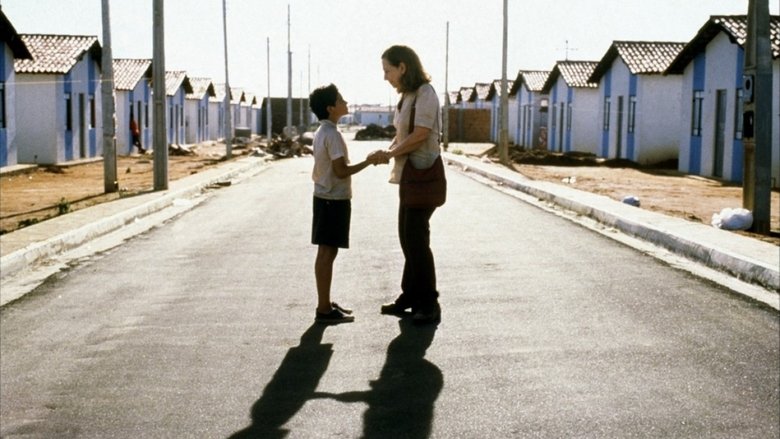
"Central Station" (Central do Brasil) tells the story of Isadora "Dora" Teixeira, a cynical, retired schoolteacher who scrapes by writing letters for illiterate people at Rio de Janeiro's bustling Central Station. Embittered by life, she often pockets the money without ever mailing the letters, discarding them in a drawer. Her life takes an unexpected turn when Ana, a client, is tragically killed in a bus accident moments after dictating a letter to her estranged husband, leaving her nine-year-old son, Josué, orphaned and alone.

Initially annoyed by the boy, Dora's first instinct is to rid herself of him, even selling him to a dubious adoption agency for the price of a new television set. However, wracked with guilt after her friend Irene warns her the children are likely trafficked for their organs, Dora rescues Josué. This act sets the mismatched pair on an unplanned journey across the vast, arid landscapes of Northeast Brazil to find the boy's father, whom he has never met. The film transforms into a road movie, chronicling their travels and the gradual, reluctant bond that forms between the hardened woman and the determined child.


Core Meaning

At its heart, "Central Station" is a story of redemption and the rediscovery of humanity. Director Walter Salles explores the search for identity, both on a personal and national level. Dora's physical journey with Josué across Brazil is a metaphor for her internal journey from profound cynicism and emotional isolation to empathy and love. She starts as a woman who has lost her capacity to connect with others but, through her responsibility to Josué, is forced to abandon her self-contained existence and re-engage with the world. The film suggests that human connection, solidarity, and shared experience are essential for survival and for finding one's purpose. Josué's quest for his father (pai) also serves as an allegory for Brazil's search for its roots and national identity (país) in a time of social and economic upheaval.

Thematic DNA

Redemption and Transformation 35%
The Search for the Father Figure 30%
Cynicism vs. Hope 20%
Literacy and Communication 15%

Redemption and Transformation

The central theme is the profound transformation of Dora. Initially depicted as a callous, selfish woman who scams the illiterate and sells a child for a TV, her journey with Josué forces her to confront her own moral decay. The road trip acts as a crucible, slowly melting her hardened exterior. Her evolution is not sudden but gradual, marked by moments of selfishness followed by remorse, culminating in a selfless act that signifies her redemption. She rediscovers her capacity for love and compassion, fundamentally changing from a cynical anti-heroine to a caring, maternal figure.

The Search for the Father Figure

Josué's unwavering quest to find his father, Jesus, is the narrative's driving force. This search operates on multiple levels. For Josué, it's a literal search for family, identity, and a place to belong. Metaphorically, this theme is expanded to a national scale, representing Brazil's search for its origins and a sense of collective identity. Director Walter Salles has noted that the absence of the father is a characteristic of Brazilian society. The film explores faith, hope, and the need for a guiding presence, whether paternal or spiritual, in a harsh world.

Cynicism vs. Hope

The film presents a stark contrast between Dora's urban cynicism and Josué's childlike hope. Dora embodies the disillusionment of a society marked by poverty and broken promises, where efficiency trumps compassion. She has lost faith in humanity. Josué, despite his tragic circumstances, clings to the belief that he can find his father and rebuild his family. Their journey becomes a battle between these two worldviews. Ultimately, Josué's resilience and faith slowly chip away at Dora's bitterness, suggesting that hope can survive even in the most hardened hearts.

Literacy and Communication

Dora's profession as a letter writer for the illiterate is central to the film's symbolism. Initially, she abuses this power, acting as a gatekeeper of communication and deciding which stories deserve to be told by choosing which letters to send. This highlights a divide between the educated and the marginalized. As her relationship with Josué develops, her role as a writer is transformed. She begins to understand the profound human need for connection expressed in the letters, and by the end, she uses her skill to unite a family rather than sever ties, symbolizing her restored humanity.

Character Analysis

Isadora "Dora" Teixeira

Fernanda Montenegro

Archetype: Antihero / The Everywoman (Redeemed)
Key Trait: Cynical

Motivation

Initially, her motivation is pure self-preservation and financial gain. She wants to be rid of Josué as quickly as possible. After rescuing him, her motivation shifts to a complex mix of guilt, responsibility, and a flicker of long-buried compassion. Ultimately, her motivation becomes a genuine, selfless desire to see Josué safe and to honor his quest, which in turn heals her own past wounds related to her own father.

Character Arc

Dora begins as a profoundly cynical and embittered antihero. A lonely, retired schoolteacher, she has built a protective wall of sarcasm and selfishness around herself, cheating her illiterate customers and showing no empathy. The unwanted responsibility of Josué forces her onto a path of reluctant heroism. Her journey is a gradual and painful shedding of this cynicism. Through arguments, moments of abandonment, and eventual dependence on Josué, she rediscovers her maternal instincts and her capacity for love, completing an arc from a heartless loner to a selfless, caring individual who finds purpose in connecting with another human being.

Josué Fontenele de Paiva

Vinícius de Oliveira

Archetype: The Orphan / The Catalyst
Key Trait: Resilient

Motivation

Josué's motivation is simple and powerful: to meet his father. This desire gives him purpose and the strength to endure hardship. He idealizes his father as the solution to his homelessness and loneliness, a figure who will provide him with a home and identity. This unwavering goal propels the entire narrative forward.

Character Arc

Josué starts as a boy defined by loss, suddenly orphaned in a massive, indifferent city. Despite his vulnerability, he is resilient, stubborn, and fiercely determined to find the father he has idealized. He acts as the catalyst for Dora's transformation. His arc is one of finding a new family in an unexpected place. While his initial goal is to find his biological father, he forges a powerful, filial bond with Dora. He learns to trust again after his world is shattered, and in the end, he is left with a new, albeit broken, family, but with a stronger sense of his own identity and roots.

Irene

Marília Pêra

Archetype: The Conscience
Key Trait: Moral

Motivation

Irene is motivated by genuine friendship and a basic sense of morality. She cares for Dora but is not afraid to challenge her cruelest impulses. Her primary role is to push Dora toward the right decision by highlighting the terrible consequences of selling Josué.

Character Arc

Irene is a static character who serves as Dora's moral compass. She is Dora's neighbor and friend, providing a sounding board for Dora's cynical complaints. Unlike Dora, Irene retains a fundamental sense of decency and empathy. Her arc is minor but crucial; she is the one who voices the horror of what will happen to Josué, planting the seed of guilt that forces Dora to act and begin her journey of redemption. She represents the humanity that Dora has lost and must reclaim.

Isaías Paiva & Moisés Paiva

Matheus Nachtergaele & Caio Junqueira

Archetype: The Destination / The Revelation
Key Trait: Faithful

Motivation

Their motivation is rooted in family and faith. They have been waiting patiently for their father to return as he promised in a letter. They are driven by a desire to keep the family unit intact and to honor their father's memory and wishes, which includes welcoming the brother they never knew he had.

Character Arc

As Josué's half-brothers, Isaías and Moisés represent the end of the physical journey. They are simple, kind carpenters living a modest life, waiting for the return of their father, Jesus. Their appearance provides the film's final twist, revealing that Josué has found a family, but not in the way he expected. They are welcoming and good-hearted, immediately accepting Josué as their brother and providing him with the home he sought. Their existence confirms his father's reality while simultaneously cementing his absence.

Symbols & Motifs

The Letters

Meaning:

The letters symbolize human connection, hope, and memory. For the illiterate clients, they are the only link to distant loved ones. For Dora, they initially represent a cynical business transaction. Her decision to discard or mail them is a measure of her soul's condition. By the end, when she mails the letters from the pilgrimage and leaves behind the crucial letters for Josué's family, they signify her redemption and her newfound respect for the bonds between people.

Context:

The film is framed by the act of letter-writing. It begins with Dora plying her trade in the station, viewing her clients with contempt. A turning point occurs during a religious pilgrimage when she and Josué set up a letter-writing stall to earn money; this time, she approaches the task with empathy. The film concludes with her leaving behind two key letters that will finally connect Josué to his family's story.

Central Station

Meaning:

The station (Central do Brasil) represents a microcosm of Brazilian society. It is a place of transit, of arrivals and departures, where diverse social classes, hopes, and despairs converge. It is depicted as a harsh, impersonal, and dangerous place—a symbol of the urban decay and social indifference that has fostered Dora's cynicism. Leaving the station is the beginning of the journey toward redemption and a reconnection with a more authentic, rural Brazil.

Context:

The first act of the film is set almost entirely within the chaotic environment of Rio's Central Station. This is where Dora works, where Josué's mother is killed, and where the boy is left orphaned. The cold, muted cinematography in these early scenes reflects the station's—and Dora's—lack of warmth and humanity.

The Road/Journey

Meaning:

The physical journey across Brazil is a classic road movie trope that symbolizes an inner, spiritual journey. It represents a departure from a stagnant, cynical life towards the possibility of change and self-discovery. For Dora, the road forces her to shed her emotional armor and open herself to another person. For Josué, it is a path toward his roots and identity. The journey itself, with its challenges and encounters, becomes more important than the final destination.

Context:

After rescuing Josué from traffickers, Dora and the boy board a bus and leave Rio. Their travels take them through the vast, sun-drenched landscapes of the Brazilian sertão, hitching rides with truckers and taking various buses. The visual palette of the film shifts from the drab greys of the city to the warm, golden hues of the countryside, mirroring Dora's internal transformation.

Photographs

Meaning:

Photographs represent identity, memory, and the longing for connection to an absent past. The small portrait of Josué and his mother, and later the one of him with Dora, are tangible links to loved ones. They are objects that hold memories and confirm relationships. In a world where people are separated and illiterate, a photograph is a powerful and direct form of communication and remembrance.

Context:

Josué's mother gives Dora a photo of him to send to his father. Later, Josué and Dora have a small portrait taken together at a town fair, a memento of their own developing bond. In her final letter to him, Dora tells Josué to look at their "little portrait" if he ever misses her, cementing the photograph as a symbol of their enduring connection.

Memorable Quotes

Se sentir saudade minha, dá uma olhada no nosso retratinho. Digo isso porque tenho medo que você me esqueça também. Saudade do meu pai. Saudade de tudo. Dora.

— Dora (in her final letter to Josué)

Context:

This is the closing narration of the film. Dora has left Josué with his brothers while they slept, knowing it is the best place for him. She rides a bus away from the village, writing him a final letter which she gives to the bus driver to mail. As she writes and cries, her voice reads the letter aloud, expressing her profound feelings of love and loss as she finally leaves him.

Meaning:

This quote, translated as "If you ever miss me, take a look at our little portrait. I say this because I fear that you'll forget me as well. I miss my father. I miss everything. Dora," encapsulates the film's emotional climax. It is a raw admission of Dora's vulnerability and love for Josué. For the first time, she directly connects her own longing for her father with her fear of being forgotten by the boy, revealing the depth of their bond and the healing that has occurred within her. It signifies her complete transformation from a closed-off cynic to someone who treasures connection.

Philosophical Questions

Can a person truly rediscover their humanity after a lifetime of cynicism?

The film's central narrative is a deep exploration of this question through the character of Dora. She is presented as a soul-sick individual, hardened by loneliness and disappointment to the point of profound amorality. The film posits that redemption is possible not through a sudden epiphany, but through a difficult, incremental journey prompted by forced responsibility for another. Josué's persistent need and unwavering hope act as a constant force against her cynicism, slowly breaking down her defenses. Her transformation suggests that our humanity is not something that can be erased, but rather buried, and that it can be unearthed through selfless connection with others.

What constitutes a 'family'?

"Central Station" challenges traditional notions of family. Josué begins his journey searching for a nuclear family defined by blood—a mother and a father. What he finds is far more complex. His mother is lost, his father is absent, but he discovers brothers he never knew. More importantly, he forges a powerful, maternal bond with Dora, a complete stranger. Their relationship, built on shared experience and reluctant affection, becomes the film's emotional core. The film suggests that family is not merely a matter of biological ties, but is ultimately defined by love, mutual care, and the profound bonds we choose to form.

In an indifferent world, is faith a necessity or a delusion?

The film examines faith in both a religious and secular sense. Josué's quest is an act of pure faith in a father he has never met. His brothers live a life defined by the faithful belief that their father will return. This is contrasted with Dora's complete lack of faith in anything or anyone. The narrative seems to conclude that faith—whether in a person, a higher power, or simply in the possibility of human goodness—is what provides meaning and purpose in a world filled with hardship. Dora's journey is one of acquiring faith, not necessarily in God, but in the value of human connection itself.

Alternative Interpretations

While widely seen as a humanist drama about redemption, "Central Station" is also frequently interpreted as a profound religious allegory. This reading focuses on the overt religious symbolism: Josué's father is a carpenter named Jesus, who is absent but promised to return. The brothers, Isaías (Isaiah) and Moisés (Moses), live in a settlement called "Bom Jesus das Mãos Atadas" (Good Jesus of the Tied Hands). In this framework, Josué's journey is a quest for faith, and Dora becomes an unwitting Mary figure, guiding the child. The film becomes a story about humanity's struggle to maintain faith and find connection in a world where God (the father figure) is absent.

A more political interpretation views Dora as a metaphor for a cynical, educated elite in Brazil that has become disconnected from the country's impoverished masses. Her journey into the rural Northeast represents a necessary return to the nation's roots to rediscover a sense of solidarity and shared identity. Her transformation is not just personal but symbolic of a national healing, a bridging of the gap between the modern, alienated city and the traditional, communal countryside.

Cultural Impact

"Central Station" was a landmark achievement in Brazilian cinema and a key film of the Cinema da Retomada (the cinematic 'resumption') of the 1990s. After years of decline under inhibiting laws and economic crisis, the film's immense international success signaled a vibrant rebirth of the national film industry. It received widespread critical acclaim, culminating in two Academy Award nominations, including a historic Best Actress nod for Fernanda Montenegro, and a Golden Globe win for Best Foreign Language Film.

The film powerfully addressed themes of national identity at a time when Brazil was grappling with its future after emerging from military rule. By contrasting the harsh, cynical urban environment of Rio with the vast, spiritual heartland of the Northeast, Salles created a national allegory about a country searching for its soul and its roots. The story resonated deeply with both Brazilian and international audiences, who were moved by its universal themes of redemption, loneliness, and the profound human need for connection. Its neorealist style, use of non-actors, and focus on the lives of marginalized people drew comparisons to Italian Neorealism and the earlier Cinema Novo movement in Brazil, positioning Salles as a major voice in world cinema.

Audience Reception

Audiences have overwhelmingly praised "Central Station" for its emotional power and heartfelt performances, particularly that of Fernanda Montenegro as Dora. Reviewers frequently describe the film as deeply moving, often admitting it brought them to tears without feeling overly sentimental or manipulative. The dynamic between the cynical Dora and the earnest Josué is consistently highlighted as the film's greatest strength. The beautiful cinematography and its depiction of the Brazilian landscape are also common points of praise. Criticisms are minor and infrequent but sometimes point to the plot's reliance on the familiar tropes of the road movie genre or find the ending's neat resolution slightly too convenient or sentimental. Overall, the audience verdict is that it is a powerful, beautifully acted, and unforgettable piece of humanist cinema.

Interesting Facts

  • The actor who plays Josué, Vinícius de Oliveira, was a 10-year-old shoe-shine boy whom director Walter Salles discovered at an airport in Rio de Janeiro. Salles reportedly asked him to buy a sandwich, and was so impressed by his personality that he invited him to audition. De Oliveira was chosen from over 1,500 boys.
  • Fernanda Montenegro became the first (and to date, only) Brazilian to be nominated for the Academy Award for Best Actress for her role as Dora. She is also the only actor ever nominated for a performance in the Portuguese language.
  • The film won the Golden Bear for Best Film at the Berlin International Film Festival and the Golden Globe for Best Foreign Language Film.
  • To achieve a sense of realism, many of the people seen dictating letters to Dora at the beginning of the film were non-actors, real people from Rio who were invited to tell their stories on camera.
  • Director Walter Salles and his crew traveled 10,000 kilometers during the shoot, mirroring the journey of the characters in the film.
  • The film is seen as a major part of the 'Cinema da Retomada' (the 'resumption' or 'renaissance' of Brazilian cinema) in the mid-1990s, after a period of near-total collapse in national film production.
  • The actress Marília Pêra, who plays Irene, also starred in the acclaimed 1981 Brazilian film "Pixote," which also dealt with the plight of street children.

⚠️ Spoiler Analysis

Click to reveal detailed analysis with spoilers

Frequently Asked Questions

Explore More About This Movie

Dive deeper into specific aspects of the movie with our detailed analysis pages

Comments (0)

Leave a comment

No comments yet. Be the first to share your thoughts!