Skip to content
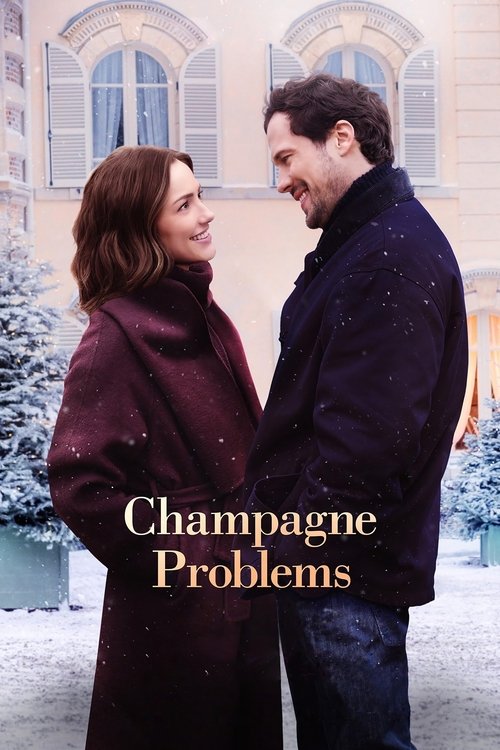
Champagne Problems
A sparkling holiday romance set among Paris bookshops and snow-dusted Champagne vineyards, where a deal-driven executive finds her ambition losing its bubbles, one glass and one honest confession at a time.
Champagne Problems

Champagne Problems

"Christmas in France is always a good idea."

18 November 2025 United States of America 99 min 6.1 (235)

Director: Mark Steven Johnson

Cast: Minka Kelly, Tom Wozniczka, Xavier Samuel, Flula Borg, Thibault de Montalembert

Comedy Romance Ambition versus fulfillment Honesty and integrity Heritage and tradition versus corporate takeover Trust in love Optimism and second chances

Overview

Champagne Problems is a Netflix holiday romantic comedy written and directed by Mark Steven Johnson, released on November 19, 2025. Ambitious executive Sydney Price (Minka Kelly) is sent to France to close the acquisition of Château Cassell, one of the country's best-loved champagne houses, before Christmas.

On her first night in Paris, Sydney meets Henri (Tom Wozniczka), a charming stranger, in a bookstore, and they hit it off right away. The next day she arrives at the château to sign the deal and finds out that Henri is the son of the company's founder, Hugo Cassell (Thibault de Montalembert).

From there, Sydney is caught between the deal she was sent to close and the man she has fallen for. The story moves from the Paris streets to the vineyards and cellars around Épernay and Reims, and she starts to wonder what her career has cost her.
Core Meaning

The film asks whether success measured by acquisitions can make up for a life with no personal meaning in it. Sydney's arc suggests that integrity and real connection matter more than winning the deal. Johnson roots the romance in the slow, traditional craft of champagne-making and argues for heritage, patience and honesty over corporate efficiency. In the end, the film treats telling the truth, even at a personal cost, as the thing that frees Sydney to follow a dream of her own.

Thematic DNA

Ambition versus fulfillment 30%
Honesty and integrity 25%
Heritage and tradition versus corporate takeover 20%
Trust in love 15%
Optimism and second chances 10%

Ambition versus fulfillment

Sydney comes to France focused only on closing the Château Cassell deal before Christmas. Her growing feelings for Henri and the Cassell family make her ask whether her career goals actually make her happy.

Honesty and integrity

The climax depends on Sydney telling Hugo the truth about the business plan and urging him not to sell, even though it costs her the job. The film presents honesty as the real romantic gesture.

Heritage and tradition versus corporate takeover

The family-owned champagne house, with its pruning, harvesting and riddling, stands for craft passed down through generations. The corporate acquisition threatens to flatten all of that.

Trust in love

When Henri learns why Sydney is really there, their relationship breaks down over trust. His apology at the bookstore where they met, and their reconciliation, show trust being rebuilt.

Optimism and second chances

Roberto's line that the glass only needs to be "refillable" sums up the film's hopeful outlook: setbacks such as losing a job can lead to a new start.

Character Analysis

Sydney Price

Minka Kelly

Archetype: Hero (driven careerist) Key Trait: Ambition

Motivation

At first, career success and closing the deal before Christmas. Later, integrity and love.

Character Arc

She starts as a single-minded executive whose job is to buy Château Cassell. By the end she tells Hugo the truth, loses her job and builds a new life with Henri.

Henri Cassell

Tom Wozniczka

Archetype: Romantic lead Key Trait: Charm

Motivation

Protecting his family's legacy and finding real love.

Character Arc

He is a charming stranger at a bookstore who turns out to be the founder's son. He feels betrayed when he learns why Sydney is there, then apologizes for not trusting her and reconciles with her.

All 4 characters and cast

Symbols & Motifs

Champagne

Meaning:

Stands for celebration, careful craft and tradition. It is also the product being bought and sold, so it links pleasure with commerce.

Context:

The film is built around the sale of Château Cassell and shows the real champagne-making process, which Johnson said helped ground the story.

The Paris bookstore

Meaning:

Stands for chance meetings, shared dreams and a slower, more personal way of living.

Context:

Sydney and Henri meet there on her first night in Paris and reconcile there near the end. The film closes with the couple opening a bookstore with a champagne bar.

The refillable glass

Meaning:

Stands for resilience and renewal: the idea that you can start again.

Context:

It comes from Roberto's line about the glass being half-empty or half-full.

Château Cassell

Meaning:

Stands for family legacy and the idea of home, set against corporate ownership.

Context:

It is the business at the center of the plot. It was filmed at real French châteaux, including Château Comtesse Lafond in Épernay and Château de Taissy.

Memorable Quotes

Doesn't matter if you're a glass half-empty or a glass half-full, all that matters is that the glass is refillable.
— Roberto

Context

Reviewers highlighted it as one of the best lines in the film. The search results did not give the exact scene.

Meaning

It puts the film's optimism into a champagne-flavored motto: what matters is being able to start over.

It's cozy in here. Too cozy.
— Otto

Context

A light comic moment. The search results did not give the exact scene.

Meaning

A comic line that plays on the film's romantic, holiday-cozy setting.

Philosophical Questions

Can personal success justify taking away someone else's legacy?

Sydney's deal would benefit her career at the Cassell family's expense. She decides that her integrity is worth more than her success.

Is honesty worth losing everything you have worked for?

Sydney tells Hugo the truth, loses her job, and the film rewards that choice with love and a new purpose.

What makes a life meaningful: achievement or connection?

The move from corporate executive to co-owner of a bookstore and champagne bar suggests that meaning comes from shared dreams, not status.

How It Ends

Alternative Interpretations

The ending is usually read as a straightforward romantic triumph: love wins over ambition. It can also be read as a critique of corporate culture, in which Sydney's real victory is saving a family business from being absorbed, and the romance is secondary. More skeptical viewers see the film as a comfort-food fantasy. Losing her job costs Sydney almost nothing because of the fairy-tale bookstore-and-champagne-bar ending, which makes the sacrifice feel smaller than it would in real life.

Full ending explanation

Cultural Impact

The film belongs to Netflix's yearly slate of holiday romantic comedies and follows the familiar pattern of an American career woman who finds love in a picturesque European setting. Its most distinctive element is the Champagne region itself: shooting on location in Épernay and Reims let it double as a showcase for French wine tourism, and several filming-location guides pointed out that viewers can visit the châteaux used. Critics mostly saw it as a typical entry in the genre. The Guardian's Adrian Horton lumped it in with Netflix's \"annual onslaught of forgettable festive films,\" but audiences still watched it in large numbers during the holiday season.

Audience Reception

Critics were mixed to negative. Reviews collected by Yahoo called the film \"boring\" and \"repetitive,\" and The Guardian said it \"lacks fizz,\" describing it as a \"mostly charmless romance.\" What's on Netflix was kinder and called it a \"solid\" Christmas rom-com led by Minka Kelly. Viewers praised the French locations, the holiday atmosphere, and Sean Amsing's Roberto, who reviewers said gets the best lines. The main criticism was that the story is predictable and follows the formula closely. The film holds a 6.0 rating on IMDb, which fits its reputation as pleasant but forgettable seasonal viewing.

Interesting Facts

  • The film was written and directed by Mark Steven Johnson.
  • It was shot entirely in France, with principal photography running from November to late December 2024.
  • Filming locations included Château Comtesse Lafond in Épernay and Château de Taissy in Taissy.
  • Night scenes on the Avenue de Champagne in Épernay were shot between 7 p.m. and 3 a.m.
  • Johnson described filming in Paris as "a dream" and said he wanted to capture everyday streets, small shops and a slower rhythm.
  • Johnson said that showing the real process of champagne-making (pruning, harvesting and riddling) helped root the film in a believable world.
  • It premiered on Netflix on November 19, 2025, as part of the streamer's holiday lineup.

Frequently Asked Questions

Explore More About This Movie

Dive deeper into specific aspects of the movie with our detailed analysis pages

Comments (0)

Leave a comment

No comments yet. Be the first to share your thoughts!

Similar Movies