Skip to content
Eternity
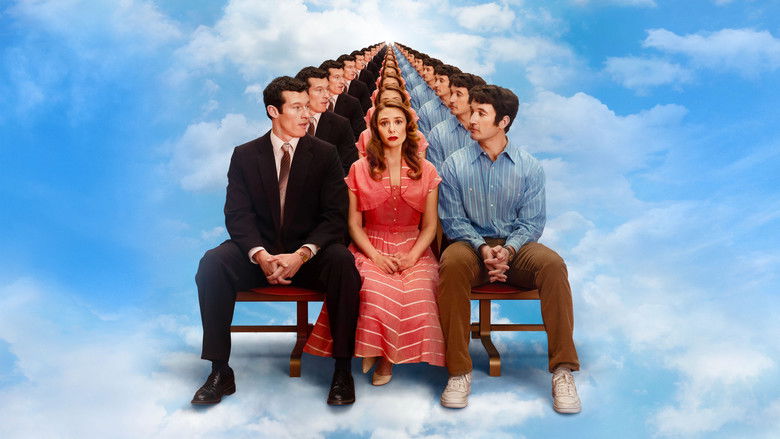
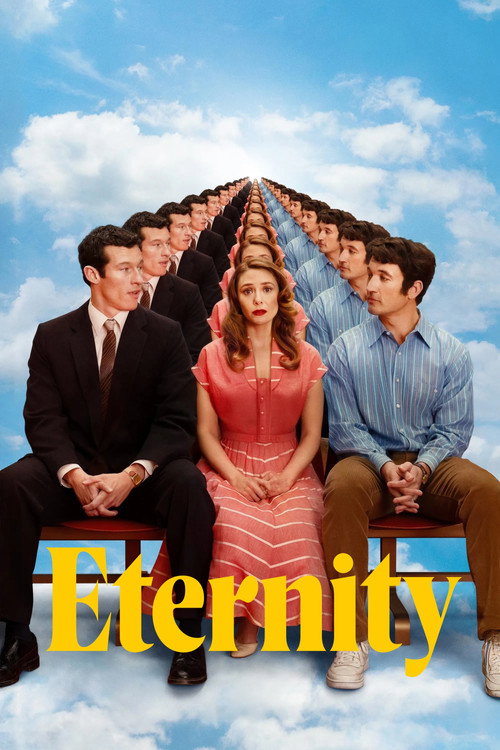
A pastel-drenched romantic fantasy glowing with melancholic tenderness, Eternity unfurls like a bittersweet vintage postcard drifting between the comfort of lived-in devotion and the haunting allure of unfinished youth.
Eternity

Eternity

"You can only choose one."

10 November 2025 United States of America 114 min 7.1 (793)

Director: David Freyne

Cast: Elizabeth Olsen, Miles Teller, Callum Turner, Da'Vine Joy Randolph, John Early

Drama Comedy Romance Fantasy vs. Lived Reality The Paradox of Choice and Permanence Grief, Unfinished Business, and Closure Agency and Selfhood in Relationships
Budget: $12,000,000
Box Office: $32,867,848

Overview

Eternity is a high-concept romantic comedy-drama written by Pat Cunnane and David Freyne, directed by Freyne, and released by A24. The story begins with Larry and Joan Cutler, an affectionate yet squabbling couple in their eighties who have been married for sixty-five years. Shortly after learning that Joan has received a terminal cancer diagnosis, Larry abruptly dies in an absurd accident at a family gathering.

Larry awakens decades younger on a vintage passenger train pulling into The Junction—a surreal, mid-century-styled transit station, grand hotel, and convention center where the recently deceased revert to the age at which they were happiest in life. Accompanied by designated Afterlife Coordinators, every newcomer is given exactly seven days to choose which themed afterlife paradise they wish to reside in forever, with no option to leave or switch once decided.

When Joan passes away shortly after and arrives at The Junction, she faces an unimaginable dilemma. Awaiting her are both Larry and Luke, Joan’s dashing first husband who was killed in the Korean War sixty-seven years earlier and has spent decades waiting at the station for her arrival. Suspended in timeless limbo, Joan must navigate an impossible crossroad: choose an eternity of idealized, preserved passion, or the rich, flawed, sixty-five-year tapestry of ordinary love.

Core Meaning

The director David Freyne and writer Pat Cunnane use the fantasy mechanics of the afterlife to examine the profound difference between romantic fantasy and lifelong commitment. The core message argues that true love is not an unblemished, static ideal frozen in the spark of first romance, but rather the cumulative weight of shared history—the compromises, griefs, inside jokes, and daily endurance that define a human life. Ultimately, the film posits that eternity is meaningless without the textures of impermanence and shared emotional growth.

Thematic DNA

Fantasy vs. Lived Reality 30%
The Paradox of Choice and Permanence 25%
Grief, Unfinished Business, and Closure 25%
Agency and Selfhood in Relationships 20%

Fantasy vs. Lived Reality

The central philosophical tension centers on Luke (an unresolved, flawless memory of young passion) versus Larry (the imperfect, companionable partner who shared sixty-five years of aging and sacrifice).

The Paradox of Choice and Permanence

The film explores how an infinite menu of custom-tailored paradises induces existential paralysis, illustrating how consumerist variety commodifies the soul’s desire for lasting meaning.

Grief, Unfinished Business, and Closure

The narrative examines the lingering scars of lives cut short by war and demonstrates how unresolved pasts haunt even the afterlife until intentional closure is reached.

Agency and Selfhood in Relationships

Depicts Joan’s journey from being an object of two men's romantic claims to an autonomous individual discovering what she herself truly desires.

Character Analysis

Joan Cutler

Elizabeth Olsen (older: Betty Buckley)

Archetype: The Central Decider / Everywoman Hero Key Trait: Empathy balanced with practical discernment

Motivation

Finding true peace without betraying either her heart or her lived memories.

Character Arc

Begins conflicted and overwhelmed by guilt and sentimentality; transforms into an assertive woman who embraces her full life history rather than escaping into idealized nostalgia.

Larry Cutler

Miles Teller (older: Barry Primus)

Archetype: The Devoted Companion / Neurotic Everyman Key Trait: Cantankerous loyalty and ordinary warmth

Motivation

Ensuring Joan's eternal happiness and remaining by her side.

Character Arc

Moves from possessive insecurity and panic over losing Joan to profound, selfless love willing to let her go if it brings her joy.

All 5 characters and cast

Symbols & Motifs

The Pretzel / Accidental Death

Meaning:

Serves as a recurring symbol of mortality’s unceremonious, mundane absurdity.

Context:

Larry's abrupt demise occurs while choking on a pretzel at a family gender reveal party, setting the afterlife journey in motion.

The Themed Worlds / Expo Booths

Meaning:

Satirizes modern consumerism and timeshare marketing applied to existential fulfillment.

Context:

Featured across the afterlife convention floor, showcasing custom eternal destinations like Smokers World, Man-Free World, Beach World, and Mountain World.

The Rolling Day/Night Curtains

Meaning:

Embodies the artificiality and constructed nature of the afterlife waystation.

Context:

Physical cloth drapes drop down inside The Junction to manually simulate sunsets and sunrises.

Squatting / Calisthenics

Meaning:

Symbolizes the lingering psychological muscle memory of elderly ailments juxtaposed against restored physical youth.

Context:

Larry and Joan repeatedly perform squats in their restored twenty-something bodies out of old-age habit.

The Train

Meaning:

Represents the irreversible transition of consciousness and the passage between terrestrial reality and the unknown.

Context:

Deceased souls arrive at The Junction aboard a vintage passenger locomotive.

Memorable Quotes

Love isn't just one happy moment, right? It's a million. And it's bickering in the car, and supporting someone when they need it, and it's growing together, and looking after each other.
— Joan Cutler

Context

Spoken during Joan's emotional contemplation at The Junction.

Meaning

Articulates the film's core theme that long-term, imperfect partnership outweighs static romantic ideals.

Maybe the beauty in life is that... is that things end. You know? Maybe that's what... this is all for.
— Joan Cutler

Context

Joan reflecting on the existential dread of picking a permanent paradise.

Meaning

Expresses Joan's realization that mortality and impermanence are what give love and human connection their value.

All 6 quotes

Philosophical Questions

Does love derive its meaning from mortality?

The film questions whether passion and devotion can retain their value if existence continues forever without stakes, loss, or consequence.

What defines a "soulmate": initial spark or endurance?

Explores whether our true partner represents who we were in our unformed youth, or the person we became through decades of shared hardship and growth.

Is customized paradise an illusion?

Investigates whether a static environment where every desire is instantaneously satisfied inevitably degenerates into a gilded prison.

Alternative Interpretations

The film invites multiple thematic readings:

Full ending explanation

Cultural Impact

Eternity arrived during a notable resurgence of original, high-concept mid-budget romantic comedies produced outside established intellectual property. Where streaming trends frequently relied on disposable formulas, A24’s distribution positioned the film alongside prestige romantic fantasies of the 1990s (Ghost, Defending Your Life, Truly Madly Deeply).

The film resonated culturally with discussions surrounding aging, multi-decade partnerships, and the modern paradox of dating and choice culture, which frequently promises limitless options at the expense of deep, lasting commitment.

Audience Reception

Eternity received generally positive reviews from critics and audiences, holding a 76% score on Rotten Tomatoes and a 61 on Metacritic. Praise was directed toward its inventive world-building, sharp script, and the strong chemistry between Elizabeth Olsen, Miles Teller, and Callum Turner.

Specific acclaim highlighted Da'Vine Joy Randolph and John Early’s comedic timing as afterlife coordinators, Olsen’s deeply emotional central performance, and the witty visual satire embedded in the convention hall design. Criticism centered on third-act pacing issues, perceived awkwardness in managing afterlife mechanics, and debates over whether turning heaven into a bureaucratic timeshare felt overly cynical or resolved too tidily.

Interesting Facts

  • Pat Cunnane’s original spec script for Eternity was featured on the prestigious 2022 Black List of Hollywood's best unproduced screenplays before being acquired and developed.
  • Screenwriter Pat Cunnane previously worked as a Senior Writer and Deputy Director of Messaging in the Obama White House before transitioning to screenwriting.
  • Veteran stage and screen icons Betty Buckley and Barry Primus play older Joan and Larry in the earthly opening act before Elizabeth Olsen and Miles Teller take over in the afterlife.
  • David Freyne cited classic afterlife romantic comedies—such as Michael Powell and Emeric Pressburger’s A Matter of Life and Death (1946) and Albert Brooks’ Defending Your Life (1991)—as primary narrative inspirations.
  • The rolling curtain rig representing sunrise and sunset inside the Terminal was constructed practically on soundstages to evoke 1960s theatrical artificiality rather than relying strictly on CGI.
  • Fresh off her Oscar win for The Holdovers, Da'Vine Joy Randolph joined the production specifically attracted to the blend of deadpan bureaucratic comedy and grounded emotional stakes.
  • Produced by Star Thrower Entertainment and Apple Original Films and distributed by A24, the film made its world premiere at the Toronto International Film Festival (TIFF) in September 2025 before a Thanksgiving theatrical rollout.

Easter Eggs

"Nazi-Free 1930s Weimar Germany" and "Man-Free World" booths

Background booths at the afterlife convention feature satirical advertisements poking fun at utopian fantasies, including an endlessly waitlisted Man-Free World on its 443rd expansion.

Homage to A Matter of Life and Death (1946)

The bureaucratic transition zone, the rigid rules against crossing eternal borders, and the courtroom-like gravity of love’s trials directly reference Powell & Pressburger's cinema classic.

Titanic Ending Subversion

Directly tackles the "Rose, Jack, and Cal/Husband" dilemma from James Cameron’s Titanic, explicitly addressing what happens when a woman survives decades beyond a tragic first romance.

"Smokers World" advertisement

A tongue-in-cheek background world featured in the expo with the tagline "Because cancer can’t kill you twice!".

Frequently Asked Questions

Explore More About This Movie

Dive deeper into specific aspects of the movie with our detailed analysis pages

Comments (0)

Leave a comment

No comments yet. Be the first to share your thoughts!

Similar Movies