
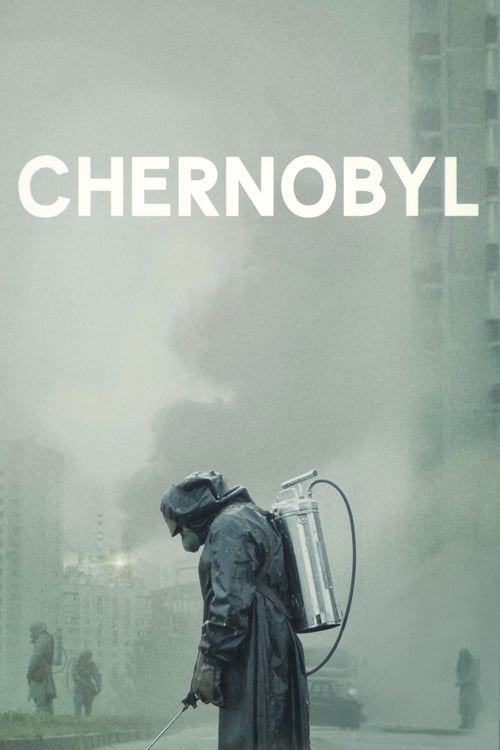
Chernobyl
A harrowing, atmospheric drama that unpacks a national tragedy, evoking a creeping dread that seeps into the soul like invisible radiation.
Chernobyl
Chernobyl

"What is the cost of lies?"

06 May 2019 — 03 June 2019 United Kingdom 1 season 5 episode Ended ⭐ 8.7 (7,175)
Cast: Jared Harris, Stellan Skarsgård, Emily Watson, Paul Ritter, Jessie Buckley
Drama
The Cost of Lies Humanity vs. The System The Nature of Truth The Unseen Horror

Chernobyl - Ending Explained

⚠️ Spoiler Analysis

The entire narrative of "Chernobyl" is structured around uncovering the ultimate truth of the disaster, a truth revealed in full only in the final episode. The series opens with the suicide of Valery Legasov two years to the day after the explosion, immediately framing the story as a tragedy and a mystery: why did this man, who helped save Europe, kill himself?

The central plot twist, which the series treats as a courtroom revelation, is that the Chernobyl reactor exploded not just because of operator error, but due to a critical, cost-cutting design flaw in the RBMK reactors known only to the state. The AZ-5 button, intended to trigger an emergency shutdown, had graphite tips on its control rods. Under the specific conditions of the safety test, pressing this failsafe button paradoxically created a massive power surge that acted as a detonator, blowing the reactor apart. This reveal is the story's climax, re-contextualizing the entire event. The operators, portrayed as arrogant and reckless, were put in an impossible situation by a state that built a faulty reactor and then kept its fatal flaw a secret.

Ulana Khomyuk's investigation throughout the series, interviewing the dying men in Moscow, is the narrative engine driving towards this revelation. The trial in the finale is not about justice—as the verdict is a foregone conclusion—but about Legasov's decision to publicly expose this hidden truth, a secret the KGB and the Soviet state are desperate to keep buried. His testimony ensures the flaw will be fixed in other reactors, but it also seals his fate. He is erased from Soviet history, his contribution denied, leading to the despair that causes his suicide. The final meaning, which becomes clear only at the end, is that Legasov's tapes, which we see him hiding at the start, are his final, desperate act to ensure the complete truth survives beyond his death, a truth that cost him everything.

Alternative Interpretations

While the series' central message about the cost of lies is quite direct, there are several layers of interpretation discussed by critics and viewers:

  • An Allegory for Climate Change: Many viewers and critics interpret the series as a powerful metaphor for the climate crisis. In this reading, the invisible, deadly radiation represents greenhouse gases, and the slow, denial-plagued response of the Soviet government mirrors the contemporary political inaction and corporate denial surrounding global warming. The scientists pleading with obstinate bureaucrats to accept an inconvenient truth becomes a direct parallel to climate scientists today.
  • A Critique of Technocratic Hubris: Beyond a critique of the Soviet system, the series can be seen as a warning against blind faith in technology without acknowledging its potential for catastrophe. The RBMK reactor was promoted as a triumph of Soviet engineering, so perfect it didn't even require a containment structure. The disaster serves as a brutal reminder that complex systems created by humans are inherently fallible and that human arrogance is often the most dangerous variable.
  • A Study in 'Hyperobjects': Some philosophical interpretations view the radiation in "Chernobyl" as a 'hyperobject'—a concept for things so massively distributed in time and space that they defy easy human comprehension (like climate change or nuclear materials). The series dramatizes humanity's struggle to grasp the scale and temporality of such an entity, which operates on a level beyond our normal perception and political structures. The disaster exposes the inadequacy of human systems to cope with the inhuman forces they unleash.