Chungking Express
A dream-pop visual poem of urban loneliness, where fleeting connections flicker like neon signs in the rain-soaked streets of Hong Kong, capturing the bittersweet ache of love and near misses.
Chungking Express
Chungking Express

重慶森林

"If my memory of her has an expiration date, let it be 10,000 years..."

14 July 1994 Hong Kong 103 min ⭐ 8.0 (2,021)
Director: Wong Kar-Wai
Cast: Brigitte Lin, Takeshi Kaneshiro, Tony Leung Chiu-wai, Faye Wong, Valerie Chow
Drama Comedy Romance
Loneliness and Alienation in Urban Spaces The Passage of Time and the Nature of Memory Love, Longing, and Missed Connections Identity and Transformation
Budget: $160,000

Chungking Express - Ending Explained

⚠️ Spoiler Analysis

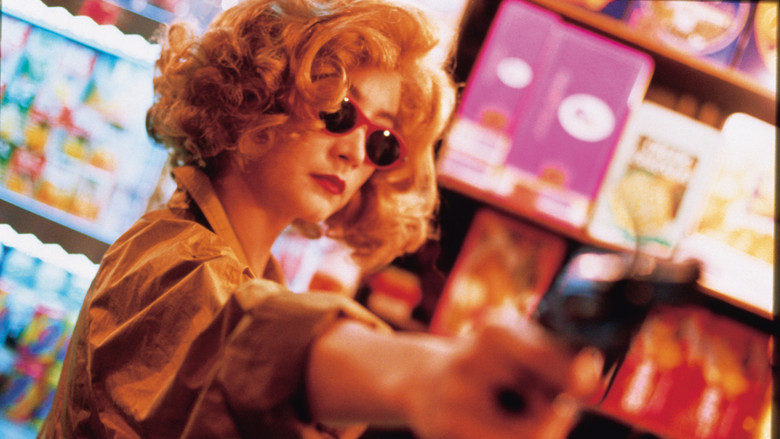
"Chungking Express" is structured as two distinct stories connected by the Midnight Express snack bar. In the first story, Cop 223's deadline of May 1st arrives, and his ex-girlfriend May does not return. He eats all 30 cans of pineapple, a symbolic act of consuming and purging his grief. That night, he meets the Woman in the Blonde Wig. They spend a platonic night in a hotel room where she sleeps off her exhaustion while he watches movies and eats. Before leaving, he cleans her shoes. This simple act of care is their only real connection. The next morning, she leaves and successfully enacts her revenge, killing the drug baron who betrayed her. She sends Cop 223 a pager message wishing him a happy birthday, a small, anonymous gesture that allows him to finally move on.

In the second story, Faye's secret intrusions into Cop 663's apartment become more bold. She cleans, redecorates, changes his CDs, and even adds more fish to his tank, subtly trying to erase the presence of his ex and insert herself into his life. Cop 663, deep in his stupor, is slow to notice, but eventually realizes his world is changing. When he finally discovers Faye in his apartment, he isn't angry but intrigued, and asks her on a date to a restaurant called California. Faye accepts but doesn't show up. Instead, she leaves him a hand-drawn boarding pass for California, dated one year later, and goes to the real California to pursue her own dreams. The ending takes place a year later. Faye, now a flight attendant, returns to Hong Kong and finds Cop 663 has bought the Midnight Express snack bar and is renovating it. He has saved her water-stained 'boarding pass.' In the final scene, she offers to draw him a new one, asking where he wants to go. He replies, "Wherever you want to take me," leaving their future hopeful and open-ended.

Alternative Interpretations

One popular interpretation views the two separate stories not just as parallel narratives, but as echoes or even alternative versions of the same core emotional journey. Both stories feature a heartbroken cop who encounters a transformative woman, suggesting a cyclical nature of love and loss in the city. The similarities and 'doubles' (two cops, two women named May, two blonde wigs) reinforce the idea that these are universal experiences of urban loneliness, simply refracted through different characters.

Another reading focuses heavily on the socio-political subtext of the 1997 Hong Kong handover. In this light, the characters' anxieties about expiration dates, identity, and uncertain futures are seen as metaphors for Hong Kong's collective anxiety during this period of transition. Faye's dream of California can be interpreted as a desire for a Western-style freedom and identity, reflecting the cultural crossroads at which Hong Kong found itself.

A more philosophical interpretation suggests the film is a commentary on the nature of reality and perception in a postmodern world. The characters often seem to be living in their own subjective realities—Cop 223 with his expiration dates, Cop 663 with his talking objects, and Faye literally 'dream-walking' into her crush's apartment. The film's disjointed, dreamlike visual style supports this reading, suggesting that objective reality is less important than the characters' internal, emotional landscapes.