Chungking Express
A dream-pop visual poem of urban loneliness, where fleeting connections flicker like neon signs in the rain-soaked streets of Hong Kong, capturing the bittersweet ache of love and near misses.
Chungking Express

Chungking Express

重慶森林

"If my memory of her has an expiration date, let it be 10,000 years..."

14 July 1994 Hong Kong 103 min ⭐ 8.0 (2,021)
Director: Wong Kar-Wai
Cast: Brigitte Lin, Takeshi Kaneshiro, Tony Leung Chiu-wai, Faye Wong, Valerie Chow
Drama Comedy Romance
Loneliness and Alienation in Urban Spaces The Passage of Time and the Nature of Memory Love, Longing, and Missed Connections Identity and Transformation
Budget: $160,000

Overview

"Chungking Express" is a critically acclaimed 1994 Hong Kong film directed by Wong Kar-wai. The film is presented in a diptych structure, telling two sequential, loosely connected stories about lonely, heartbroken policemen in the vibrant, chaotic landscape of Hong Kong. Both narratives explore themes of love, loss, memory, and the possibility of connection in a densely populated, yet isolating, urban environment.

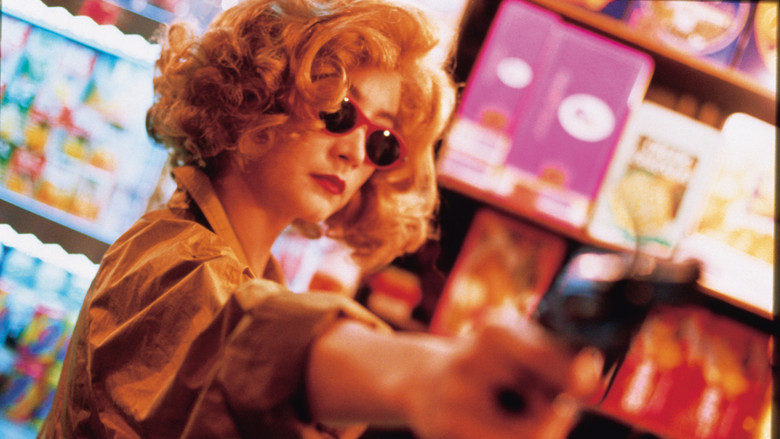
The first story follows He Qiwu, also known as Cop 223 (Takeshi Kaneshiro), who is obsessing over his recent breakup. He copes by buying a can of pineapple each day with a May 1st expiration date, a self-imposed deadline for his love to expire. His path crosses with a mysterious, stoic woman in a blonde wig (Brigitte Lin), a drug smuggler navigating a dangerous underworld after a deal goes wrong. Their encounter is a brief, poignant moment of shared solitude rather than a conventional romance.

The second story focuses on another officer, Cop 663 (Tony Leung Chiu-wai), who is mourning his breakup with a flight attendant. He is quietly noticed by Faye (Faye Wong), a quirky and dreamy snack bar worker who develops a secret crush on him. When his ex leaves a spare key to his apartment at the snack bar, Faye begins to let herself in, subtly altering his living space and, by extension, his life, forming an unusual and intimate connection without his initial knowledge.

Core Meaning

At its core, "Chungking Express" is a meditation on urban loneliness and the transient nature of human connection. Director Wong Kar-wai explores the paradox of feeling isolated in a hyperactive, densely populated city like Hong Kong. The film suggests that in the modern world, connections are often fleeting, coincidental, and defined by near misses and unspoken emotions. It delves into how individuals cope with heartbreak and longing, often by creating personal rituals and projecting their feelings onto inanimate objects. Ultimately, the film carries a message of quiet optimism, suggesting that even in the chaos of city life, the possibility for new connections and new beginnings is always present, often in the most unexpected ways.

Thematic DNA

Loneliness and Alienation in Urban Spaces 35%
The Passage of Time and the Nature of Memory 30%
Love, Longing, and Missed Connections 25%
Identity and Transformation 10%

Loneliness and Alienation in Urban Spaces

The film masterfully portrays the paradox of being alone in a crowd. Characters are frequently framed in isolation amidst the bustling, blurred crowds of Hong Kong, emphasizing their emotional disconnection from the vibrant city life around them. Wong Kar-wai uses the frenetic energy of locations like Chungking Mansions as a metaphor for Hong Kong itself—a place of immense activity where individuals still struggle to form meaningful bonds. This sense of alienation leads characters to seek companionship in unconventional ways, such as talking to inanimate objects.

The Passage of Time and the Nature of Memory

Time is a central, recurring motif. This is most evident in the first story with Cop 223's obsession with pineapple cans and their expiration dates, which serve as a metaphor for the finite nature of love and relationships. The film's unique visual style, particularly the use of step-printing (shooting at a lower frame rate), creates a sense of time being distorted—some moments feel sped up and chaotic, while others are slowed down, highlighting the subjective experience of memory and longing. The narrative suggests that memories, like canned goods, can have a shelf life.

Love, Longing, and Missed Connections

"Chungking Express" explores the nuances of unrequited love, heartbreak, and the yearning for connection. The two stories present different facets of romance: one based on a fleeting, almost accidental encounter, and the other on a secret, quirky courtship. The film is driven by missed possibilities and the idea that intimacy can be found in the smallest of moments, like sharing a physical space of just 0.01 cm apart. It's a film about the process of falling in and out of love, and the often-unspoken ways people express their affection and cope with its loss.

Identity and Transformation

The characters in the film are in a state of transition, grappling with their identities in the wake of emotional upheaval. The motif of doubles and parallels—two cops, two women named May, two women in blonde wigs—suggests a search for self and the interchangeability of lives in the city. Faye's dream of going to California represents a desire for escape and self-reinvention. The impending 1997 handover of Hong Kong from Britain to China provides a poignant subtext, reflecting the city's own uncertain and transitional identity during the period the film was made.

Character Analysis

He Qiwu (Cop 223)

Takeshi Kaneshiro

Archetype: The Lovelorn Wanderer
Key Trait: Hopeful Obsessiveness

Motivation

His primary motivation is to overcome the pain of his breakup with his girlfriend, May. He clings to the hope that she might come back, and when that fails, he desperately seeks a new connection to fill the void of his loneliness.

Character Arc

Cop 223 begins as a heartsick and obsessive young man, unable to accept his breakup. He creates a ritual with the pineapple cans to give his grief a tangible form and deadline. His brief, platonic encounter with the mysterious woman in the blonde wig helps him break out of his self-pity. By the end of his story, after consuming all 30 cans of pineapple, he appears to reach a point of acceptance, realizing that love, like everything else, has an expiration date, and he is ready to move on.

The Woman in the Blonde Wig

Brigitte Lin

Archetype: The Stoic Femme Fatale
Key Trait: Enigmatic Resilience

Motivation

Her motivation is survival. Betrayed by her boss, she is driven to navigate the treacherous criminal underworld of Hong Kong, reclaim her agency, and exact revenge.

Character Arc

This character remains enigmatic throughout her story. She operates in a dangerous criminal underworld, initially appearing cold and in control. After a smuggling operation fails and she is betrayed, she becomes a hunted figure. Her encounter with Cop 223 reveals a flicker of vulnerability beneath her tough exterior, as she allows herself a moment of rest in his company. Her arc culminates in her taking decisive, violent action to resolve her situation, after which she disappears, leaving only a birthday message for Cop 223, a small gesture of human connection.

Faye

Faye Wong

Archetype: The Manic Pixie Dream Girl
Key Trait: Whimsical Impulsiveness

Motivation

Faye is motivated by a mix of romantic infatuation with Cop 663 and a deep-seated desire for personal freedom and experience, symbolized by her dream of going to California. She wants to connect with him, but also to define herself on her own terms.

Character Arc

Faye starts as a quirky, daydreaming snack bar employee who develops a secret crush on Cop 663. Initially passive, she acts on her feelings in a highly unconventional way by 'invading' his apartment and becoming a part of his life without his knowledge. This act of 'dream-walking' into his world is her way of connecting. When he finally asks her on a real date, she stands him up and leaves for California to pursue her own dreams, demonstrating a desire for independence. A year later, she returns as a confident flight attendant, ready to engage with him on more equal terms, having completed her own journey of self-discovery.

Cop 663

Tony Leung Chiu-wai

Archetype: The Stoic Griever
Key Trait: Introspective Melancholy

Motivation

His motivation evolves from passively mourning his lost relationship to actively embracing the possibility of a new one. He is driven by a subconscious need to break free from his emotional inertia, a process that Faye's unusual actions catalyze.

Character Arc

Cop 663 is introduced as being in a state of quiet melancholy after his breakup, clinging to the memory of his ex. He is initially oblivious to the changes happening around him, both in his apartment and in Faye's feelings for him. As Faye secretly reorganizes his life, he slowly begins to emerge from his stupor, becoming more aware and open. Though their initial attempt at a date fails when she leaves, her actions have a profound effect on him. By the end, he has transformed, buying the snack bar and waiting for her, showing he has moved on from his past and is ready for a new future, wherever it may lead.

Symbols & Motifs

Canned Pineapples with Expiration Dates

Meaning:

The canned pineapples symbolize the finite nature of love and the process of grieving a relationship. For Cop 223, the May 1st expiration date represents a deadline for his love and hope to expire, a tangible way to measure and contain his heartbreak. His frantic search for these specific cans shows his struggle to accept that some things, including feelings, have a shelf life.

Context:

In the first story, after being broken up with on April 1st, Cop 223 buys a can of pineapple every day that expires on his birthday, May 1st. He vows that if his ex-girlfriend, May, doesn't return by then, their love will have expired along with the cans.

The Song "California Dreamin'"

Meaning:

The Mamas & The Papas' song represents Faye's yearning for escapism, change, and a different life. It symbolizes a dream of a place that is freer and less constricting than her current reality. Blasting the song loudly is her way of drowning out her thoughts and asserting her individuality in a monotonous job. It also reflects the cultural influence of the West in Hong Kong.

Context:

In the second story, Faye constantly plays "California Dreamin'" at full volume at the Midnight Express food stall where she works. The song becomes her anthem and is intrinsically linked to her character, foreshadowing her eventual decision to travel to California.

The Blonde Wig and Raincoat

Meaning:

Worn by the mysterious drug smuggler, the blonde wig, sunglasses, and raincoat serve as a disguise, symbolizing a hidden identity, detachment, and emotional armor. The raincoat, worn even when it's not raining, signifies her constant expectation of trouble or a "storm" in her dangerous line of work. These items create a barrier between her and the world, reflecting her isolation.

Context:

The Woman in the Blonde Wig (Brigitte Lin) wears this distinctive outfit throughout the first story. It makes her stand out visually while also obscuring her true self, embodying the film's theme of elusive identity in a sprawling city.

Inanimate Objects (Towels, Soap, Stuffed Animals)

Meaning:

Cop 663's habit of talking to objects in his apartment—a dripping towel he describes as crying, a bar of soap he says has lost weight—is a form of anthropomorphism that symbolizes his profound loneliness and inability to process his heartbreak directly. By projecting his feelings of sadness and abandonment onto these objects, he finds a way to cope with his grief without having to articulate it to another person.

Context:

After his breakup, Cop 663 is shown in his apartment having one-sided conversations with various household items. This occurs before and during the time Faye secretly begins to change things in his apartment, with the state of his objects reflecting his emotional state.

Airplanes and Flight Attendants

Meaning:

Airplanes and the flight attendant profession symbolize transience, departure, and the possibility of both escape and emotional distance. Cop 663's ex-girlfriend is a flight attendant, representing a love that was always in motion and ultimately departed. Faye's eventual decision to become a flight attendant signifies her own journey of self-discovery and a temporary departure, but with the promise of return, offering a more hopeful version of the theme.

Context:

Cop 663's relationship ends with a flight attendant. Later, after their near-romance, Faye leaves for a year and returns as a flight attendant herself, bringing the story full circle. Toy airplanes are also seen in Cop 663's apartment.

Memorable Quotes

If memories could be canned, would they also have expiry dates? If so, I hope they last for centuries.

— He Qiwu (Cop 223)

Context:

This is part of Cop 223's internal monologue as he explains his ritual of buying pineapple cans with a May 1st expiration date to cope with his breakup.

Meaning:

This quote encapsulates the film's central theme of time, memory, and loss. It reflects Cop 223's deep desire to hold onto his past love and his philosophical pondering on the transient nature of feelings and relationships, wishing that something as precious as memory could be preserved forever, unlike a simple can of pineapple.

Actually, really knowing someone doesn't mean anything. People change. A person may like pineapple today and something else tomorrow.

— The Woman in the Blonde Wig

Context:

The Woman in the Blonde Wig says this to Cop 223 in the bar after he tells her about his ex-girlfriend May and her love for pineapples.

Meaning:

This line speaks to the theme of transience and the unpredictable nature of desire. It's a cynical yet realistic observation that dismisses the idea of deep understanding in favor of accepting the constant state of flux in people's emotions and preferences. It also directly echoes Cop 223's personal dilemma concerning his ex-girlfriend, May, who loved pineapples.

The louder the better. Stops me from thinking.

— Faye

Context:

Faye says this to her cousin, the manager of the Midnight Express, when he complains about how loud she is playing her favorite song, "California Dreamin'".

Meaning:

This line perfectly captures Faye's character and the Gen X ennui that permeates the film. Her need for loud music is a form of escapism, a way to fill the silence and avoid confronting her thoughts and the monotony of her life. It's an active choice to live in the sensory moment rather than get lost in introspection.

Where do you want to go? / Wherever you want to take me.

— Faye and Cop 663

Context:

This is the final dialogue of the film. Faye, now a flight attendant, has returned to the snack bar. Cop 663 asks her to write him a new 'boarding pass,' and this is their exchange as she prepares to draw it for him.

Meaning:

This final exchange represents a hopeful, open-ended conclusion. Cop 663, who was once stuck in the past, now places his future in Faye's hands, signifying his complete trust and readiness for a new journey. It suggests that the destination is less important than the companionship. It's a leap of faith for both characters, embracing an unknown future together.

Philosophical Questions

Is there a shelf life on love and memory?

The film directly confronts this question through Cop 223's obsession with pineapple cans that expire on May 1st. He uses this tangible deadline as a metaphor for the life of his relationship, wondering if feelings, like consumer goods, are inherently perishable. The recurring motif of expiration dates forces the audience to consider whether memories fade and if love has a natural endpoint, or if, as Cop 223 hopes, some things can be preserved for '10,000 years.'

In a hyper-connected world, are we more isolated than ever?

"Chungking Express" explores the paradox of modern urban life where physical proximity does not equate to emotional connection. Characters are constantly brushing past each other in crowded spaces, yet remain profoundly lonely. They struggle to communicate directly, instead resorting to internal monologues, talking to inanimate objects, or interacting with another person's personal space in their absence. The film questions whether the overwhelming nature of city life fosters alienation, making true connection a rare and fleeting event.

What defines a meaningful connection?

The film challenges conventional notions of romance by presenting two very different, unconventional relationships. The first is a brief, non-physical encounter between two strangers who find solace in each other's quiet company for one night. The second is a one-sided, voyeuristic courtship that blossoms into a potential romance. By focusing on these fleeting and quirky interactions, the film suggests that meaningful connections aren't always defined by longevity or traditional courtship, but by moments of shared understanding, vulnerability, and the subtle impact one person can have on another's life.

Alternative Interpretations

One popular interpretation views the two separate stories not just as parallel narratives, but as echoes or even alternative versions of the same core emotional journey. Both stories feature a heartbroken cop who encounters a transformative woman, suggesting a cyclical nature of love and loss in the city. The similarities and 'doubles' (two cops, two women named May, two blonde wigs) reinforce the idea that these are universal experiences of urban loneliness, simply refracted through different characters.

Another reading focuses heavily on the socio-political subtext of the 1997 Hong Kong handover. In this light, the characters' anxieties about expiration dates, identity, and uncertain futures are seen as metaphors for Hong Kong's collective anxiety during this period of transition. Faye's dream of California can be interpreted as a desire for a Western-style freedom and identity, reflecting the cultural crossroads at which Hong Kong found itself.

A more philosophical interpretation suggests the film is a commentary on the nature of reality and perception in a postmodern world. The characters often seem to be living in their own subjective realities—Cop 223 with his expiration dates, Cop 663 with his talking objects, and Faye literally 'dream-walking' into her crush's apartment. The film's disjointed, dreamlike visual style supports this reading, suggesting that objective reality is less important than the characters' internal, emotional landscapes.

Cultural Impact

"Chungking Express" was released in 1994, a period of significant anxiety and transition for Hong Kong, with the impending 1997 handover to China looming. The film captures this sense of uncertainty and fleeting identity, with its themes of expiration dates and change resonating with the historical context. It is considered a quintessential work of the Hong Kong New Wave.

Its influence on cinema has been profound. Wong Kar-wai's collaboration with cinematographer Christopher Doyle resulted in a groundbreaking visual style, characterized by handheld camerawork, step-printing, neon-saturated colors, and a kinetic, MTV-esque energy. This aesthetic has inspired countless filmmakers, including Barry Jenkins, who cited the film as a major influence on his Oscar-winning movie "Moonlight". The film also helped to popularize its soundtrack, particularly Faye Wong's cover of The Cranberries' "Dreams" and The Mamas & the Papas' "California Dreamin'".

Critically acclaimed, "Chungking Express" garnered numerous awards and established Wong Kar-wai as a major international auteur. While some audiences were initially puzzled by its unconventional structure, it has since become a beloved cult classic, celebrated for its unique mood, emotional depth, and its poignant, dreamlike love letter to 1990s Hong Kong. It redefined cinematic storytelling, proving that a film's substance could be found in its style, mood, and exploration of internal emotional landscapes rather than a conventional plot.

Audience Reception

Audience reception for "Chungking Express" has evolved since its 1994 release. Initially, some audiences, particularly those accustomed to mainstream Hong Kong action films and comedies, were bewildered by its unconventional narrative structure and arthouse sensibilities. However, among cinephiles and international audiences, it was quickly embraced as a masterpiece. The film is praised for its incredible vibe, unique visual style, and its evocative portrayal of loneliness and love in a bustling city. Many viewers connect deeply with its mood and the relatable feelings of heartbreak and longing. The soundtrack, especially the use of "California Dreamin'," is frequently cited as a highlight that perfectly captures the film's whimsical and melancholic tone.

Criticism of the film tends to focus on its perceived lack of a strong plot, with some finding the narrative frivolous or meandering. The two-story structure can feel disjointed to some, and the characters' quirky behaviors can be interpreted as style over substance. Despite these criticisms, the overall verdict is overwhelmingly positive, with the film achieving a passionate cult following and being widely regarded as one of the most iconic films of the 1990s.

Interesting Facts

  • The film was shot very quickly, in just 23 days, during a two-month break Wong Kar-wai took from the difficult production of his larger epic, "Ashes of Time".
  • The screenplay was not finished when filming began; Wong Kar-wai wrote scenes by day and shot them at night, contributing to the film's spontaneous and improvisational feel. He reportedly wrote the entire second story in a single day.
  • The apartment of Cop 663 was actually the real-life apartment of cinematographer Christopher Doyle at the time of filming.
  • Quentin Tarantino was a huge champion of the film and arranged for its distribution in North America through his Rolling Thunder Pictures company, which significantly boosted its international cult status.
  • A third story, about a love-sick hitman, was originally planned for the film. Wong felt it would make the movie too long and instead developed it into his next feature, "Fallen Angels" (1995).
  • The film's title, "Chungking Express," refers to two key locations: the labyrinthine Chungking Mansions in Tsim Sha Tsui, a central setting for the first story, and the Midnight Express food stand, where much of the second story unfolds.
  • The frequent use of The Mamas & the Papas' "California Dreamin'" is credited with helping to introduce dream pop music to the Hong Kong market.
  • Upon its initial release in some markets, audiences were bewildered by the unconventional narrative, with reports of people walking out or even throwing things at the screen in Korea.

⚠️ Spoiler Analysis

Click to reveal detailed analysis with spoilers

Frequently Asked Questions

Explore More About This Movie

Dive deeper into specific aspects of the movie with our detailed analysis pages

Comments (0)

Leave a comment

No comments yet. Be the first to share your thoughts!