At its core, "Cinema Paradiso" is a heartfelt love letter to the magic of cinema and its power to shape our lives, memories, and dreams. Director Giuseppe Tornatore explores the idea that films are not just entertainment, but a collective experience that unites communities and provides a lens through which we understand the world and our own emotions. The film carries a profound message about the bittersweet nature of nostalgia, the passage of time, and the sacrifices we make for our ambitions. It suggests that while we must move forward and pursue our destinies, the memories of our past, and the people who shaped us, remain an indelible part of who we are. Alfredo's final gift to Salvatore encapsulates this, showing that even the moments we thought were lost can be recovered and cherished.
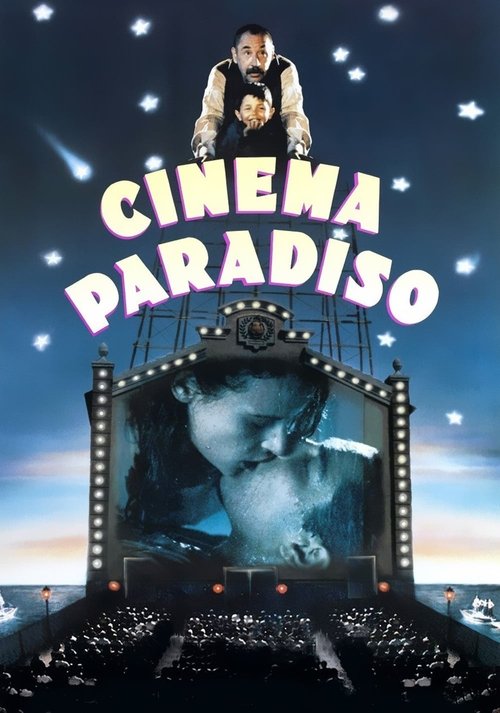
Nuovo Cinema Paradiso
"An enchanted village. A wonderful friendship. Star-crossed lovers. And the magic of the movies."
Director: Giuseppe Tornatore
Cast: Philippe Noiret, Jacques Perrin, Marco Leonardi, Salvatore Cascio, Agnese Nano
Cinema Paradiso — Symbolism & Philosophy
Symbols & Motifs
The Cinema Paradiso Theater
The theater symbolizes the heart of the community, a sanctuary, and a microcosm of life itself. It represents a magical space where dreams are projected and shared. Its eventual decay and demolition symbolize the inevitable passage of time, the loss of innocence, and the changing nature of community in the modern world.
The theater is the central location for the majority of the film. We see it as a bustling community hub, a place of censorship by the local priest, the site of the tragic fire that blinds Alfredo, and finally as a ruin being demolished upon Salvatore's return.
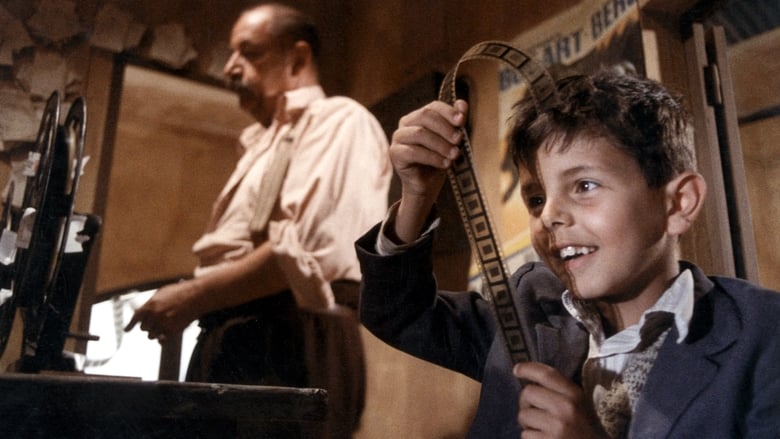
Censored Film Strips (The Kissing Montage)
The strips of film containing kisses, cut by the priest and collected by Alfredo, symbolize forbidden passion, innocence, and the pure magic of cinema that transcends censorship. Alfredo's final gift to Salvatore—a montage of all the censored kisses—represents a lifetime of preserved love and passion, a final lesson that love and art endure. It is a deeply personal and profound symbol of his love for both Totò and cinema.
Throughout Totò's childhood, the village priest censors all kissing scenes from the movies. Alfredo saves these snippets. The film's iconic final scene shows the adult Salvatore watching the reel Alfredo left for him, a seamless montage of every kiss that was denied to the audience of his youth.
The Town Square
The piazza, or town square, represents the public stage of village life, the space just outside the dream world of the cinema. It's a place of social interaction, observation, and real-world events that contrast with the cinematic fantasies inside the theater. The recurring character who shouts "The square is mine!" emphasizes it as a contested public space.
The square is prominently featured throughout the film, located directly in front of the Cinema Paradiso. It's where Alfredo projects a film for the crowd who couldn't get in, where Totò waits for Elena, and where Salvatore observes the changes in his hometown upon his return.
Philosophical Questions
What is the relationship between memory and reality?
The film is told almost entirely through flashback, presenting Salvatore's past through the warm, golden filter of nostalgia. This raises the question of how accurately we remember our past. Is Salvatore's childhood as idyllic as he recalls, or has his memory, shaped by the cinematic fantasies he grew up with, romanticized it? The film suggests that the emotional truth of our memories might be more important than their factual accuracy.
Is it necessary to sever ties with the past to achieve one's full potential?
Alfredo's central advice to Salvatore is to leave his hometown and never look back, arguing that nostalgia is a trap. The film explores the consequences of this advice: Salvatore becomes a great success but is also emotionally isolated and seemingly unable to form lasting relationships. This prompts the question of whether complete separation from one's roots is a prerequisite for success or a recipe for a hollow life.
How does art (specifically cinema) shape our understanding of life and love?
Salvatore learns about the world, and especially about love, through the movies he watches. The censored kisses represent a sanitized, incomplete version of love, which Alfredo's final gift 'completes'. The film constantly questions whether cinema provides a roadmap for life or an unrealistic fantasy that reality can never match, as encapsulated in Alfredo's line, "Life isn't like in the movies. Life... is much harder."
Core Meaning
Explore More About This Movie
Dive deeper into specific aspects of the movie with our detailed analysis pages