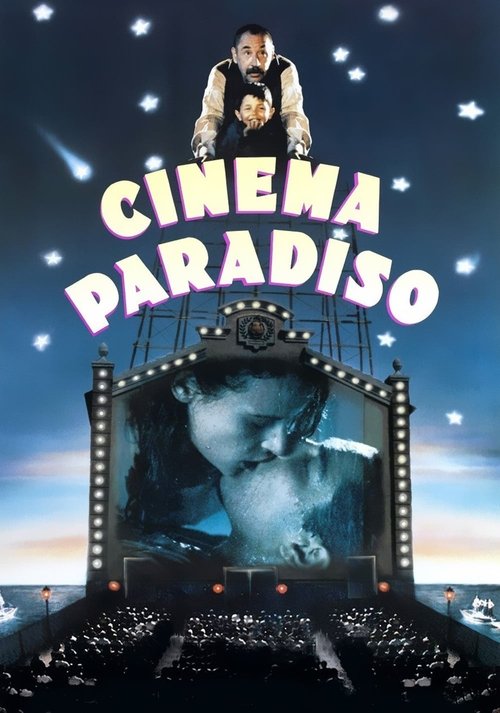
Cinema Paradiso
Nuovo Cinema Paradiso
"An enchanted village. A wonderful friendship. Star-crossed lovers. And the magic of the movies."
Overview
"Cinema Paradiso" tells the story of Salvatore Di Vita, a successful film director in Rome. Upon hearing of the death of his old friend Alfredo, the projectionist from his childhood movie theater, Salvatore is flooded with memories of his youth in the small Sicilian village of Giancaldo. The film then flashes back to his childhood as a mischievous boy nicknamed 'Totò'.
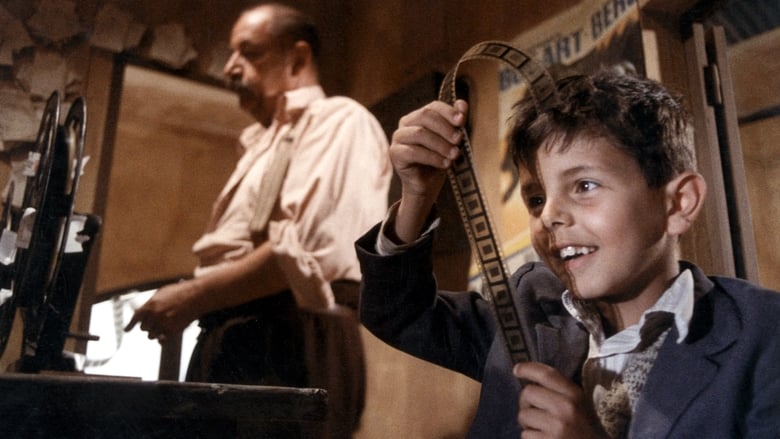
Fascinated by the movies, Totò forms a deep, father-son-like bond with Alfredo, who initially tries to keep the boy out of the projection booth but eventually succumbs to his persistent charm. Alfredo teaches Totò about life, love, and the art of film projection. The Cinema Paradiso theater itself is the heart of the village, a place where the community gathers to laugh, cry, and escape the hardships of post-WWII life. The story follows Totò through his adolescence, his first love with the beautiful Elena, and the pivotal moments that lead him to leave his village to pursue his dream of becoming a filmmaker, guided by Alfredo's poignant advice.

Core Meaning
At its core, "Cinema Paradiso" is a heartfelt love letter to the magic of cinema and its power to shape our lives, memories, and dreams. Director Giuseppe Tornatore explores the idea that films are not just entertainment, but a collective experience that unites communities and provides a lens through which we understand the world and our own emotions. The film carries a profound message about the bittersweet nature of nostalgia, the passage of time, and the sacrifices we make for our ambitions. It suggests that while we must move forward and pursue our destinies, the memories of our past, and the people who shaped us, remain an indelible part of who we are. Alfredo's final gift to Salvatore encapsulates this, showing that even the moments we thought were lost can be recovered and cherished.
Thematic DNA
The Power and Magic of Cinema
Cinema is portrayed as a central, transformative force in the lives of the villagers. For the young Totò, it is a source of wonder and a gateway to a world beyond his small town. The movie theater, the "Cinema Paradiso," is the heart of the community, a place of shared joy, sorrow, and escape. The film celebrates how movies can shape our perceptions of life, love, and reality, with Alfredo often dispensing wisdom through quotes from classic films.
Nostalgia and Memory
The film's entire structure is built on nostalgia, framed by the adult Salvatore's recollections of his past. Tornatore masterfully creates a nostalgic atmosphere, evoking a sense of longing for a bygone era and the innocence of childhood. The narrative explores the idea that our memories, while perhaps idealized, are fundamental to our identity. Salvatore's return to his village forces him to confront the gap between his memories and the reality of time's passage.
Friendship and Mentorship
The relationship between the young, fatherless Totò and the projectionist Alfredo is the emotional core of the film. Alfredo becomes a mentor and a father figure to Totò, nurturing his passion for film while teaching him crucial life lessons. Their bond highlights the profound impact a mentor can have on a young person's life, culminating in Alfredo's selfless act of pushing Salvatore to leave the village to fulfill his potential, even at the cost of their connection.
Love and Loss
"Cinema Paradiso" explores love in its many forms: the paternal love between Alfredo and Totò, the community's love for its cinema, and Totò's passionate first love for Elena. The theme of loss is intrinsically linked to love—Totò loses his father, his first love, and ultimately, his connection to his hometown. The film poignantly captures the bittersweet pain of these losses and the way they shape Salvatore's adult life.
Character Analysis
Salvatore 'Totò' Di Vita
Salvatore Cascio (child), Marco Leonardi (teen), Jacques Perrin (adult)
Motivation
Initially, his motivation is a pure, childlike fascination with the magic of movies. As he grows, this evolves into a desire to create that magic himself, fueled by his love for Elena and Alfredo's encouragement to pursue a bigger life than their small town can offer.
Character Arc
Salvatore's journey is a classic coming-of-age story. He begins as a curious, mischievous, and cinema-obsessed boy in a small Sicilian village. Under Alfredo's mentorship, his passion for film solidifies into a life path. He experiences the joy of first love and the pain of heartbreak. Pushed by Alfredo to leave his roots behind, he transforms into a successful but emotionally distant filmmaker. His return for Alfredo's funeral forces him to reconnect with his past, leading to an emotional catharsis and a deeper understanding of the sacrifices that shaped him.
Alfredo
Philippe Noiret
Motivation
Alfredo's primary motivation is his deep, paternal love for Totò. Having spent his life in the projection booth, he wants more for his protégé. He wants Salvatore to experience the world and achieve a level of success he never could, even if it requires personal sacrifice and painful decisions.
Character Arc
Alfredo starts as a somewhat gruff, solitary projectionist who is possessive of his domain. His relationship with Totò softens him, and he embraces the role of a surrogate father. After a fire blinds him, he becomes dependent on Totò, yet his wisdom deepens. His arc culminates in an act of profound, selfless love: he intentionally severs Totò's ties to the village and his first love to ensure the boy follows his dream, believing that nostalgia and attachment would hold him back.
Elena Mendola
Agnese Nano
Motivation
Her motivation is to reciprocate Salvatore's love, but she is constrained by her family's social status and patriarchal control. She ultimately yields to the forces separating them, whether it be her father's disapproval or, as revealed in the director's cut, Alfredo's intervention.
Character Arc
Elena is introduced as the beautiful daughter of a wealthy banker and becomes the object of teenage Totò's intense affection. Their romance is passionate but brief, seemingly ended by her father's disapproval and her family moving away. In the theatrical version, she represents the idealized, lost love of youth. The director's cut expands her arc, revealing she tried to stay in touch and that Alfredo hid her message, adding a layer of tragic depth to her character as she too lived a life haunted by their separation.
Symbols & Motifs
The Cinema Paradiso Theater
The theater symbolizes the heart of the community, a sanctuary, and a microcosm of life itself. It represents a magical space where dreams are projected and shared. Its eventual decay and demolition symbolize the inevitable passage of time, the loss of innocence, and the changing nature of community in the modern world.
The theater is the central location for the majority of the film. We see it as a bustling community hub, a place of censorship by the local priest, the site of the tragic fire that blinds Alfredo, and finally as a ruin being demolished upon Salvatore's return.
Censored Film Strips (The Kissing Montage)
The strips of film containing kisses, cut by the priest and collected by Alfredo, symbolize forbidden passion, innocence, and the pure magic of cinema that transcends censorship. Alfredo's final gift to Salvatore—a montage of all the censored kisses—represents a lifetime of preserved love and passion, a final lesson that love and art endure. It is a deeply personal and profound symbol of his love for both Totò and cinema.
Throughout Totò's childhood, the village priest censors all kissing scenes from the movies. Alfredo saves these snippets. The film's iconic final scene shows the adult Salvatore watching the reel Alfredo left for him, a seamless montage of every kiss that was denied to the audience of his youth.
The Town Square
The piazza, or town square, represents the public stage of village life, the space just outside the dream world of the cinema. It's a place of social interaction, observation, and real-world events that contrast with the cinematic fantasies inside the theater. The recurring character who shouts "The square is mine!" emphasizes it as a contested public space.
The square is prominently featured throughout the film, located directly in front of the Cinema Paradiso. It's where Alfredo projects a film for the crowd who couldn't get in, where Totò waits for Elena, and where Salvatore observes the changes in his hometown upon his return.
Memorable Quotes
Whatever you end up doing, love it. The way you loved the projection booth when you were a little squirt.
— Alfredo
Context:
Alfredo gives this advice to Salvatore as he is growing up, recognizing the boy's deep-seated love for film and wanting to ensure he carries that passion into his adult life and career.
Meaning:
This quote encapsulates Alfredo's core advice to Salvatore. It's a simple yet profound message about the importance of passion in one's life and work. It connects Salvatore's future success to the pure, unadulterated love he had for cinema as a child, urging him never to lose that fundamental passion.
Life isn't like in the movies. Life... is much harder.
— Alfredo
Context:
Spoken to a teenaged Salvatore, this line is Alfredo's attempt to ground the boy's romantic worldview. Totò asks if a famous actor said the line, but Alfredo claims it as his own, emphasizing it as a piece of hard-won, personal wisdom.
Meaning:
This is a pivotal moment of realism from Alfredo, contrasting the idealized narratives on screen with the complexities and hardships of reality. It's a crucial lesson for Salvatore, who has learned about the world primarily through films. Alfredo is preparing him for the disappointments and difficulties that lie outside the cinema's darkness.
Don't come back. Don't think about us. Don't look back. Don't write. Don't give in to nostalgia. Forget us all.
— Alfredo
Context:
Alfredo says this to Salvatore at the train station as Salvatore is leaving Giancaldo for good after completing his military service. It's a tearful, powerful farewell that defines the next 30 years of Salvatore's life.
Meaning:
This is Alfredo's painful but necessary command to Salvatore as he leaves for Rome. He understands that for Salvatore to truly succeed, he must make a clean break from the past. Nostalgia, in Alfredo's view, is a trap that will prevent him from fully embracing his future. It is the ultimate sacrifice of their friendship for the sake of Salvatore's dream.
Once upon a time, a king gave a feast... A soldier, who was standing guard, saw the king's daughter... he immediately fell in love with her... she said to the soldier: 'If you can wait 100 days and 100 nights under my balcony, then at the end of it, I shall be yours.'... And on the 99th night, the soldier stood up, took his chair, and went away.
— Alfredo
Context:
Alfredo tells this story to a teenage Salvatore who is pining for Elena, waiting for her to acknowledge him. The story is a complex piece of advice about the nature of love and waiting.
Meaning:
This story, told by Alfredo, is an allegory for love, sacrifice, and perhaps the fear of ultimate disappointment. Its ambiguous meaning has been widely debated: did the soldier leave to save the princess from having to keep her promise, or did he leave because he feared that after 100 days of devotion, the reality of being with her could never live up to the dream? It's a parable that haunts Salvatore's own love story.
Philosophical Questions
What is the relationship between memory and reality?
The film is told almost entirely through flashback, presenting Salvatore's past through the warm, golden filter of nostalgia. This raises the question of how accurately we remember our past. Is Salvatore's childhood as idyllic as he recalls, or has his memory, shaped by the cinematic fantasies he grew up with, romanticized it? The film suggests that the emotional truth of our memories might be more important than their factual accuracy.
Is it necessary to sever ties with the past to achieve one's full potential?
Alfredo's central advice to Salvatore is to leave his hometown and never look back, arguing that nostalgia is a trap. The film explores the consequences of this advice: Salvatore becomes a great success but is also emotionally isolated and seemingly unable to form lasting relationships. This prompts the question of whether complete separation from one's roots is a prerequisite for success or a recipe for a hollow life.
How does art (specifically cinema) shape our understanding of life and love?
Salvatore learns about the world, and especially about love, through the movies he watches. The censored kisses represent a sanitized, incomplete version of love, which Alfredo's final gift 'completes'. The film constantly questions whether cinema provides a roadmap for life or an unrealistic fantasy that reality can never match, as encapsulated in Alfredo's line, "Life isn't like in the movies. Life... is much harder."
Alternative Interpretations
The most significant alternative interpretation of "Cinema Paradiso" comes from the director's cut (2002), which adds nearly an hour of footage and fundamentally changes the narrative's meaning. In the theatrical version, Alfredo is a purely benevolent mentor whose advice to Salvatore is a painful but necessary sacrifice for the boy's future. The ending is a bittersweet reconciliation with the past.
However, the director's cut reveals that Alfredo was directly responsible for Salvatore and Elena's separation. He convinced Elena to leave Salvatore, believing she would stand in the way of his destiny, and never told Salvatore she had left a note for him. This re-frames Alfredo's character as more manipulative, playing God with Salvatore's life. The reunion between the adult Salvatore and Elena, and their brief affair, demystifies the idealized romance, making the film less a story of pure nostalgia and more a tragic exploration of how one man's choices irrevocably altered the course of two lives. This version suggests that Salvatore's success came at the cost of his personal happiness, a price orchestrated by his own mentor.
Some academic readings have also interpreted the film through a postmodern lens, viewing it as a satire that ironically deconstructs national myths and cultural ideals. Another interpretation sees the film as a critique of the very nostalgia it seems to celebrate, suggesting that living in the past, or through the lens of cinema, ultimately leads to an unfulfilled life.
Cultural Impact
"Cinema Paradiso" was met with widespread critical acclaim upon its international release, winning the Grand Prix at the 1989 Cannes Film Festival and the Academy Award for Best Foreign Language Film in 1990. This success was instrumental in reviving global interest in Italian cinema after a period of relative decline. The film struck a chord with audiences worldwide for its universal themes of nostalgia, love, and the magic of movies, becoming one of the highest-grossing foreign films of its time.
The film's influence extends beyond cinema; it has become a cultural touchstone for cinephiles everywhere, a celebration of the communal experience of watching films in a theater, a feeling that has become even more poignant in the age of streaming. Ennio Morricone's score is iconic and instantly recognizable, becoming synonymous with cinematic nostalgia. The movie's depiction of a changing rural Italy also served as a reflection of the country's social transformations after World War II. Decades after its release, "Cinema Paradiso" is consistently cited as one of the greatest films ever made and remains a beloved classic, cherished for its emotional depth and its profound homage to the art form it depicts.
Audience Reception
Audiences have overwhelmingly adored "Cinema Paradiso" since its release, and it is widely regarded as a beloved classic. Viewers consistently praise its emotional power, the heartwarming friendship between Totò and Alfredo, and its deeply felt nostalgia. Ennio Morricone's beautiful and evocative score is frequently singled out as one of the greatest film soundtracks of all time, perfectly enhancing the movie's sentimental tone. The final scene, featuring the montage of censored kisses, is considered one of cinema's most moving and perfect endings, often leaving viewers in tears.
Criticism is sparse, but some viewers find the film overly sentimental or emotionally manipulative. The primary point of contention among fans is the difference between the theatrical version and the director's cut. Many who fell in love with the original, more ambiguous ending feel that the extended version over-explains the central romance and tarnishes the character of Alfredo, making his actions cruel rather than purely selfless.
Interesting Facts
- The film was shot in director Giuseppe Tornatore's hometown of Bagheria, Sicily, and the town square is Piazza Umberto I in Palazzo Adriano. The 'Cinema Paradiso' building was constructed for the film and demolished after shooting.
- The film's international success is credited with helping to revitalize the Italian film industry in the late 1980s and early 1990s.
- Philippe Noiret, the French actor who played Alfredo, spoke all his lines in French and was later dubbed into Italian by actor Vittorio Di Prima. In the French release, Noiret dubbed his own voice.
- The film has three different versions: the original 155-minute Italian cut, the 124-minute internationally released version that won the Oscar, and a 173-minute director's cut released in 2002 which significantly alters the story.
- The character of Alfredo was inspired by Tornatore's friend, photographer Mimmo Pintacuda, who introduced the young director to the world of filmmaking.
- The iconic final 'kissing montage' was featured in an episode of The Simpsons, "Stealing First Base," which also used Ennio Morricone's "Love Theme."
- Director Giuseppe Tornatore makes a cameo as the projectionist operating the machine when the adult Salvatore watches Alfredo's final gift.
Easter Eggs
When the adult Salvatore returns to his childhood room, a poster for the Federico Fellini film "The White Sheik" (1952) is visible on the wall.
This is a nod to a classic of Italian cinema. More significantly, the actor who played the priest, Father Adelfio, in "Cinema Paradiso" was Leopoldo Trieste, who also starred in "The White Sheik." It's a subtle tribute to both Italian film history and an actor within the film itself.
⚠️ Spoiler Analysis
Click to reveal detailed analysis with spoilers
Frequently Asked Questions
Explore More About This Movie
Dive deeper into specific aspects of the movie with our detailed analysis pages
Comments (0)
No comments yet. Be the first to share your thoughts!