"True Blind Love"
City Lights - Symbolism & Philosophy
Symbols & Motifs
Flowers
The flowers symbolize purity, beauty, love, and the fragile connection between The Tramp and the girl. They represent the simple, natural beauty that stands in contrast to the cold, indifferent city.
The Tramp first meets the girl when he buys a flower from her. He cherishes the flower she gives him, carrying it with him as a symbol of his love. At the end, it is through her act of giving him a flower that she finally recognizes him.
Blindness
Blindness in the film is a metaphor for the inability to see the true nature of people and situations. While the flower girl is literally blind, other characters are metaphorically blind to qualities like kindness and integrity.
The flower girl cannot see that The Tramp is poor. The millionaire is "blind" to his friendship with The Tramp when he is sober. The film suggests that true vision comes from the heart, not the eyes.
The Statue of 'Peace and Prosperity'
The monument unveiled at the beginning of the film symbolizes the hypocrisy and hollowness of civic pride and the indifference of society towards the poor.
The film opens with the unveiling of this grand statue, only to reveal The Tramp sleeping in its lap. This immediately establishes him as an outcast and satirizes the empty promises of a society that erects monuments to prosperity while ignoring the poverty at its feet. The squawking, kazoo-like voices of the dignitaries further mock the empty rhetoric of those in power.
The Tramp's Cane
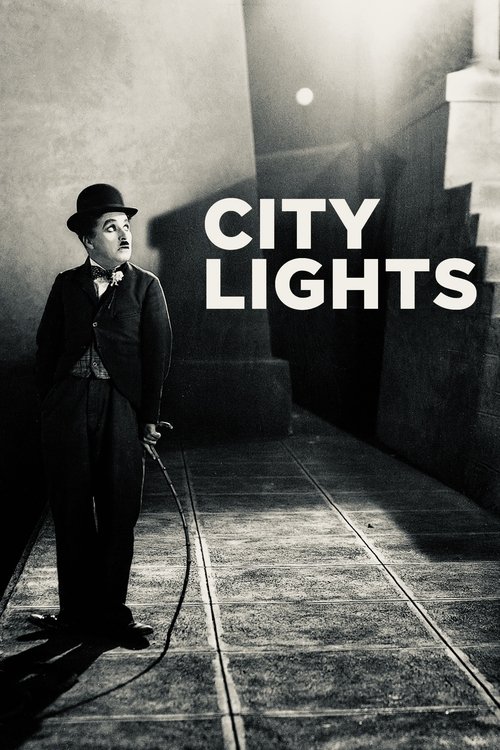
The cane represents The Tramp's resilience and his clumsy but determined attempts to navigate a hostile world. It's a tool for both physical comedy and a symbol of his enduring, if awkward, dignity.
The Tramp uses his cane throughout the film in various slapstick routines, such as when he gets it caught in a grate or fends off newsboys. It's an extension of his character—unrefined but surprisingly effective in getting him through scrapes.
Philosophical Questions
What is the nature of true sight and perception?
The film delves into this question by contrasting literal sight with emotional and moral insight. The Blind Girl cannot see The Tramp's poverty and instead perceives his inner kindness. The Eccentric Millionaire can only recognize his friend when his perception is altered by alcohol. Chaplin suggests that physical vision can be deceiving, clouded by societal prejudices about class and appearance. True perception, the film argues, is a function of the heart, an ability to see another's soul regardless of external circumstances. The final scene is the ultimate exploration of this, as the girl must reconcile what her eyes now see with what her heart has always known.
Can love bridge the gap between social classes?
"City Lights" uses the romance between The Tramp and the Blind Girl to question the rigidity of social structures. The Tramp, an outcast, can only court the girl through the illusion of wealth, a pretense made possible by his sporadic friendship with the millionaire. The film critiques a world where money dictates relationships and opportunities. The central question left at the end is whether the girl's newfound awareness of The Tramp's poverty will be an insurmountable barrier or if their connection is strong enough to transcend class distinctions. The film offers a hopeful but ambiguous answer, suggesting that while love has the power to cross these divides, society's ingrained prejudices make it a difficult, perhaps even tragic, endeavor.
Core Meaning
The core meaning of "City Lights" revolves around the idea that true sight is not physical but emotional and spiritual. The film posits that love and compassion transcend social class, appearances, and even physical senses. Director Charlie Chaplin wanted to convey a message about the enduring power of human decency and sacrifice in a world often characterized by indifference and materialism. The central message is that the greatest acts of love are often unseen and unrewarded, yet they hold the power to transform lives in the most profound ways. The film champions the purity of the heart over the illusions of wealth and status.