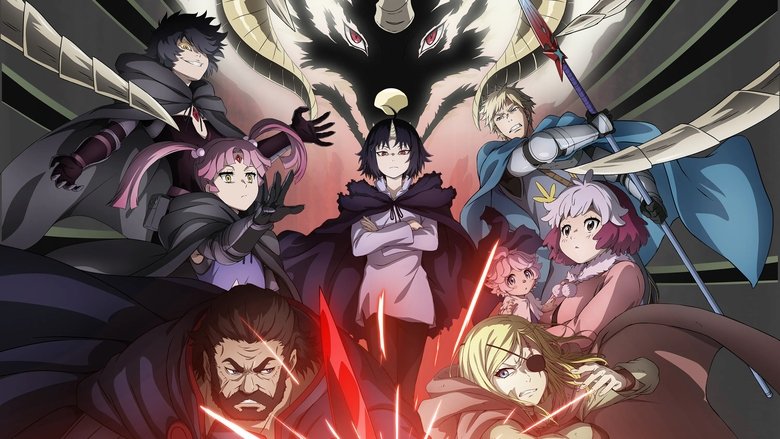
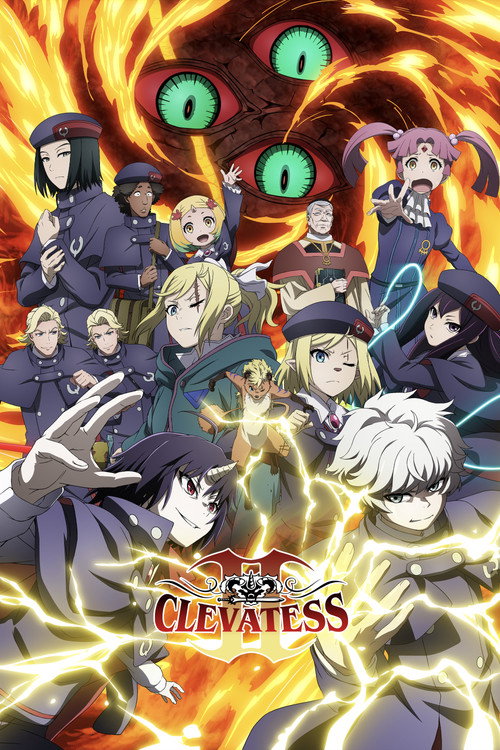
Season one, opening act. Alicia, who has wanted to be a hero since childhood, is selected by the king as one of thirteen heroes and sent to kill the Dark Beast Lord Clevatess with a legendary sword. The party is wiped out. Clevatess then goes after the man who instigated the attack and destroys the royal capital. Afterward he revives Alicia — one of the heroes he personally killed — and takes in an orphaned humanoid infant, Luna, framed as the last hope of a dying world. The revival is grimly practical: he raises Alicia to nurse the baby, and only then learns that lactation does not work that way. His ignorance of human basics, money included, becomes a running thread.
Mid-season. The household becomes a target. In episode 7, 'Secrets of Magic', General Drel's wizards Meynard and Naie attempt to abduct Prince Luna from Alicia and Nelluru, with Naie prepared to test the infant's magical ability even at the risk of killing the child. Drel's line — that the wise will stay and watch the world change — crystallizes the antagonist philosophy the series will spend its climax refuting. Nelluru expends the last of her strength protecting Luna; she is subsequently restored by merging her wounds and missing parts with the body of a troll, her old scars vanishing and returning her in a wholly renewed form.
The episode 11 reveal. 'The False Hero' recontextualizes the entire series. Crown Princess Toara Mort Anzeta and General Drel reveal that humanity, the dark beasts, and even the Dark Beast Lords themselves are pawns in a larger and far older conflict that none of them can comprehend. Clevatess's trial of humanity — the ostensible spine of the season — turns out to have been conducted inside a structure he did not author and cannot yet see.
The finale. 'Return of the King' ends the Alicia–Drel rivalry in blood, and pointedly does so through intelligence rather than force: Alicia wins by outsmarting him, dramatizing the season's argument that persisting in a chaotic and unjust world beats surrendering to nihilism. She then rejects Klen's variant of that nihilism, and it is this exchange — not the duel — that persuades the Dark Beast Lord not to abandon humanity just yet. Critics observed that the episode's remaining runtime falls off sharply, sliding from charged dialogue into ordinary dark fantasy exposition, which leaves the reprieve feeling deliberately unresolved.
Season two. Announced the day the finale aired and premiering July 8, 2026 across 13 episodes, the second season builds directly on the hidden-conflict revelation, with episode 7 ('The Surface World and the Hidden World') pushing the cast explicitly into the concealed order beneath the visible one. The retrospective meaning of season one shifts accordingly: the domestic comedy of a monster raising a baby was never a detour from the cosmology — Luna's protection is the one move on the board that the older powers did not plan for.