Skip to content
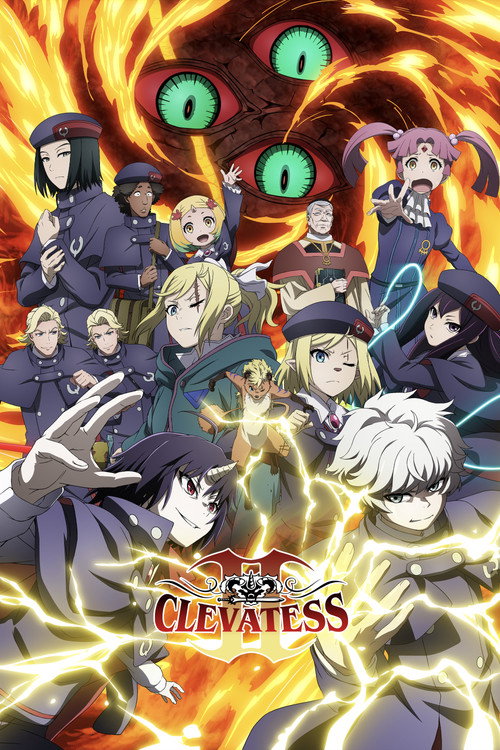
Clevatess
A dark fantasy where the world's most feared monster cradles an infant: blood-soaked judgment softened by a lullaby, and a dead hero walking on for the living.
Clevatess

Clevatess

クレバテス-魔獣の王と赤子と屍の勇者

02 July 2025 — 02 September 2026 Japan 2 season 24 episode Returning Series 8.0 (103)

Cast: Haruka Shiraishi, Mutsumi Tamura, Yuichi Nakamura, Saya Aizawa, Aoi Yuuki

Animation Sci-Fi & Fantasy Action & Adventure Humanity on Trial Care as an Answer to Despair The Deconstruction of Heroism Death, Undeath, and the Cost of Continuing Pawns of an Older Conflict

Overview

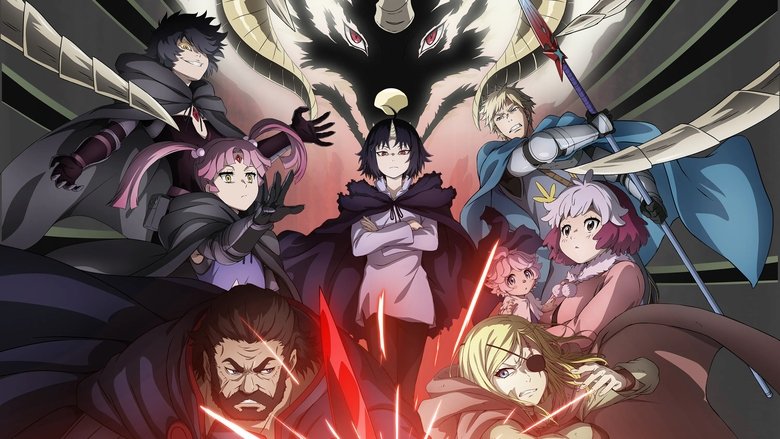
Clevatess -Majū no Ō to Akago to Shikabane no Yūsha- is a dark fantasy anime adapted from Yūji Iwahara's manga, animated by Lay-duce under director Kiyotaka Taguchi, with series composition by Keigo Koyanagi and music by Nobuaki Nobusawa. It opens with a setup that looks entirely familiar and then dismantles it within a single episode: Alicia, who has dreamed of being a hero since childhood, is chosen by the king as one of thirteen heroes sent to slay the Dark Beast Lord Clevatess with a legendary sword. The heroes are annihilated, and Clevatess goes to settle accounts with the man who sent them, destroying the royal capital in the process.

What follows is not a revenge story but an argument. Clevatess revives one of the heroes he killed as a corpse that still thinks and feels, and takes in an orphaned infant left in the ruins — and the monster who despises humanity finds himself raising the last hope of a dying world. The first season follows this unlikely household across a devastated kingdom while Clevatess conducts what amounts to a trial of the human race, weighing what he sees against what he already believes, and while Alicia tries to work out what a hero even means once the throne she served has turned to ash.

Season one ran for twelve episodes in summer 2025; a second season was announced immediately after the finale aired on September 17, 2025, and began on July 8, 2026 with thirteen episodes. The second season widens the map considerably, pushing past the kingdom's ruins toward the older, hidden structures the first season only hinted at, and turning the show's central question — whether this world deserves to be saved, and by whom — into something the characters must answer with actions rather than speeches.

Core Meaning

At its center, Clevatess is a sustained argument against nihilism conducted by the only character with the standing to make the nihilist case convincingly — a being powerful enough to end humanity and honest enough to have counted the reasons. The series takes the isekai-adjacent hero fantasy, kills it in the first episode, and then asks the harder question underneath it: not can the world be saved, but is it worth saving, and what evidence would change your mind.

Its answer is deliberately unheroic. The thing that stays the monster's hand is not a prophecy or a stronger sword but an infant who needs feeding, and a dead woman who keeps choosing to get up. Reviewers singled out exactly this in the season one finale: Alicia defeats General Drel not by overpowering him but by out-thinking him, and then refutes Klen's nihilism in a way that persuades the Dark Beast Lord not to abandon humanity — yet. That qualifier is the show's thesis. Meaning here is not proven once and banked; it is re-earned daily, through care, stubbornness, and the refusal to surrender to a world that is genuinely chaotic and unjust.

Thematic DNA

Humanity on Trial 30%
Care as an Answer to Despair 25%
The Deconstruction of Heroism 20%
Death, Undeath, and the Cost of Continuing 15%
Pawns of an Older Conflict 10%

Humanity on Trial

The spine of the series is a judgment. Clevatess does not simply hate humans; he examines them, dissecting human society and individual behavior with a startlingly impartial eye even while holding the species in contempt. Season one structures its twelve episodes as evidence-gathering: each town, each atrocity, each unexpected kindness is entered into the record.

The second season escalates the stakes of that verdict by revealing how much of the trial was rigged from the start — the judge, the defendants, and the prosecution all turn out to be operating inside a frame none of them designed. What began as a monster's private reckoning becomes a question about whether judgment itself is meaningful when the accused were never free.

Care as an Answer to Despair

The infant Luna is the counter-argument the series makes instead of a speech. Clevatess, a being with no grasp of human life — he resurrects Alicia specifically to nurse the baby, only to discover that milk does not work that way, and he does not know what money is — is dragged into competence by the demands of an entirely helpless creature.

Across the run this hardens into the show's moral method: abstractions lose to obligations. Nelluru spends the last of her strength shielding Luna; Alicia keeps moving because someone smaller than her cannot. By the finale, the case for humanity is not philosophical at all — it is a household that has decided to keep going.

The Deconstruction of Heroism

Thirteen chosen heroes, a legendary sword, a royal mandate — the series assembles the entire apparatus of fantasy heroism and destroys it in its opening movement, then spends the rest of its length asking what survives the wreckage.

Alicia's answer evolves season by season: first grief for the role she lost, then the recognition that no one revoked it — Clevatess pointedly never ordered her to stop being a hero. Season two tests this against a far larger and more indifferent scale, where being a hero means acting without the promise that the story is on your side.

Death, Undeath, and the Cost of Continuing

The show's hero is a corpse. Alicia's revived state is never treated as a power-up; it is a condition, a body that persists past the point where it should have been allowed to rest, in the service of someone else's plan.

The motif recurs in bodies rebuilt rather than healed — Nelluru returns restored by being merged with a troll's flesh, her old scars erased into something new and not entirely her own. Across both seasons, survival in this world is consistently shown as a thing purchased with identity.

Pawns of an Older Conflict

Late in season one, the floor drops out. As Crown Princess Toara Mort Anzeta and General Drel reveal, humanity, the dark beasts, and even the Dark Beast Lords themselves are pieces in a larger and far older struggle none of them can perceive in full.

Season two lives in the space this reveal opened, moving from the visible world into the hidden one behind it. The theme turns the earlier seasons' moral questions inside out: if the trial of humanity was staged, then the only genuinely free act left is choosing what to do once you know.

Character Analysis

Clevatess

Yūichi Nakamura (Japanese); Sean Letourneau (English dub)

Archetype: Antihero / reluctant guardian Key Trait: Impartial contempt — he judges humanity honestly, which is precisely why he can be persuaded

Motivation

Initially retribution and the settling of a debt; then the intellectual project of deciding whether humanity merits extinction. By the later run, the motivation quietly inverts — protecting one specific child becomes more compelling than any verdict about the species.

Character Arc

He begins as an apocalypse with a personality — a Dark Beast Lord who wipes out thirteen chosen heroes and levels the royal capital to punish the man who sent them. Adopting an orphaned infant and reviving a hero he personally killed turns his annihilating contempt into something far more dangerous to him: curiosity.

Across season one he functions as a judge collecting evidence on humanity, analyzing human society from an impartial remove despite his disdain, while comically failing at the basics of human life. By the finale, Alicia's rebuttal of Klen's nihilism is enough to stay his hand — he declines to abandon humanity for now. Season two forces him to reckon with the discovery that he, too, has been a piece on someone else's board.

Alicia Glenfall

Katie Wetch (English dub)

Archetype: Fallen hero / resurrected idealist Key Trait: Stubborn moral clarity, argued rather than swung

Motivation

Begins as the desire to be recognized as a hero; becomes the far harder commitment to keep fighting in a world she now knows to be chaotic and unjust, for a child rather than for a crown.

Character Arc

A girl who wanted to be a hero from childhood, chosen as one of thirteen and then killed in the attempt — and brought back by her killer for a chore. Her season one journey moves from humiliation and grief through the slow realization that the role was never actually taken from her; Clevatess never ordered her to stop being a hero, and she chooses to keep being one.

She closes the first season by defeating General Drel not through brute force but by outsmarting him, and then wins the more important fight by arguing Klen's nihilism down. Season two carries her forward as someone who must be heroic without a kingdom, a sword, or a living body to do it with.

All 5 characters and cast

Symbols & Motifs

The Legendary Sword

Meaning:

The promise of narrative guarantee — the belief that the world hands the righteous a tool equal to the threat. Its failure is the series' founding statement: the sacred instrument is simply an object, and the story it belonged to was never true.

Context:

Introduced as the heroes' mission-critical weapon against Clevatess in the opening episode, and rendered meaningless almost immediately when the thirteen are annihilated. Its absence shadows everything after: Alicia's later victories come from wit and endurance rather than from any ordained instrument.

The Infant Luna

Meaning:

Unconditional obligation, and the last hope of a dying world made small enough to carry. Luna is the one argument in the series that does not need to be spoken — a being who cannot debate, only need.

Context:

Adopted by Clevatess from the ruins, the baby becomes the fixed point of the household. Luna's presence visibly pacifies the Dark Beast Lord, and by season two the child's latent significance draws the attention of factions willing to kill to test what Luna is.

Alicia's Revived Body

Meaning:

A conscience that cannot be discharged. As a corpse that still walks, Alicia embodies the show's insistence that the dead do not get to stop caring, and that continuing is a choice rather than a state.

Context:

Established when Clevatess raises her for an absurdly domestic purpose, and revisited whenever the story wants to remind the audience what she gave up. Her undeath is the physical form of the series' final position: keep going anyway.

The Ruined Royal Capital

Meaning:

The cost of settling scores, and the moral ledger Clevatess opens against himself. The capital is the evidence that the judge is not clean.

Context:

Destroyed when Clevatess goes after the king who sent the heroes, the ruin becomes the landscape the rest of the series walks through, ensuring that every argument about humanity's worth is conducted on ground the arguer razed.

Feeding and Milk

Meaning:

The gap between power and competence. Omnipotence that cannot produce a meal for an infant is the series' running joke and its quiet thesis about what actually sustains life.

Context:

Born from Clevatess's misunderstanding that any revived woman could nurse Luna, the motif recurs through the household's mundane logistics — food, money, shelter — grounding a cosmic conflict in chores.

Rebuilt Flesh

Meaning:

Restoration as replacement. Healing in this world does not return you to who you were; it substitutes something borrowed for what was lost.

Context:

Most explicit in Nelluru, whose wounds and missing parts are restored by merging with a troll's body, erasing her old scars and returning her in an entirely renewed form — a resurrection that is also an overwriting.

Memorable Quotes

If you are wise, you will stay here and watch the world change.
— General Drel

Context

Spoken in season one, episode 7 ('Secrets of Magic'), the episode in which Drel's wizards Meynard and Naie move to abduct Prince Luna from Alicia and Nelluru, with Naie willing to test the infant's magical ability even at the cost of the child's life.

Meaning

Drel's creed in one line: the future is already decided, and the only rational posture is spectatorship. It frames the antagonist's nihilism as an invitation rather than a threat, which is exactly what makes it corrosive — and it sets up the series' eventual answer, delivered when Alicia refuses to merely watch.

Episode Highlights

Series premiere

S1E1

The episode that establishes the show's method by breaking its own premise. Alicia and the thirteen chosen heroes attack Clevatess with the legendary sword and are decimated; Clevatess then turns on the king who instigated the attack and destroys the royal capital. Critics flagged it immediately as a dark fantasy debut not to be overlooked.

Significance:

It converts a standard chosen-hero fantasy into a story about aftermath, and creates the two conditions everything else depends on: a ruined kingdom and a monster with a reason to look closely at humanity.

Secrets of Magic

S1E7

General Drel's wizard duo, Meynard and Naie, attempt to kidnap Prince Luna from Alicia and Nelluru, with Naie determined to test the infant's magical ability even if the test kills the royal baby. Drel delivers the season's coldest line about simply watching the world change.

Significance:

The midpoint where Luna stops being a charge to protect and becomes an asset others will kill for, and where the antagonists' nihilistic philosophy is stated clearly enough to be argued with later.

The False Hero

S1E11

The reveal episode. Crown Princess Toara Mort Anzeta and General Drel disclose that humanity, the dark beasts, and even the Dark Beast Lords themselves are pawns in a larger and far older conflict that none of them can fully comprehend. Reviewers described it as recontextualizing the entire anime with earth-shaking truths.

Significance:

It retroactively reframes Clevatess's trial of humanity as a proceeding inside someone else's design, and supplies the scaffolding the second season is built on.

Return of the King

S1E12

The season finale, praised for bombastic spectacle, shocking violence and genuine pathos. Alicia brings her rivalry with General Drel to a bloody end by outsmarting rather than overpowering him, then rejects Klen's nihilism — an argument that convinces the Dark Beast Lord not to abandon humanity just yet. Critics noted the material after Alicia's victory slackens into more conventional dark fantasy exposition.

Significance:

The series' thesis statement: choosing to live and fight in a chaotic, unjust world beats surrendering to despair. It also secures humanity a reprieve rather than a pardon, leaving the verdict open for the next season.

The Surface World and the Hidden World

S2E7

A season two turning point built around the split between the world as it is seen and the world concealed beneath it, pushing the cast past the ruins of the first season into the older order that episode 11 had only named.

Significance:

It moves the 'pawns of an older conflict' revelation from dialogue into setting, making the hidden structure a place the characters must actually operate in rather than a twist they were told about.

Philosophical Questions

Does humanity deserve to survive, and who could possibly be qualified to decide?

The series hands the question to the being least sympathetic to the answer and then insists he ask it honestly — Clevatess analyzes human society and individual behavior with genuine impartiality despite his contempt. Season one's twelve episodes function as evidence, and the finale's reprieve is explicitly conditional. Season two complicates the premise further by suggesting the judge's own standing was manufactured.

Is nihilism a conclusion or a surrender?

Two antagonists articulate despair in different registers: General Drel's fatalistic invitation to stand aside and watch the world change, and Klen's more personal version. Alicia answers both — Drel in combat by outwitting him, Klen in argument — and the show's position is that choosing to live and fight in a chaotic, unjust world is always better than capitulating to that world's cruelty as if it were proof of anything.

What is a hero when the institution that named you is ash?

Alicia is stripped of her title, her comrades, her kingdom and her life in the opening act, and spends the series discovering that none of those were the source of the role. The pivotal realization is negative rather than triumphant: Clevatess never ordered her to stop being a hero. Heroism becomes a private commitment that survives the destruction of every external validator.

Can moral choice mean anything if you are a piece in someone else's game?

Episode 11's reveal that humans, dark beasts and Dark Beast Lords alike are pawns of a far older conflict detonates the assumption of agency the first ten episodes ran on. The second season lives in that aftermath, moving from the visible world into the hidden one and testing whether an act freely chosen inside a rigged frame still counts as free.

What is the price of being brought back?

Resurrection in this world is never restoration. Alicia returns as a corpse revived for someone else's errand; Nelluru is rebuilt by merging with a troll's body, her old scars erased into a form that is new but no longer entirely hers. The series consistently treats continued existence as purchased with some portion of the self.

Alternative Interpretations

The trial reading. The most straightforward interpretation treats the series as a courtroom drama in fantasy dress: Clevatess is the judge, humanity the defendant, and Alicia the defense counsel who wins a stay of execution in the finale. Under this reading the story is fundamentally optimistic — the case for humanity is winnable, and it is won by an ordinary person refusing to concede.

Full ending explanation

Cultural Impact

Clevatess arrived in a television landscape that critics had spent a decade describing as saturated with formulaic isekai and chosen-hero fantasy. Reviewers responded to it explicitly in those terms — one assessment called it 'the antidote' after a decade flooded with generic isekai, arguing that it restored a real sense of hope and that dark fantasy may be the last reliable home for meaningful, high-quality anime. Its opening gambit of annihilating the thirteen chosen heroes reads as a direct commentary on the genre it belongs to.

It also functioned as a sleeper. Coverage repeatedly framed the show as a hidden gem that quietly delivered one of summer 2025's best finales, and its late-season reveal in 'The False Hero' generated the kind of discourse — a twist that recontextualizes everything preceding it — that drives word of mouth well past a season's broadcast window. Crunchyroll's same-day English dub gave that conversation an unusually synchronized international audience.

The renewal announcement landing immediately after the finale, and the source manga entering its final arc in 2025, positioned the property as a complete authored statement rather than an open-ended franchise. Its legacy so far is as a proof of concept: that a philosophically argumentative dark fantasy built around a monster raising a baby can succeed commercially and critically without the reassurances of the genre it critiques.

Audience Reception

Season one was received as one of summer 2025's strongest surprises. Critics described it as an outstanding first season and repeatedly used the language of discovery — a hidden gem that quietly pulled off one of the season's best finales — while audiences on review aggregators and forums framed it as a corrective to a decade of generic isekai. Several outlets named it an anime-of-the-season contender.

The most consistent praise went to three things: the opening subversion, in which the thirteen chosen heroes are annihilated almost immediately; the unexpected depth of the show's central judgment, with Clevatess weighing human society and behavior from an impartial perspective despite his disdain; and the tonal range, which lets a story of shocking violence also be genuinely funny about a Dark Beast Lord who does not understand milk or money. The finale's combination of spectacle, brutality and real pathos was widely singled out.

Criticism clustered around structure rather than concept. The strongest recurring complaint was that the finale peaks early: after Alicia's victory over General Drel, the episode reverts to conventional dark fantasy, trading philosophically charged dialogue for perfunctory exposition. Related reservations held that the show leans on familiar dark fantasy furniture between its high points. A separate strand of discussion — flagged by coverage of episode 11 noting that the series had effectively 'lied' to its audience — treated the late reveal as either exhilarating or as a rug-pull, though even critics in that camp largely reported enjoying it.

The overall verdict: a show that earned its reputation on execution rather than premise, with the second season inheriting high expectations and the burden of resolving a twist that redefined the first.

Interesting Facts

  • The series adapts Yūji Iwahara's manga Clevatess -Majū no Ō to Akago to Shikabane no Yūsha-; Iwahara both writes and illustrates it.
  • The anime adaptation was announced by Anime News Network on July 2, 2024 — exactly one year to the day before the series premiered in Japan on July 2, 2025.
  • Animation is by studio Lay-duce, with Kiyotaka Taguchi directing, Keigo Koyanagi handling series composition, and Nobuaki Nobusawa composing the music.
  • Season one ran 12 episodes from July 2 to September 17, 2025.
  • Crunchyroll produced an English dub that premiered on its service the same day as the Japanese broadcast.
  • A second season was announced immediately after the season one finale aired on September 17, 2025; it premiered on July 8, 2026 and is scheduled for 13 episodes.
  • The source manga entered its final arc in 2025, according to Anime News Network — meaning the anime was airing while the original story was heading toward its conclusion.
  • The manga is available in English on WEBTOON.
  • In the English dub, Clevatess is voiced by Sean Letourneau, Alicia Glenfall by Katie Wetch, Klen by Morgan Berry, Luna by Lara Woodhull and Nelluru by Celeste Perez; Yūichi Nakamura plays Clevatess in the original Japanese.

Frequently Asked Questions

Explore More About This Movie

Dive deeper into specific aspects of the movie with our detailed analysis pages

Comments (0)

Leave a comment

No comments yet. Be the first to share your thoughts!

Similar Movies