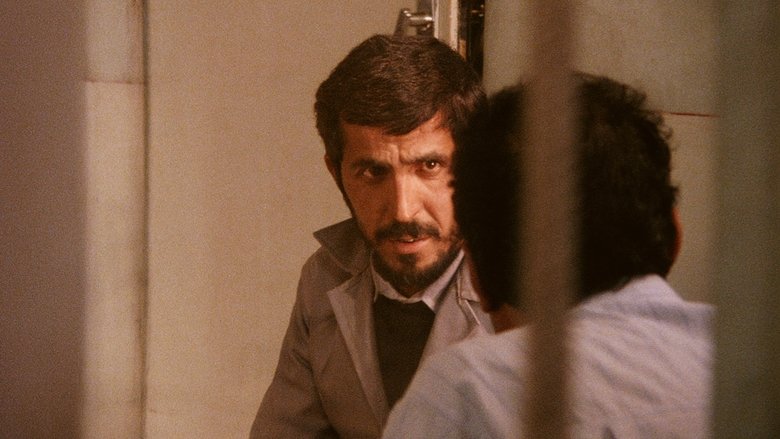

The central twist of "Close-Up" lies in its very construction: the film is a reenactment of real events starring the actual people involved. This becomes fully apparent as the film progresses, blurring the lines between observing a story and watching people process their own recent history. The courtroom scenes, which seem like pure documentary, were in fact influenced by Kiarostami, who fed questions to the judge and even scripted some of Sabzian's eloquent defenses based on prior interviews.
The film's climax is the resolution of Sabzian's trial. The judge, heavily influenced by a desire for a compassionate outcome (and by Kiarostami), encourages the Ahankhah family to forgive Sabzian, which they do. After his release, in a scene entirely orchestrated by Kiarostami, Sabzian is met by his idol, the real Mohsen Makhmalbaf. Makhmalbaf greets him warmly and gives him a motorcycle ride to the Ahankhah's house to apologize in person.
The final scene is one of profound emotional release. Sabzian, overwhelmed with emotion, weeps as he rides with his hero. When they arrive at the Ahankhah's, Sabzian is initially not recognized by his real name over the intercom. Only when Makhmalbaf identifies himself are they let in. Mr. Ahankhah accepts their apology and flowers, expressing his hope that Sabzian will now make them proud. The ending reveals the ultimate power of the director (Kiarostami) to not only document reality but to shape it, creating a cathartic and redemptive conclusion that would not have occurred without his intervention. It underscores the idea that the film itself has become the ultimate truth of the story, a manufactured reality that is emotionally more satisfying and perhaps more meaningful than the unfilmed truth.