Close-Up
کلوزآپ ، نمای نزدیک
"A real-life situation based on a real incident in actual locations with actual people involved"
Overview
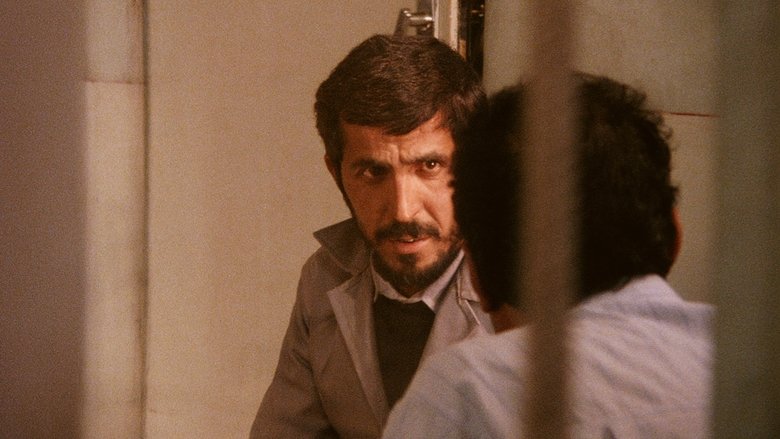
"Close-Up" is a compelling Iranian film that uniquely blends documentary and fiction to tell the true story of Hossain Sabzian, an unemployed cinephile with a deep admiration for the filmmaker Mohsen Makhmalbaf. One day, while riding a bus, Sabzian strikes up a conversation with a woman, Mrs. Ahankhah, and impulsively introduces himself as Makhmalbaf.
This initial deception leads him into the lives of the affluent Ahankhah family, who are thrilled at the prospect of being involved in a famous director's next film. Sabzian continues the charade, visiting their home, discussing his supposed artistic vision, and even rehearsing scenes with their sons. However, as time goes on, the Ahankhah family becomes suspicious of "Makhmalbaf's" true identity, particularly after he borrows a small amount of money from them. Their doubts eventually lead them to contact a journalist, culminating in Sabzian's arrest for fraud.
The film then follows Sabzian's trial, where director Abbas Kiarostami was given permission to film the actual proceedings. Kiarostami masterfully interweaves this courtroom footage with reenactments of the preceding events, with all the real-life individuals playing themselves, creating a complex and layered exploration of truth, identity, and the profound impact of cinema on a person's life.
Core Meaning
The core meaning of "Close-Up" revolves around the complex interplay between identity, art, and reality. Director Abbas Kiarostami explores the profound human need for recognition and respect, and how cinema can offer an escape and a sense of self-worth to those who feel marginalized by society. The film delves into the idea that art, particularly cinema, can be more real and meaningful than everyday life for some individuals.
Kiarostami doesn't present Hossain Sabzian as a simple con man but as a sympathetic figure whose actions stem from a deep love for film and a desire to be seen as more than his social standing allows. The film questions the very nature of truth, suggesting that subjective, emotional truth can be as valid as objective fact. Through its innovative docu-fiction style, "Close-Up" ultimately posits that we are all, in a sense, performers in our own lives, and that compassion and understanding are more important than rigid judgments of right and wrong.
Thematic DNA
The Nature of Truth and Deception
"Close-Up" constantly blurs the line between what is real and what is fabricated, not only in its narrative but in its very structure as a docu-fiction film. The film challenges the audience's perception of truth by presenting reenactments by the real people involved, alongside actual courtroom footage that itself is influenced by Kiarostami's presence. It explores the idea that deception can sometimes be a path to a deeper, more personal truth, as Sabzian's impersonation reveals his profound love for cinema and his yearning for a different life. Kiarostami himself has said, "We can never get close to the truth except through lying."
Identity and Self-Worth
The film is a profound exploration of identity and the human desire for significance. Hossain Sabzian, a man from a lower social class, feels invisible and disrespected in his own life. By assuming the persona of a famous director, he experiences a sense of power and importance he has never known. His actions are not motivated by greed but by a deep-seated need to be seen and valued. The film poignantly illustrates the gap between one's real self and one's ideal self, and the sometimes desperate measures people take to bridge that gap.
The Power and Influence of Cinema
Cinema is at the very heart of "Close-Up," acting as both the catalyst for the events and the medium through which they are explored. The film is a testament to the profound impact art can have on an individual's life, offering solace, inspiration, and even a new identity. Sabzian's love for the films of Mohsen Makhmalbaf is so intense that he feels he can embody the director. Kiarostami's film itself becomes an act of compassion and understanding, using the language of cinema to delve into the complexities of Sabzian's motivations in a way that a simple news report or a traditional trial could not.
Social Class and Injustice
Subtly woven throughout the film is a commentary on social stratification in Iran. The contrast between the working-class Sabzian and the upper-middle-class Ahankhah family is stark. The deference and respect the family shows him as "Makhmalbaf" is something he would never receive as himself. His impersonation can be seen as a form of rebellion against a society that has marginalized him. The film raises questions about how much of our identity is shaped by our social and economic circumstances.
Character Analysis
Hossain Sabzian
Hossain Sabzian
Motivation
Sabzian's primary motivation is not financial gain, but a deep-seated desire for respect, identity, and a connection to the world of art that has given his life meaning. He is driven by his profound love for cinema and the way it makes him feel seen. He craves the authority and admiration that comes with being a renowned artist.
Character Arc
Hossain Sabzian begins as a marginalized and unemployed man who finds solace in cinema. His impulsive decision to impersonate a famous director leads him down a path of deception, but also gives him a taste of the respect and significance he craves. Through his trial and his interactions with Kiarostami, he is given a platform to articulate his complex motivations. His arc is not one of drastic change, but of being seen and understood. The film ends with a sense of catharsis for him as he meets his idol and makes amends with the family he deceived, though his future remains uncertain.
The Ahankhah Family
Monoochehr Ahankhah, Mahrokh Ahankhah, Abolfazl Ahankhah, Mehrdad Ahankhah
Motivation
Their initial motivation is the excitement and prestige of being associated with a famous filmmaker. Later, their motivation shifts to seeking justice and understanding why they were deceived. They are also concerned about the possibility of being robbed. Ultimately, they are motivated by a desire for resolution and, to some extent, by the social pressure to be forgiving during the trial.
Character Arc
The Ahankhah family initially appears as victims of a con. They are flattered by the attention of a famous director and are eager to participate in his film. Their arc involves a shift from belief to suspicion, and finally to a feeling of betrayal and humiliation. However, the film also portrays their willingness to forgive, albeit with some prompting from the judge and Kiarostami. By participating in the reenactments, they become active collaborators in the telling of the story, moving from being passive victims to co-creators of the film.
Abbas Kiarostami
Abbas Kiarostami
Motivation
Kiarostami's motivation is to understand the human story behind the sensational headline. He is fascinated by Sabzian's character and the complex reasons for his impersonation. He is driven by a philosophical curiosity about the nature of truth, reality, and cinema, and a desire to use his craft to create a more nuanced and compassionate portrayal of the events than a court of law could provide.
Character Arc
Kiarostami inserts himself into the narrative not just as a filmmaker but as a character who actively influences the events. He moves from being an observer who read about the story in a magazine to a participant who arranges to film the trial, interviews Sabzian, and even facilitates the meeting between Sabzian and Makhmalbaf. His arc is one of increasing involvement, as he uses his position as a director to explore the deeper truths of the situation and to bring about a form of reconciliation for the people involved.
Symbols & Motifs
The Aerosol Can
The rolling aerosol can symbolizes chance, aimlessness, and the unexpected poetry that can be found in mundane moments. It represents a deviation from the main narrative and a focus on the peripheral, a characteristic of Kiarostami's style. It also highlights the contrast between passive observation and active intervention, as the taxi driver gently nudges it while the journalist later gives it a firm kick.
In the opening scene, after the journalist and police enter the Ahankhah house, the camera remains outside with the taxi driver. He idly kicks an empty aerosol can, which then rolls down the street in a long, contemplative shot.
Flowers
The flowers symbolize forgiveness, reconciliation, and the possibility of finding beauty in unexpected places. They represent a gesture of peace and an attempt to mend the breach of trust between Sabzian and the Ahankhah family.
The motif appears early when the taxi driver picks a bouquet of flowers from a pile of refuse. It reappears powerfully at the end of the film when the real Mohsen Makhmalbaf and Hossain Sabzian buy a pot of flowers to bring to the Ahankhah family's home as a peace offering.
The Motorcycle
The motorcycle ride at the end of the film signifies a journey towards resolution and a union between the admirer and the idol, fiction and reality. It represents a form of liberation and forward movement for Sabzian, both literally and emotionally.
In the final sequence, the real Mohsen Makhmalbaf gives Hossain Sabzian a ride on his motorcycle to the Ahankhah family's house. This is a highly emotional and cathartic scene for Sabzian, who is overwhelmed to be in the presence of his hero.
Memorable Quotes
I'm interested in art and film.
— Hossain Sabzian
Context:
During his trial, when asked to explain why he impersonated Mohsen Makhmalbaf, Sabzian offers this honest and vulnerable statement to the court.
Meaning:
This simple, almost childlike declaration cuts to the core of Sabzian's motivation. It's his heartfelt and sincere explanation for his actions, stripping away the legal complexities of fraud and revealing the pure passion that drove him. It encapsulates the film's central theme of the profound and transformative power of art.
I'm speaking of my suffering; that's not acting... For me, art is the extension of what you feel inside...
— Hossain Sabzian
Context:
Towards the end of the trial, Kiarostami asks Sabzian if he is acting for the camera. Sabzian's response articulates his belief that he is conveying a truth that comes from a place of deep personal suffering.
Meaning:
This quote further blurs the line between performance and genuine expression, a central theme of the film. Sabzian argues that his actions, both as an impersonator and in recounting his story, are not a form of acting in the deceptive sense, but rather an authentic expression of his inner pain and love for art.
Before, no one would ever have obeyed me like that because I'm just a poor man.
— Hossain Sabzian
Context:
In his testimony during the trial, Sabzian explains the intoxicating feeling of being treated with the deference and respect accorded to a famous director, a stark contrast to his everyday life.
Meaning:
This quote directly addresses the theme of social class and the desire for respect. Sabzian acknowledges the power and authority that came with his assumed identity, highlighting how society treats people differently based on their status. It reveals the deep-seated feelings of powerlessness that fueled his impersonation.
I hope he'll be good now and make us proud of him.
— Mr. Ahankhah
Context:
At the very end of the film, after Sabzian and the real Makhmalbaf have visited the Ahankhah home to apologize, Mr. Ahankhah speaks these words, offering a sense of closure and reconciliation.
Meaning:
This line signifies the resolution and forgiveness at the end of the film. It's a statement of hope and a willingness to move past the deception. It suggests that the family has come to see Sabzian not as a criminal, but as a troubled individual who deserves a second chance, embodying the film's compassionate perspective.
Philosophical Questions
What is the nature of truth and reality?
The film fundamentally questions whether there is a single, objective truth. By blending actual trial footage with reenactments, and by showing how the presence of the camera influences events, Kiarostami suggests that reality is subjective and constructed. It asks whether Sabzian's emotional truth—his deep love for art—is any less valid than the legal fact of his deception. The film forces the viewer to constantly question what is real and what is performed, ultimately suggesting that life itself is a form of performance.
How does art shape our identity and our perception of the world?
"Close-Up" explores the profound impact of art on identity. Hossain Sabzian's identity is so intertwined with his love for cinema that he literally becomes the filmmaker he admires. The film examines whether art is merely an escape from reality or if it can become a more potent and meaningful reality in itself. It raises questions about our own relationship with art and how the stories we consume shape our understanding of ourselves and our place in the world.
To what extent are our lives determined by social class?
The film subtly probes the ways in which social and economic status define a person's life and opportunities. Sabzian's impersonation is a direct response to the powerlessness and invisibility he feels as a poor man. The film asks whether we can truly be ourselves in a society that judges us based on our wealth and status, and whether it is possible to transcend these limitations. It questions the inherent injustices of a class-based society and the human desire to be judged on character rather than circumstance.
Alternative Interpretations
One alternative interpretation of "Close-Up" is to view it not just as a film about an individual's love for cinema, but as a critique of the power structures within society and the film industry itself. Kiarostami, as the director, holds a position of immense power, able to manipulate the trial, script the dialogue, and orchestrate the final reconciliation. In this reading, the film becomes a self-reflexive examination of the director's own role as a creator and manipulator of reality, mirroring Sabzian's own attempts to direct the lives of the Ahankhah family.
Another interpretation focuses on the film as a political allegory. Sabzian's desire to escape his impoverished reality and assume the identity of someone powerful can be seen as a metaphor for the broader aspirations of the Iranian people in a post-revolutionary society. His trial, a public space where he can finally voice his suffering and dreams, becomes a platform for expressing the frustrations of a generation. The film's ambiguity and open-endedness can also be interpreted as a commentary on the impossibility of finding a single, objective truth in a complex social and political landscape.
Cultural Impact
"Close-Up" is widely regarded as a landmark of Iranian cinema and a masterpiece of world cinema. Released in the post-revolutionary period of Iran, the film was part of a new wave of Iranian filmmaking that gained international recognition for its humanism, poetic realism, and innovative narrative techniques. It challenged the conventional boundaries between documentary and fiction, influencing a generation of filmmakers both in Iran and globally with its docu-fiction style.
Critically, the film was highly acclaimed internationally, though it was not as celebrated in Iran upon its initial release. It has since been ranked by critics in polls like Sight & Sound as one of the greatest films of all time. The film's profound exploration of universal themes such as identity, art, and the human need for dignity resonated with audiences worldwide. It brought international attention to Abbas Kiarostami as a major directorial voice and cemented his reputation as a master of cinema. The film's influence can be seen in the works of many subsequent filmmakers who have explored the territory between reality and fiction.
Audience Reception
Audiences have generally praised "Close-Up" for its originality, its profound humanism, and its thought-provoking exploration of truth and identity. Many viewers find the story of Hossain Sabzian to be incredibly moving and sympathetic, and they admire the film's ability to generate deep empathy for its protagonist. The film's unique blend of documentary and fiction is often cited as a major strength, creating a fascinating and intellectually stimulating viewing experience.
The main points of criticism, particularly for some first-time viewers, tend to revolve around the film's slow pace and what can be perceived as an uneventful plot. Some may find its docu-fiction style confusing or alienating, and the grainy 16mm footage of the trial can be visually jarring for those accustomed to more polished cinematography. However, for most cinephiles and critics, these are considered integral aspects of the film's unique and powerful style.
Interesting Facts
- Director Abbas Kiarostami discovered the story of Hossain Sabzian by reading an article about his arrest in the Iranian magazine Sorush.
- Upon reading about the case, Kiarostami immediately halted pre-production on the film he was working on to pursue making "Close-Up".
- All of the individuals involved in the real-life events, including Hossain Sabzian, the Ahankhah family, and the journalist, play themselves in the film.
- Kiarostami received permission from the judge to film Sabzian's actual trial, and even persuaded the judge to move the trial date forward to accommodate his filming schedule.
- Much of Hossain Sabzian's dialogue in the courtroom scenes was scripted by Kiarostami, based on interviews the director had conducted with him.
- The sound problems during the final scene on the motorcycle, where the real Makhmalbaf's dialogue cuts out, were intentionally created by Kiarostami in post-production to focus the emotional weight on Sabzian.
- The Ahankhah family was initially angry about the deception and wanted Sabzian to be punished; their on-screen forgiveness was largely orchestrated by Kiarostami.
- A follow-up documentary called "Close-Up Long Shot" was made in 1996, which revisited Hossain Sabzian's life five years after the release of Kiarostami's film.
⚠️ Spoiler Analysis
Click to reveal detailed analysis with spoilers
Frequently Asked Questions
Explore More About This Movie
Dive deeper into specific aspects of the movie with our detailed analysis pages
Comments (0)
No comments yet. Be the first to share your thoughts!