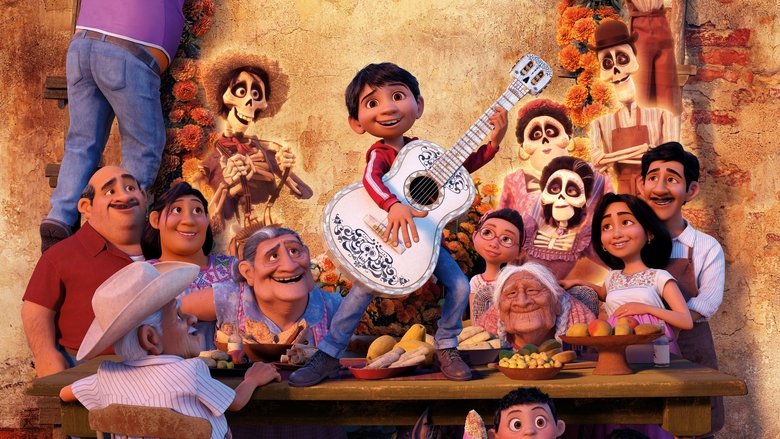

Coco
A vibrant, animated fantasy that strikes a poignant chord about family, memory, and heritage, wrapped in the visually stunning tapestry of Mexican tradition.
Coco
Coco

"The celebration of a lifetime."

27 October 2017 United States of America 105 min ⭐ 8.2 (20,271)
Director: Lee Unkrich
Cast: Anthony Gonzalez, Gael García Bernal, Benjamin Bratt, Alanna Ubach, Renée Victor
Animation Family Adventure Music
The Primacy of Family Remembrance and Legacy Passion vs. Tradition Forgiveness and Reconciliation
Budget: $175,000,000
Box Office: $814,641,172

Coco - Ending Explained

⚠️ Spoiler Analysis

The central plot twist of "Coco" completely re-frames the narrative by revealing that Miguel's idol, Ernesto de la Cruz, is not his ancestor but is in fact the murderer of his true great-great-grandfather, Héctor. Ernesto, unable to write songs himself, poisoned Héctor on the eve of his return home and stole his songbook and guitar, passing the timeless classics off as his own to build a legendary career. This revelation transforms Héctor from a tragic, secondary character into the film's emotional heart and rightful hero, while de la Cruz is exposed as a villainous fraud.

This twist clarifies several early plot points, such as why the torn photo of the great-great-grandfather didn't show his face. It was torn because Imelda still loved him but couldn't bear to see the man she believed abandoned her. The true meaning of "Remember Me" is also revealed; it is not a romantic farewell to the world, but a private, loving lullaby from a father to his daughter, Coco. The film's ending provides profound catharsis as Miguel returns to the Land of the Living and sings "Remember Me" to the elderly Coco. This act of musical love revives her memory, which in turn saves Héctor from the final death. A year later, Héctor's photo is on the ofrenda, his musical legacy is rightfully restored to the world, de la Cruz is disgraced, and the Rivera family's ban on music is lifted, with Miguel now freely playing the guitar surrounded by his loving family, both living and dead.

Alternative Interpretations

While overwhelmingly praised, some critical interpretations of "Coco" have explored underlying themes of cultural appropriation and the commercialization of tradition. Despite Pixar's extensive efforts to be respectful, some critics argue that the very act of a massive American corporation packaging and selling a sacred, indigenous-rooted tradition is inherently problematic. The initial attempt to trademark "Día de los Muertos" is often cited as evidence of a corporate mindset that can clash with cultural preservation.

Another interpretation focuses on the film's narrative structure. Some viewers have pointed out that the story follows a familiar Disney/Pixar formula of a protagonist rebelling against their family to follow a dream, which is then neatly resolved. A more critical reading might question whether this individualistic, dream-following narrative, while universally appealing, subtly imposes a Western value system onto a story about a culture that often prioritizes community and family (familismo) over individual ambition. From this perspective, Miguel's ultimate reconciliation could be seen as a convenient way to merge two different cultural value systems without deeply challenging the primacy of the individual's quest for self-fulfillment.