Coco
"The celebration of a lifetime."
Overview
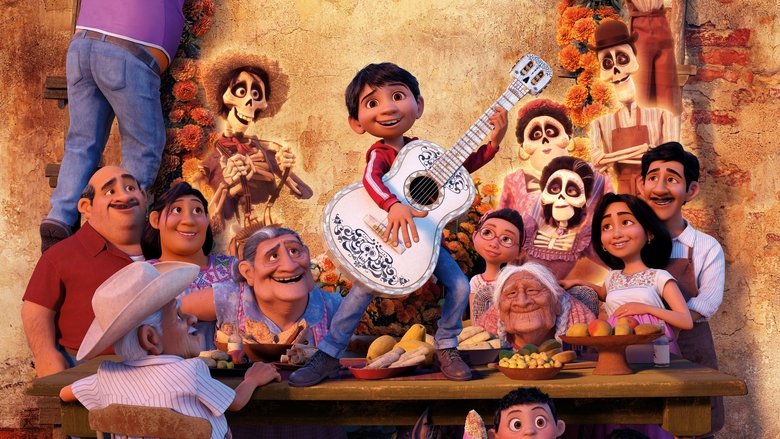
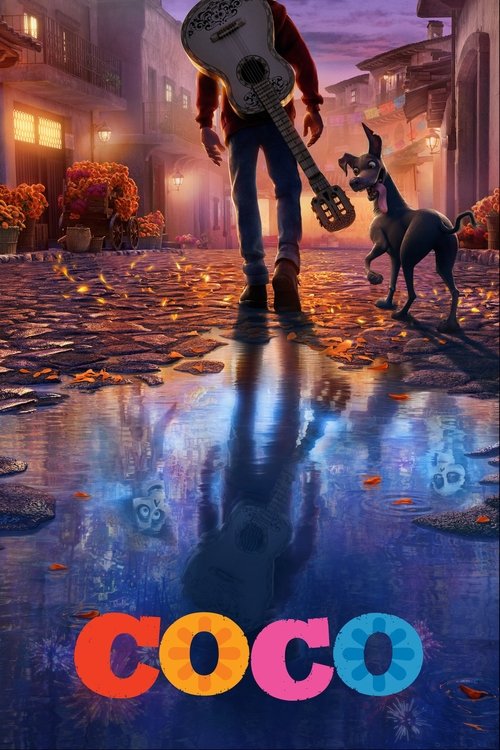
"Coco" tells the story of Miguel, a 12-year-old boy from a family of shoemakers in Mexico who dreams of becoming a musician, just like his idol, Ernesto de la Cruz. However, his family has a mysterious, generations-old ban on music. Desperate to prove his talent, Miguel finds himself on an extraordinary journey to the Land of the Dead on the eve of Día de Muertos.
In this stunningly colorful afterlife, Miguel befriends a charming trickster named Héctor. Together, they embark on an adventure to uncover the real story behind Miguel's family history and the reason for the music ban. Along the way, he meets his deceased ancestors and discovers secrets that will change his family's fate and his own understanding of his identity forever.
Core Meaning
The core meaning of "Coco" revolves around the profound importance of family, memory, and remembrance. It posits that our identities are deeply shaped by our ancestors and the stories we tell about them. The film beautifully illustrates the Mexican cultural belief that our loved ones who have passed away are not truly gone as long as they are remembered by the living. It is not just about following one's dreams, but about understanding that our passions and our family are intertwined, suggesting that true fulfillment comes from balancing personal ambition with familial love and heritage.
Thematic DNA
The Primacy of Family
This is the central theme of the film. Miguel's journey begins with a rejection of his family's rules, but his experiences in the Land of the Dead teach him that family is the most important support system one can have. The film emphasizes the concept of "familismo," a cultural value prioritizing family relationships over individual needs, showcasing how the Rivera family, both living and dead, ultimately unite to protect and support Miguel.
Remembrance and Legacy
"Coco" explores the idea that death is not the end, but that being forgotten is a "final death." The importance of keeping the memories of ancestors alive through stories, photos on the ofrenda, and traditions is a powerful and recurring message. Héctor's impending disappearance highlights the urgency and significance of remembrance for preserving one's legacy and existence in the afterlife.
Passion vs. Tradition
Miguel's personal passion for music is in direct conflict with his family's long-held tradition banning it. The film delves into the struggle between pursuing individual dreams and honoring family expectations. Ultimately, it suggests that a healthy balance is possible, where personal talents can be embraced within the family, healing old wounds and creating new, stronger traditions.
Forgiveness and Reconciliation
The story is driven by a decades-old grudge held by Mamá Imelda against her husband for choosing music over family. Her journey, along with the rest of the family's, is one of learning the full truth, leading to forgiveness and reconciliation. The film shows that forgiveness is crucial for healing generational trauma and allowing the family to become whole again.
Character Analysis
Miguel Rivera
Anthony Gonzalez
Motivation
His primary motivation is to become a musician and receive his family's blessing to pursue his dream, which he believes can only be achieved by connecting with his supposed great-great-grandfather, Ernesto de la Cruz.
Character Arc
Miguel begins as a boy torn between his passion for music and his loyalty to a family that forbids it. His journey through the Land of the Dead forces him to confront his family's history and his own identity. He evolves from a rebellious individualist to someone who understands that his dreams are intertwined with his heritage, ultimately using his music to heal his family.
Héctor
Gael García Bernal
Motivation
His motivation is singular and desperate: to get his photo placed on an ofrenda so he can cross over and see his daughter, Coco, one last time before she forgets him.
Character Arc
Héctor is introduced as a desperate, charming rogue trying to cross the marigold bridge. He is on the verge of the "final death" as he is being forgotten by the living world. His arc is one of revelation and redemption, as he is revealed not as a failure, but as the true musical talent, a loving father, and Miguel's actual great-great-grandfather who was murdered and betrayed.
Ernesto de la Cruz
Benjamin Bratt
Motivation
His motivation is to protect his fraudulent legacy at any cost. He is driven by a selfish desire for adoration and is willing to do whatever it takes to ensure his fame is never challenged, even if it means murdering Héctor and attempting to get rid of Miguel.
Character Arc
Ernesto begins as Miguel's idol—a charismatic and celebrated musician embodying success. His arc is a dramatic fall from grace as his charming facade crumbles to reveal a murderous, narcissistic fraud who stole everything from his partner, Héctor, to achieve fame.
Mamá Imelda
Alanna Ubach
Motivation
Her primary motivation is the protection and well-being of her family. This manifests as a strict enforcement of the music ban, which she believes is necessary to prevent the heartbreak she endured from happening again.
Character Arc
Imelda is the formidable matriarch of the Rivera family who instituted the ban on music out of heartbreak and a desire to protect her family after her husband left. Initially rigid and unforgiving, her love for her family forces her to confront her past. She learns to forgive Héctor and even rediscovers her own love for music to save Miguel, showing her immense strength and capacity for change.
Symbols & Motifs
Marigold Petals (Cempasúchil)
Marigolds symbolize the connection between the Land of the Living and the Land of the Dead. Their vibrant color and strong scent are believed to guide the spirits of the deceased back to their families' ofrendas on Día de Muertos.
The film visualizes this connection with a breathtaking bridge made entirely of glowing marigold petals that the spirits cross. Petals are also sprinkled on the ground to create a path for the spirits to follow.
The Ofrenda
The ofrenda, or offering altar, represents memory and familial connection. It is a sacred space where photos of deceased relatives are placed, along with their favorite foods and objects, to honor them and welcome their spirits back for one night. A person's photo must be on an ofrenda for their spirit to be able to cross over.
The Rivera family's ofrenda is central to the plot. Miguel's accidental disruption of the altar sets his journey in motion, and the central conflict revolves around getting Héctor's photo placed on it so he is not forgotten.
Héctor's Guitar
The white, skull-adorned guitar symbolizes both the forbidden passion for music within the Rivera family and the true, stolen legacy of Héctor. It represents the power of music to connect generations and reveal hidden truths.
Initially believed to belong to Ernesto de la Cruz, Miguel's theft of the guitar from his tomb is what transports him to the Land of the Dead. It is later revealed to be Héctor's, and Miguel uses it in the final scene to help Mamá Coco remember her father.
Alebrijes
Alebrijes are spirit guides in the Land of the Dead. Based on vibrant Mexican folk art sculptures of fantastical creatures, they symbolize the mystical and spiritual aspects of the afterlife.
Mamá Imelda's massive and powerful winged-cat alebrije, Pepita, helps the family track Miguel. Miguel's dog, Dante, transforms into a colorful, clumsy but loyal alebrije, revealing his spiritual nature.
Memorable Quotes
Remember me, though I have to say goodbye. Remember me, don't let it make you cry.
— Héctor (sung by Ernesto de la Cruz)
Context:
The song appears throughout the film, first as Ernesto's biggest hit. The crucial moment is when Miguel sings it to an elderly Mamá Coco, jogging her memory of her father and saving Héctor from being forgotten forever.
Meaning:
This lyric is the emotional core of the film. Initially presented as a romantic ballad by Ernesto, its true meaning is revealed as a tender lullaby written by a loving father, Héctor, for his daughter, Coco. It encapsulates the film's central theme of remembrance across distance and even death.
Seize your moment.
— Ernesto de la Cruz
Context:
Miguel repeats this mantra throughout the first half of the film. Ernesto later says to Miguel, "I am the one who is willing to do what it takes to seize my moment, whatever it takes," revealing its darker interpretation just before trying to dispose of him.
Meaning:
This is Ernesto's famous catchphrase, which inspires Miguel to pursue his dreams. It initially represents ambition and self-belief. However, its meaning is twisted when it's revealed Ernesto used this philosophy to justify murdering Héctor and stealing his songs, showing how a noble idea can be corrupted by selfish ambition.
Nothing is more important than family.
— Miguel Rivera
Context:
Miguel says this near the end of the film, showing his newfound understanding and reconciling with his family after returning from the Land of the Dead. It contrasts with his earlier sentiment, "I don't want to be in this family!"
Meaning:
This line, spoken by Miguel, signifies the culmination of his character arc. After his journey, he fully embraces the central lesson of the film: that family connections are the most valuable thing in life, superseding individual ambition or fame.
Our memories, they have to be passed down by those who knew us in life – in the stories they tell about us.
— Héctor
Context:
Héctor explains this concept to Miguel while in the Land of the Dead, highlighting why it is so crucial for him to have his photo placed on the ofrenda and for Coco to remember him.
Meaning:
This quote directly explains the film's rules for existence in the afterlife. It articulates the central theme that a person's spirit and legacy survive only as long as they are remembered and spoken of by the living.
Philosophical Questions
What is the nature of existence after death?
The film presents a unique philosophical take on the afterlife. Existence is not guaranteed; it is conditional upon the memories of the living. This raises questions about what it means to be "alive" or to "exist." "Coco" suggests that a person dies twice: once physically, and a second, final time when they are forgotten by everyone in the living world. This ties existence directly to legacy and social memory, proposing that we live on through the impact we have on others.
Does family duty outweigh personal ambition?
"Coco" deeply explores the conflict between Miguel's desire for a life of music and his family's traditions and expectations. The film initially presents these as mutually exclusive paths. It asks whether one's personal calling should be sacrificed for the sake of family harmony and tradition. The resolution suggests a synthesis is possible: that true fulfillment lies not in choosing one over the other, but in finding a way for one's passion to enrich the family, and for family to support one's passion.
What is the relationship between art, legacy, and morality?
The film contrasts two artists: Héctor, the genuine songwriter who created from the heart for his family, and Ernesto de la Cruz, who stole that art for fame and built a legacy on a lie. This raises questions about the integrity of art and whether a legacy built on deceit can be considered valid. The film argues that true legacy isn't about public adoration but about the authentic connections and love that inspired the art in the first place, which ultimately endures long after the false idol has fallen.
Alternative Interpretations
While overwhelmingly praised, some critical interpretations of "Coco" have explored underlying themes of cultural appropriation and the commercialization of tradition. Despite Pixar's extensive efforts to be respectful, some critics argue that the very act of a massive American corporation packaging and selling a sacred, indigenous-rooted tradition is inherently problematic. The initial attempt to trademark "Día de los Muertos" is often cited as evidence of a corporate mindset that can clash with cultural preservation.
Another interpretation focuses on the film's narrative structure. Some viewers have pointed out that the story follows a familiar Disney/Pixar formula of a protagonist rebelling against their family to follow a dream, which is then neatly resolved. A more critical reading might question whether this individualistic, dream-following narrative, while universally appealing, subtly imposes a Western value system onto a story about a culture that often prioritizes community and family (familismo) over individual ambition. From this perspective, Miguel's ultimate reconciliation could be seen as a convenient way to merge two different cultural value systems without deeply challenging the primacy of the individual's quest for self-fulfillment.
Cultural Impact
"Coco" was a landmark film for its authentic and respectful representation of Mexican culture, specifically the traditions of Día de Muertos. Before its release, there was apprehension, particularly after a controversial attempt by Disney to trademark the holiday's name. However, the final film was widely praised by critics and audiences alike for its extensive research and collaboration with cultural consultants, which resulted in a heartfelt "love letter to Mexico." The film became a massive box office success, grossing over $814 million worldwide and becoming the highest-grossing film of all time in Mexico.
Its influence extended beyond the box office; it fostered a greater global understanding and appreciation for Día de Muertos, distinguishing it from Halloween. The movie's success demonstrated the commercial and critical viability of stories centered on specific cultures when told with care and authenticity. It won two Academy Awards, for Best Animated Feature and Best Original Song for "Remember Me," solidifying its place as a modern classic in animation. The film's emotional resonance and positive portrayal of family and heritage have made it a beloved staple, particularly within the Latino community, and a benchmark for cultural representation in mainstream cinema.
Audience Reception
Audience reception for "Coco" was overwhelmingly positive. On Rotten Tomatoes, it holds a 97% approval rating from critics and a 94% from audiences, indicating widespread acclaim. Viewers universally praised the film's stunning and vibrant animation, its emotional depth, and its heartfelt story. Many viewers, particularly those of Mexican heritage, celebrated the film for its respectful and accurate portrayal of their culture and the Día de Muertos holiday. The final scene, where Miguel sings "Remember Me" to Mamá Coco, is frequently cited as one of the most powerful and tear-jerking moments in Pixar's history. Criticisms were minor and infrequent, though some found the first act to be a bit slow or the plot twist predictable. Overall, audiences considered it a return to form for Pixar, a visually spectacular and emotionally resonant masterpiece that celebrates family, culture, and memory.
Interesting Facts
- The film was in development for six years, one of the longest production periods for a Pixar movie.
- To ensure authenticity, the animation team videotaped musicians' hands playing every song and even strapped GoPro cameras to their guitars to accurately capture the fingerings.
- Disney initially attempted to trademark the phrase "Día de los Muertos," but faced a significant public backlash from the Latino community, leading them to withdraw the application and hire cultural consultants.
- The character of Dante, the Xoloitzcuintli dog, was inspired by a real stray dog that the filmmakers saw sneakily eating food from an ofrenda during a research trip in Oaxaca.
- The film was originally conceived as a full-blown musical where characters would break into song, but the idea was scrapped because it felt inauthentic for a family that banned music to sing about it.
- Anthony Gonzalez was originally hired only as a temporary "scratch" voice for Miguel, but the producers were so impressed with his performance and singing that they officially cast him in the role.
- The Land of the Dead's design was inspired by the real Mexican city of Guanajuato, known for its colorful, stacked houses on hillsides.
- Every single character in the Land of the Dead has a unique skull face painting design; no two are alike.
Easter Eggs
The Pizza Planet Truck
The iconic Pizza Planet truck, a staple in nearly every Pixar film, can be seen speeding past Miguel's window early in the movie. To fit the setting, it's named "Pizza Planeta."
A113
The number A113, a reference to the CalArts classroom where many top animators studied, appears on the door of the office in the Department of Family Reunions.
Pixar Character Piñatas
In the market scene, piñatas of Woody and Buzz Lightyear from "Toy Story" and Mike Wazowski from "Monsters, Inc." can be seen hanging for sale.
Nemo Alebrije
On a table of alebrije figures in the Santa Cecilia market, you can spot small clownfish figures resembling Nemo and Marlin from "Finding Nemo." Another Nemo figure is hidden on the Rivera family's ofrenda.
The Luxo Ball
The famous yellow ball with a blue stripe and red star from Pixar's first short, "Luxo Jr.," appears on a table in Frida Kahlo's art studio during the scene where Dante fights with her monkey alebrije.
Sid's Shirt
During the music competition in the Land of the Dead, one of the skeletal musicians wears a black t-shirt with a white skull, identical to the shirt worn by Sid, the villain from the original "Toy Story."
⚠️ Spoiler Analysis
Click to reveal detailed analysis with spoilers
Frequently Asked Questions
Explore More About This Movie
Dive deeper into specific aspects of the movie with our detailed analysis pages
Comments (0)
No comments yet. Be the first to share your thoughts!