
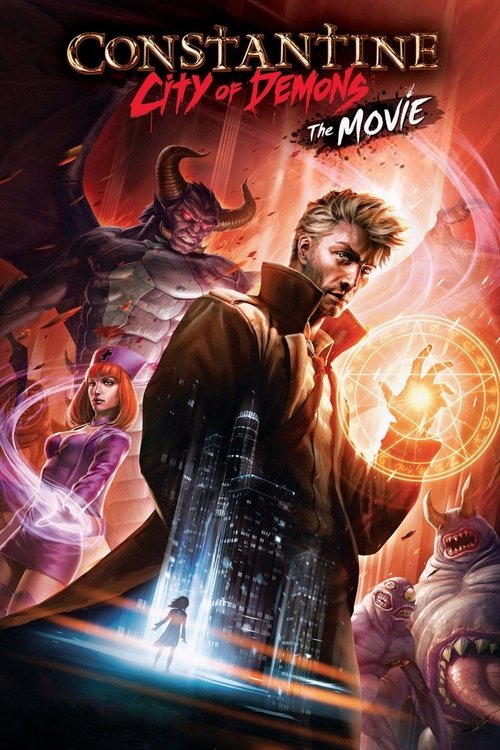
"To stop a devil, you must summon a bigger one."
Constantine: City of Demons - The Movie - Symbolism & Philosophy
Symbols & Motifs
The Inner Demons
They symbolize John's fracturing psyche and the specific guilt of damning Astra Logue to Hell. They are his self-loathing made flesh.
Early in the film, John is attacked in his apartment by tiny, grotesque versions of himself, which he must reabsorb into his subconscious.
Beroul's Pool of Corpses
Represents the predatory nature of Hollywood and the "City of Angels," where dreams literally decay into a cesspool of death.
Inside the villain's mansion, John stumbles upon a literal pool filled with rotting bodies, contrasting with the luxury of the estate.
The Camdever Curse
Symbolizes the ultimate sacrifice of love. It represents the idea that safety and ignorance are purchased at the cost of emotional truth.
Used in the climax to destroy Nergal, the spell is powered by the sacrifice of Trish and Renee's love for Chas, and Chas's memory of John.
Philosophical Questions
Is a life saved worth a life forgotten?
The film asks if physical survival is meaningful without the emotional connections that define humanity. By saving Trish at the cost of her memories of her father, Constantine forces a utilitarian outcome that feels like a spiritual defeat.
Can one ever truly make amends for the past?
John's entire existence is a penance for Newcastle. The film suggests that redemption is impossible; one can only mitigate future harm. His 'inner demons' are not just metaphors but realities, implying that guilt is a permanent constituent of the self.
Core Meaning
The film explores the inescapable nature of guilt and the transactional reality of magic. Unlike typical superhero narratives where victory is absolute, this story posits that every supernatural act demands a balance. The director uses Constantine's journey to show that true heroism often requires a sacrifice far greater than physical death: the erasure of love and memory. Ultimately, it argues that redemption is not a destination, but a continuous, painful burden that must be carried alone.