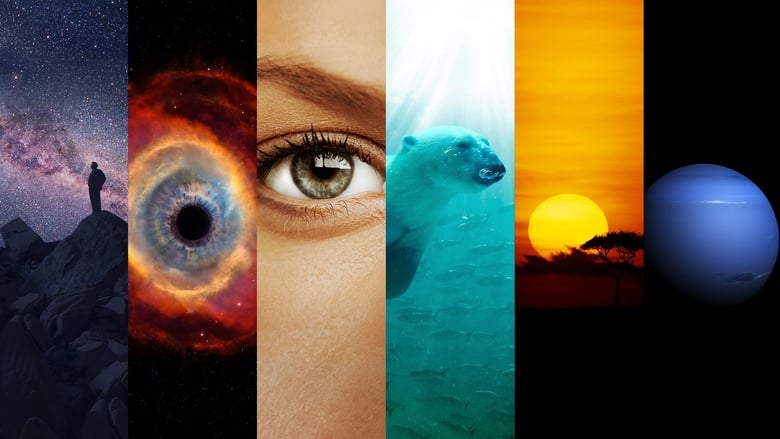
As a documentary series, Cosmos doesn't have a plot with twists in the traditional sense. The 'spoilers' are the scientific and historical revelations it presents. The overarching narrative arc is humanity's journey from a state of ignorance and superstition to one of scientific understanding. The key revelation, repeated in many forms, is that of our profound connection to the universe. We learn that the iron in our blood and the calcium in our bones were forged in the hearts of stars that exploded billions of years ago. We discover that all life on Earth shares a common genetic language, making us one family.
The series builds its case methodically. Early episodes establish our 'Cosmic Address' and place on the 'Cosmic Calendar.' Subsequent episodes reveal the hidden laws of nature—how light works, what atoms are, the force of gravity, the mechanics of evolution. The story of science itself is a major arc, showing a progression from lone, persecuted thinkers like Giordano Bruno to a global, collaborative enterprise. The finale of A Spacetime Odyssey, 'Unafraid of the Dark,' reveals the discovery of dark energy, an unknown force accelerating the expansion of the universe, ending on a note of profound mystery and celebrating science's comfort with the unknown. Possible Worlds culminates with a hopeful vision of the 2039 New York World's Fair, where humanity has solved its greatest problems by embracing science, presenting a potential 'ending' for our current societal story arc that is optimistic and aspirational.