The central turn in the latter half of the film is the surreal and horrifying sequence after Agnes's death. She appears to reanimate in her deathbed, her body still in the throes of her final agony, and she verbally pleads for her sisters to stay with her and comfort her. This is not a typical resurrection; she is a terrifying amalgam of the living and the dead. Karin, repulsed, refuses her, citing her own life and lack of love for Agnes. Maria approaches, but flees in terror when the dead Agnes grabs her. This sequence reveals the absolute depth of the sisters' self-absorption and their inability to provide solace even when begged by the dead. It is only Anna, the servant, who answers the call. She enters the room, cradles Agnes's body in her arms in an image reminiscent of the Pietà, and rocks her until she is finally still. This moment solidifies Anna as the film's sole vessel of true compassion. The ending's final twist is one of perspective. After the sisters part ways with cold finality, Anna is shown reading from Agnes's diary. We are shown a flashback to a golden, sunlit day where all four women are together, happy and at peace. Agnes's voiceover describes this as a moment of absolute perfection and happiness, for which she is profoundly grateful. This final revelation recasts the entire film's narrative of suffering, suggesting that such moments of grace are the ultimate meaning of life, making the preceding torment bearable and the sisters' subsequent emotional failure all the more tragic.
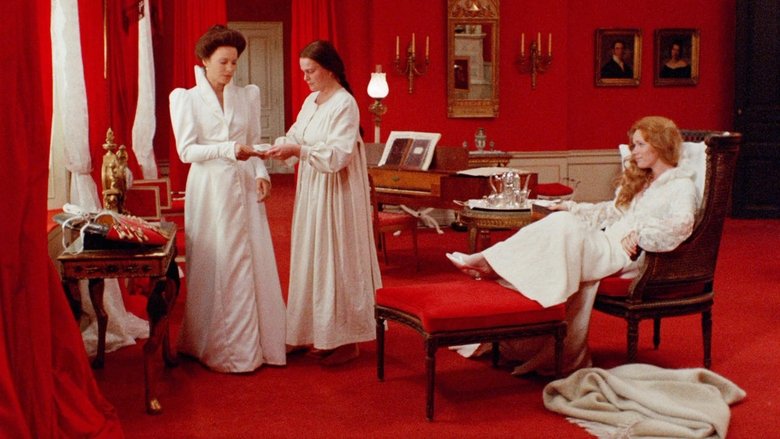

Viskningar och rop
"Four women dressed in white in a mansion painted red... haunted by whispers and cries."
Director: Ingmar Bergman
Cast: Liv Ullmann, Ingrid Thulin, Kari Sylwan, Harriet Andersson, Erland Josephson
Cries and Whispers — Ending Explained
⚠️ Spoiler Analysis
Alternative Interpretations
While the narrative appears straightforward, its dreamlike quality and ambiguous scenes invite multiple interpretations. One key area of debate is the sequence where the deceased Agnes appears to come back to life. Some view this as a literal, supernatural event, a final, horrifying manifestation of Agnes's need for comfort. Others interpret it as a dream or a collective psychological projection of the surviving characters—specifically Anna's dream—reflecting their guilt, fear, and unresolved emotions. The final, idyllic memory from Agnes's diary can also be seen in different lights. It can be viewed as a genuinely transcendent moment of grace, suggesting that happiness is possible even amidst immense suffering. Alternatively, it can be interpreted as a bittersweet, almost tragic memory of a fleeting moment of peace that only highlights the preceding pain and the sisters' ultimate failure to remain connected.
Explore More About This Movie
Dive deeper into specific aspects of the movie with our detailed analysis pages