
Cries and Whispers
Viskningar och rop
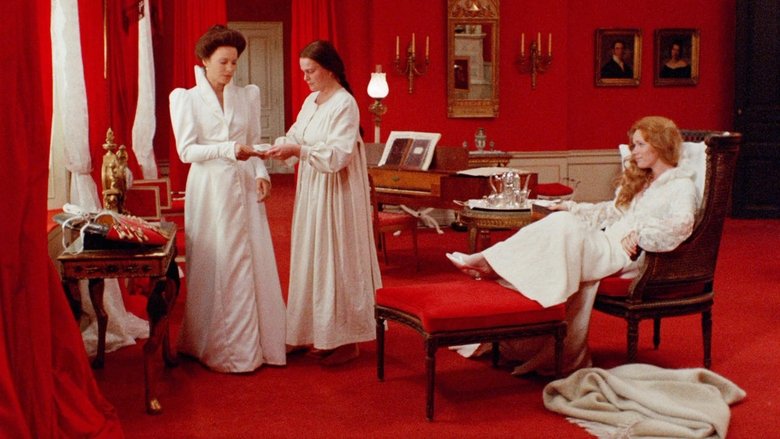
"Four women dressed in white in a mansion painted red... haunted by whispers and cries."
Overview
Set in a secluded 19th-century mansion, "Cries and Whispers" centers on three sisters and a devoted maid. Agnes is in the final, agonizing stages of uterine cancer, and her sisters, Maria and Karin, have returned to their childhood home to be with her. The film delves into the complex and strained relationships between the siblings, using flashbacks to reveal their individual histories of emotional turmoil, infidelity, and repression. As Agnes's suffering intensifies, the emotional distance and inability to connect between the sisters becomes painfully apparent. The maid, Anna, who has lost her own child, provides the only genuine comfort and empathy to the dying Agnes. The narrative explores themes of death, faith, the female psyche, and the desperate search for meaning in the midst of profound suffering.
The film is not a linear narrative but rather a dreamlike and atmospheric exploration of the characters' inner lives. Director Ingmar Bergman uses a distinct and saturated color palette, particularly crimson, to symbolize the inner turmoil of the characters. The story is punctuated by moments of intense emotional confrontation and quiet desperation, creating a claustrophobic and psychologically charged atmosphere.

Core Meaning
"Cries and Whispers" is a profound meditation on the nature of human suffering, death, and the elusive possibility of finding solace and connection. Bergman explores the idea that in the face of mortality, social facades crumble, revealing the raw and often ugly truths of human relationships. The film suggests that genuine compassion and empathy, as embodied by the maid Anna, are the only true balms for the profound loneliness and pain of existence. It questions the efficacy of faith and societal conventions in providing comfort, ultimately positing that fleeting moments of genuine human connection are the closest we can come to grace and meaning. The pervasive use of the color red is central to the film's meaning, with Bergman himself stating it represents his childhood conception of the soul.
Thematic DNA
The Inescapability of Suffering and Death
The film confronts the physical and emotional agony of death head-on through Agnes's battle with cancer. Her suffering is depicted in excruciating detail, forcing both the characters and the audience to confront the stark reality of mortality. Beyond Agnes's physical pain, her sisters are trapped in their own forms of emotional suffering stemming from loveless marriages, repressed desires, and an inability to connect. The film posits that suffering is an intrinsic part of the human condition, from which there is no easy escape.
The Failure of Communication and Human Connection
Despite being sisters, Karin and Maria are emotionally distant from each other and from the dying Agnes. Their attempts at connection are often fleeting and ultimately fail, highlighting their deep-seated narcissism and inability to truly empathize with another's pain. This theme is powerfully illustrated in a scene where the dead Agnes seemingly returns and begs for comfort, only to be rejected by her terrified sisters. The genuine, selfless connection is only found between Agnes and her maid, Anna, who offers physical and emotional solace without reservation.
The Female Psyche and Gender Roles
The film is an intense exploration of the inner lives of its four female protagonists. Bergman delves into their repressed desires, frustrations, and the societal constraints placed upon them at the turn of the century. The male characters in the film are largely peripheral and ineffectual, emphasizing the film's focus on the complexities of female relationships and psychology. Some feminist critics have argued that Bergman uses his female characters as projections of his own anxieties and fears.
Faith and the Silence of God
The film questions the ability of organized religion to provide comfort in the face of immense suffering. The priest who visits Agnes's deathbed confesses that her faith was stronger than his own, highlighting the inadequacy of religious platitudes in the face of raw, human agony. Anna's simple, personal faith and selfless actions stand in stark contrast to the formal, yet ultimately hollow, rituals of the church. This continues Bergman's career-long exploration of God's silence in a suffering world.
Character Analysis
Agnes
Harriet Andersson
Motivation
To find relief from her excruciating pain and to experience a final moment of connection and love with her estranged sisters.
Character Arc
Agnes's arc is one of physical decline and a desperate yearning for connection. As she dies, her suffering strips away all pretense, and her primary desire is for comfort and the loving presence of her sisters. Through her diary, read at the end, we see that despite her pain, she was capable of experiencing moments of profound happiness and gratitude, suggesting a spiritual grace that transcends her physical torment.
Karin
Ingrid Thulin
Motivation
To maintain control and protect herself from emotional vulnerability through rigid self-discipline and emotional detachment.
Character Arc
Karin is trapped in a loveless marriage and a life of emotional repression. The presence of death forces some of her long-buried hatred and self-loathing to the surface, notably in a shocking act of self-mutilation. She briefly attempts to connect with Maria after Agnes's death, but ultimately retreats back into her cold, isolated existence, unable to sustain genuine intimacy.
Maria
Liv Ullmann
Motivation
To avoid unpleasantness and to be seen as desirable and loved, without having to offer genuine emotional commitment in return.
Character Arc
Maria is shallow, self-absorbed, and seeks validation through flirtation and affairs. Confronted with her sister's death, her emotional immaturity is exposed. She is incapable of offering real comfort and is repulsed by the ugliness of death. Though she makes a brief, sentimental attempt to bond with Karin, her shallowness prevents any lasting change, and she quickly reverts to her superficial self.
Anna
Kari Sylwan
Motivation
To provide selfless comfort and care to Agnes, driven by a deep well of empathy and a simple, powerful faith.
Character Arc
Anna is a steady, grounding presence throughout the film. Having lost her own daughter, her devotion to Agnes is an act of selfless love. She is the only character who remains unchanged because her core of empathy and faith is unshakable. She provides the film's moral and emotional center, representing a quiet, profound humanity in the face of the sisters' self-absorption and the indifference of the universe.
Symbols & Motifs
The Color Red
Ingmar Bergman famously stated that he imagined the soul as being red on the inside. In the film, the pervasive crimson of the mansion's walls and carpets symbolizes the raw, unfiltered emotions of the characters, their inner turmoil, and the primal nature of suffering and passion. It also evokes blood, menstruation, and the physicality of both life and death.
The color red dominates the interior scenes, creating a womb-like yet claustrophobic atmosphere. The film frequently employs red fade-outs and fade-ins instead of traditional black, immersing the viewer in this symbolic color. This intense use of a single color was a deliberate and experimental choice by Bergman and his cinematographer, Sven Nykvist.
Touch
Physical touch in the film represents the presence or absence of genuine connection and empathy. The sisters' inability to touch one another or the dying Agnes signifies their emotional coldness and isolation. In contrast, Anna's gentle and constant physical care for Agnes is a powerful expression of love and compassion.
Karin recoils from Maria's touch, and Maria flees in terror when the resurrected Agnes tries to hold her. A brief, almost frantic moment of caressing between Karin and Maria after Agnes's death proves to be fleeting and superficial. The most profound moments of touch are between Anna and Agnes, culminating in a Pietà-like image of Anna cradling the dead Agnes in her arms.
The Ticking Clocks
The recurring sound of ticking clocks serves as a constant reminder of the passage of time and the inevitability of death. It heightens the sense of dread and anticipation within the quiet, suffocating mansion. The relentless sound underscores the characters' waiting for Agnes's death and the slow, agonizing nature of her decline.
The sound of ticking clocks is a prominent feature of the film's sound design, often being the only sound in otherwise silent scenes. This auditory motif contributes to the film's tense and claustrophobic atmosphere, emphasizing the characters' isolation and the slow march towards the inevitable.
Memorable Quotes
Come what may, this is happiness. I cannot wish for anything better. Now, for a few minutes, I can experience perfection. And I feel profoundly grateful to my life, which gives me so much.
— Agnes (from her diary, read by Anna)
Context:
Anna reads this entry from Agnes's diary after the sisters have departed. The quote accompanies a flashback to a beautiful autumn day when the four women were together in the garden, a rare moment of peace and togetherness.
Meaning:
This quote, which concludes the film, offers a surprising and deeply moving perspective. Despite the immense suffering depicted, it suggests that moments of simple, shared happiness and connection are the ultimate meaning of life. It provides a glimmer of hope and grace amidst the bleakness, reframing the entire narrative.
Pray for us who are left here on the dark, dirty earth under an empty and cruel Heaven.
— The Priest
Context:
The priest says this during a eulogy at Agnes's wake. His emotional plea reveals his own crisis of faith and the inability of religious doctrine to adequately address the profound reality of suffering.
Meaning:
This line encapsulates the film's existential dread and its questioning of faith. The priest, a supposed spiritual guide, expresses his own doubt and despair, asking the dead Agnes to intercede for the living. It highlights a central theme of God's silence and the struggle to find meaning in a seemingly indifferent universe.
Do you realize I hate you? I know of what you're made - with your empty caresses and your false laughter. Can you conceive how anyone can live with so much hate as has been my burden?
— Karin
Context:
Karin says this to Maria during a tense confrontation after an earlier, failed attempt at reconciliation. It is a key moment that lays bare the years of resentment and emotional distance between them.
Meaning:
This outburst reveals the depth of Karin's long-repressed bitterness and her contempt for Maria's superficiality. It is a moment of raw, brutal honesty that shatters the fragile pretense of sisterly affection, exposing the toxic undercurrents of their relationship.
Philosophical Questions
Can true empathy exist in the face of overwhelming, personal suffering?
The film explores this question through the contrasting behaviors of the sisters and the maid, Anna. Karin and Maria, consumed by their own emotional problems, are ultimately unable to offer genuine comfort to their dying sister. Their empathy is limited by their self-absorption and their fear of confronting the raw reality of death. Anna, who has also known profound loss, is the only one capable of selfless compassion. The film suggests that true empathy requires a transcendence of the self, which most of the characters are unable to achieve.
In the absence of divine comfort, what is the source of meaning in life?
"Cries and Whispers" consistently portrays a world where religion and God are silent or absent. The priest's crisis of faith is a testament to this. The film seems to suggest that if meaning is to be found, it is not in the supernatural, but in fleeting, authentic moments of human connection and compassion. Agnes's final diary entry, which describes a moment of simple happiness with her sisters as 'perfection,' posits that these transient experiences of love and togetherness are the ultimate source of meaning in a finite and often painful existence.
Alternative Interpretations
While the narrative appears straightforward, its dreamlike quality and ambiguous scenes invite multiple interpretations. One key area of debate is the sequence where the deceased Agnes appears to come back to life. Some view this as a literal, supernatural event, a final, horrifying manifestation of Agnes's need for comfort. Others interpret it as a dream or a collective psychological projection of the surviving characters—specifically Anna's dream—reflecting their guilt, fear, and unresolved emotions. The final, idyllic memory from Agnes's diary can also be seen in different lights. It can be viewed as a genuinely transcendent moment of grace, suggesting that happiness is possible even amidst immense suffering. Alternatively, it can be interpreted as a bittersweet, almost tragic memory of a fleeting moment of peace that only highlights the preceding pain and the sisters' ultimate failure to remain connected.
Cultural Impact
"Cries and Whispers" is widely regarded as one of Ingmar Bergman's masterpieces and a landmark of 1970s cinema. Its audacious use of color, particularly the saturated reds, was a significant departure from Bergman's earlier black-and-white films and influenced subsequent filmmakers' approach to color as a storytelling tool. The film's unflinching portrayal of physical suffering and psychological turmoil was groundbreaking and emotionally devastating for audiences. Critically, it was a massive success, earning a rare Best Picture Oscar nomination for a foreign film and solidifying Bergman's reputation as a master director. The film has been the subject of extensive academic and critical analysis, particularly regarding its themes of femininity, faith, and existentialism. The iconic image of Anna holding Agnes in a Pietà-like pose has been commemorated on Swedish postage stamps. Its influence can be seen in the work of many later directors who have explored themes of family dysfunction and grief with similar psychological intensity.
Audience Reception
Audiences have generally found "Cries and Whispers" to be a profoundly moving, yet emotionally draining and difficult film to watch. It is widely praised for its powerful performances, particularly Harriet Andersson's harrowing portrayal of Agnes, and for Sven Nykvist's stunning, Oscar-winning cinematography. The film's deliberate pacing, intense psychological focus, and unflinching depiction of suffering have been points of both admiration and criticism. Some viewers find the film's bleakness and emotional cruelty to be overwhelming, while others see it as a beautiful and ultimately life-affirming exploration of the human condition. The dreamlike, ambiguous scenes, especially the 'resurrection' of Agnes, have sparked considerable discussion and debate among viewers.
Interesting Facts
- The film was inspired by a recurring dream Ingmar Bergman had of four women in white in a red room, whispering to each other.
- Bergman initially struggled to find financing for the film, as his previous two films had been unsuccessful. He ended up using his own savings to help fund the production.
- The film was a major critical and commercial success, especially in the United States, where it was distributed by B-movie producer Roger Corman.
- It received five Academy Award nominations, including for Best Picture, a rare achievement for a foreign-language film.
- Cinematographer Sven Nykvist won the Academy Award for Best Cinematography for his work on the film.
- To enhance Harriet Andersson's appearance of illness, the filmmakers kept her up late at night. She modeled her death scene on the death of her own father.
- The on-set atmosphere was described as surprisingly light and cheerful, which the cast and crew found to be a necessary antidote to the film's heavy subject matter.
- The exterior and final swing scene were shot first to take advantage of the autumn sunlight before the darker season set in.
⚠️ Spoiler Analysis
Click to reveal detailed analysis with spoilers
Frequently Asked Questions
Explore More About This Movie
Dive deeper into specific aspects of the movie with our detailed analysis pages
Comments (0)
No comments yet. Be the first to share your thoughts!