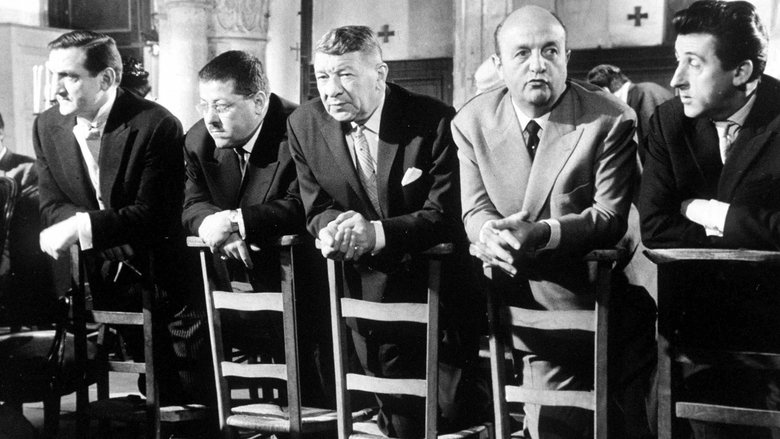
The narrative is a series of failed coups against Fernand. The true antagonist is revealed to be Théo, the German distiller, who has been manipulating the bumbling Volfoni brothers. In the climax, while Patricia is getting married to Antoine in a church, Fernand and his loyalists settle the score.
The twist is not in the plot but in the resolution of the character dynamics: the Volfoni brothers, who spent the whole film trying to kill Fernand, end up as guests at the wedding, effectively neutered and accepted into the "family" as harmless uncles. The film ends with a final gag where the "End" title card appears, sealing the characters in their archetypal roles forever: the boss, the fool, and the happy couple. Fernand succeeds in his mission not by changing the criminal world, but by surviving it with his code intact.