Crooks in Clover
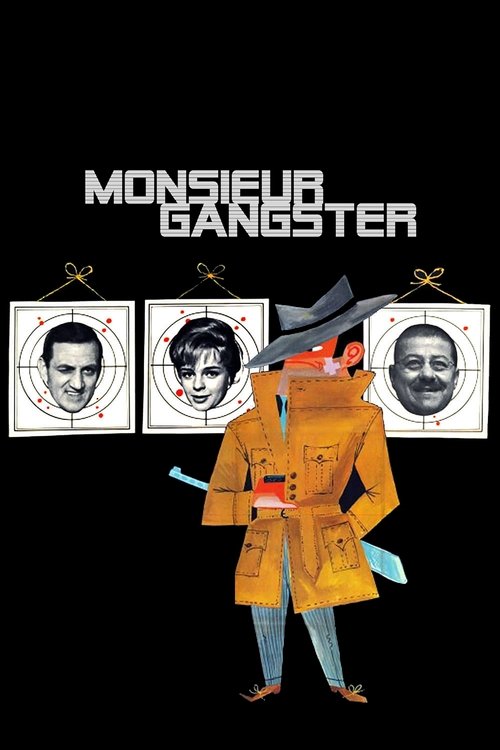
A cult French gangster parody blending noir aesthetics with hilarious slang-heavy dialogue. It captures the clash between old-school mob codes and the swinging 60s youth culture through the eyes of a reluctant godfather.
Crooks in Clover

Crooks in Clover

Les Tontons flingueurs

27 November 1963 France 111 min ⭐ 7.7 (549)
Director: Georges Lautner
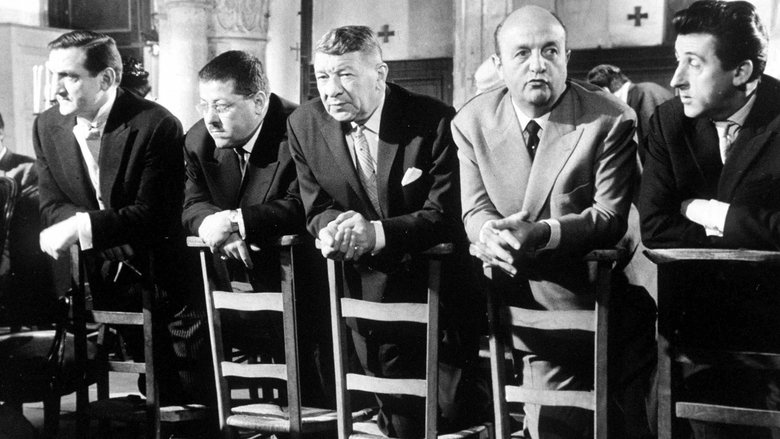
Cast: Lino Ventura, Bernard Blier, Francis Blanche, Claude Rich, Pierre Bertin
Crime Comedy
The Generation Gap Friendship and Loyalty Parody of Masculinity Language as a Weapon

Overview

Fernand Naudin, a former mobster turned respectable tractor dealer in Montauban, is summoned to Paris by his dying childhood friend, the gang boss Louis "The Mexican". To everyone's surprise, including his own, Fernand is named the sole heir to Louis's criminal empire and appointed guardian of his rebellious teenage daughter, Patricia. This decision enrages the organization's existing lieutenants, particularly the bumbling Volfoni brothers and the treacherous Théo.

Fernand moves into the Mexican's mansion, protected by the loyal hitman Pascal and the butler Jean. He must navigate a dual life: managing a crime syndicate while fending off assassination attempts from his jealous rivals, and playing the strict "uncle" to Patricia, who is more interested in parties and her eccentric boyfriend Antoine than her studies. The film culminates in a chaotic wedding day where Fernand must eliminate the last threats to the family's peace while ensuring Patricia gets to the altar on time.
Core Meaning

At its heart, Crooks in Clover is a satirical elegy for a dying breed of "gentleman gangsters." Director Georges Lautner and screenwriter Michel Audiard mock the seriousness of the film noir genre by placing tough, old-fashioned characters in absurd situations driven by modern changes. The film suggests that the rigid codes of honor and masculinity of the past are becoming obsolete in the face of a carefree, chaotic, and incomprehensible new generation.

Thematic DNA

The Generation Gap 30%
Friendship and Loyalty 25%
Parody of Masculinity 25%
Language as a Weapon 20%

The Generation Gap

The film sharply contrasts the stiff, suit-wearing gangsters with the "yé-yé" generation of the 1960s. Fernand and his crew are baffled by Patricia's music, parties, and lack of discipline, highlighting the cultural shift occurring in France at the time.

Friendship and Loyalty

Despite the violence, the bond between the "tontons" (uncles) is central. Characters like Fernand, Pascal, and Jean operate on a code of loyalty to the deceased Mexican, contrasting with the treacherous behavior of Théo.

Parody of Masculinity

The film satirizes the stoic, violent male archetype common in crime films. The gangsters' obsession with respect, hierarchy, and "manly" drinks (the kitchen scene) is played for laughs, exposing the absurdity of their posturing.

Language as a Weapon

Michel Audiard's dialogue creates a unique world where slang (argot) serves as a status symbol. The characters' verbal sparring is as lethal and significant as their gunfights, defining their hierarchy and intelligence.

Character Analysis

Fernand Naudin

Lino Ventura

Archetype: The Reluctant Hero / The Straight Man
Key Trait: Unflappable stoicism

Motivation

He is motivated solely by his promise to his dying friend, the Mexican. He has no desire for power but feels bound by a code of honor to protect Patricia and the business.

Character Arc

Fernand starts as a settled businessman who wants nothing to do with crime. He is dragged back in by duty, proves he is tougher than all the current bosses combined, and ultimately secures Patricia's future before (presumably) returning to his quiet life.

Raoul Volfoni

Bernard Blier

Archetype: The Buffoon / The Incompetent Villain
Key Trait: Cowardly arrogance

Motivation

Greed and jealousy. He feels entitled to the Mexican's empire and is insulted that an outsider like Fernand was chosen over him.

Character Arc

Raoul begins as an arrogant rival believing he deserves the throne. After repeated failures and beatings, he essentially becomes a comic relief sidekick, begrudgingly respecting Fernand's authority.

Maître Folace

Francis Blanche

Archetype: The Consigliere
Key Trait: Pedantic bureaucrat

Motivation

Order and legality within illegality. He cares about the books balancing and the organization running smoothly, regardless of who is in charge.

Character Arc

The notary serves as the narrator and guide to the criminal underworld's finances. He remains constant, transitioning his loyalty from the Mexican to Fernand without skipping a beat.

Patricia

Sabine Sinjen

Archetype: The Rebellious Daughter
Key Trait: Naive manipulation

Motivation

Freedom and amusement. She wants to live her life without the interference of her father's "associates."

Character Arc

She goes from a spoiled, manipulative teenager who tries to play the gangsters against each other to a young bride, seemingly settling down with her quirky fiancé Antoine.

Symbols & Motifs

The "Vitriol" (Illegal Liquor)

Meaning:

Symbolizes the harsh, unfiltered nature of the "old world" gangsters.

Context:

In the iconic kitchen scene, the characters drink a foul-tasting, high-proof moonshine. Their ability to stomach it (or pretend to) creates a bond of shared suffering and masculine bravado that excludes outsiders.

Silenced Pistols

Meaning:

Represents the trivialization of violence and the polite facade of the criminal underworld.

Context:

During gunfights, the characters use silencers that make comical "pfft" sounds, allowing them to conduct deadly business without disturbing the neighbors or the police, turning murder into a quiet, almost domestic chore.

Patricia's Record Player

Meaning:

Symbolizes the intrusion of modernity and Americanized youth culture.

Context:

The loud pop music constantly interrupts the gangsters' serious meetings, physically manifesting the generation gap that Fernand cannot control or silence.

Memorable Quotes

Les cons ça ose tout, c'est même à ça qu'on les reconnaît.

— Fernand Naudin

Context:

Fernand says this to Maître Folace when discussing the Volfoni brothers' reckless behavior and their audacity in challenging him.

Meaning:

"Morons dare to do anything; that’s even how you recognize them." This line has become a French proverb, observing that stupidity is defined by a lack of inhibition or shame.

C'est curieux chez les marins ce besoin de faire des phrases.

— Maître Folace

Context:

Spoken during the kitchen scene after a toast involves a poetic but nonsensical speech about the liquor.

Meaning:

"It's curious among sailors, this need to make phrases." A dismissive remark mocking someone's attempt to sound tough or poetic.

Touche pas au grisbi, salope !

— Fernand Naudin

Context:

Fernand yells this at a character (often misremembered, but directed at Patricia or a rival in a moment of frustration) to assert dominance.

Meaning:

"Don't touch the loot, bitch!" (A direct nod to the film Touchez pas au grisbi). It represents the drawing of a line in the sand regarding money and loyalty.

J'disperse, j'ventile. Aux quatre coins de Paris qu'on va le retrouver, éparpillé par petits bouts, façon puzzle.

— Raoul Volfoni

Context:

Raoul is ranting to his brother Paul about what he will do to Fernand, moments before getting beaten up by Fernand again.

Meaning:

"I scatter, I ventilate. We'll find him in the four corners of Paris, scattered in little pieces, puzzle-style." A hilarious display of impotent rage and overly descriptive violence.

Philosophical Questions

Does stupidity have limits?

Through the famous line "Les cons ça ose tout," the film posits that stupidity is a limitless force of nature. Unlike intelligence, which has boundaries of reason and caution, stupidity is defined by its infinite capacity for reckless action, making it a dangerous and unpredictable variable in human affairs.

Is honor possible in a changing world?

Fernand clings to a code of friendship and promise-keeping that everyone else seems to have abandoned. The film asks whether such virtues are admirable constants or outdated liabilities in a world driven by greed (Théo) and superficiality (Patricia's friends).

Alternative Interpretations

While widely seen as a comedy, the film can be interpreted as a conservative critique of modernity. Fernand represents traditional values (loyalty, stoicism, hierarchy) that are under siege by a chaotic new world of Americanized youth (yé-yé music, rebellion) and dishonorable criminals (Théo). The ending, with marriage and the restoration of order, suggests a desire to tame these modern forces.

Conversely, it can be viewed as a deconstruction of the gangster myth. By making the "tough guys" inept, drunk, or domestic (worrying about nieces and groceries), the film strips away the glamour of the American film noir, revealing the mundane and ridiculous reality of the criminal lifestyle.

Cultural Impact

Les Tontons flingueurs is arguably the most quotable film in French cinema history. Upon its release in 1963, critics dismissed it as a low-brow parody, but it became a massive box-office success. Over the decades, it achieved legendary status, primarily due to Michel Audiard's dialogue, which elevated slang to an art form. It is broadcast regularly on French television, often drawing millions of viewers even 60 years later.

The film defined the "Audiard style"—cynical, witty, and rhythmically precise dialogue—that influenced generations of French filmmakers and comedians. It stands as a nostalgic monument to the "Trente Glorieuses" (the post-war economic boom) and a bridge between the classic cinema of the 1950s and the modern pop culture of the 1960s.

Audience Reception

Praised: Audiences universally adore the dialogue, particularly the "kitchen scene," which is considered a masterclass in screenwriting and acting. The chemistry between Lino Ventura (the straight man) and Bernard Blier (the comic foil) is frequently cited as the film's highlight.

Criticized: Modern audiences sometimes find the plot slightly meandering or the pacing slow compared to today's action comedies. Some original critics in 1963 found the violence too casual or the humor too low-brow, though this view has largely vanished.

Verdict: A timeless masterpiece of French comedy that transcends its genre to become a cultural touchstone.

Interesting Facts

  • Jean Gabin was originally offered the role of Fernand Naudin but demanded his own technical crew. When the producers refused, Lino Ventura was cast, despite his initial fears that he couldn't play comedy.
  • The famous kitchen scene was almost cut. Screenwriter Michel Audiard thought it was useless to the plot, but director Georges Lautner insisted on keeping it as a homage to the film noir Key Largo.
  • The German actress Sabine Sinjen (Patricia) did not speak fluent French, so her voice was dubbed in post-production.
  • Composer Michel Magne used a single musical theme for the entire soundtrack, arranging it in over a dozen different styles (waltz, twist, baroque, jazz) to fit the mood of each scene.
  • The title Les Tontons flingueurs (The Gun-toting Uncles) was chosen because the working title, Le Terminus des prétentieux, was considered too intellectual by the studio.
  • During the kitchen scene, the actors were actually drinking water, but they acted so well that audiences are often convinced they were drunk. However, some reports say they did consume real liquor in later takes to loosen up.

Easter Eggs

Corelli's Sheet Music

In the scene where Antoine is composing music, the sheet music on the piano is titled "Corelli." However, the music played is actually by the film's composer, Michel Magne, serving as a meta-joke about the score.

The Halmoze Car Bomb

The "bomb in the car" gag is a classic trope subversion. Raoul plans to blow up Fernand's car, but through incompetence or misfortune, the plan backfires (often literally in the genre), referencing the Wile E. Coyote-style futility of the Volfonis.

Mac Ronay's Hand

The character Bastien (played by Mac Ronay) often uses a fake hand prop for comedic effect during gunfights, a surreal visual gag that fits the film's parody tone.

⚠️ Spoiler Analysis

Click to reveal detailed analysis with spoilers

Frequently Asked Questions

Explore More About This Movie

Dive deeper into specific aspects of the movie with our detailed analysis pages

Comments (0)

Leave a comment

No comments yet. Be the first to share your thoughts!