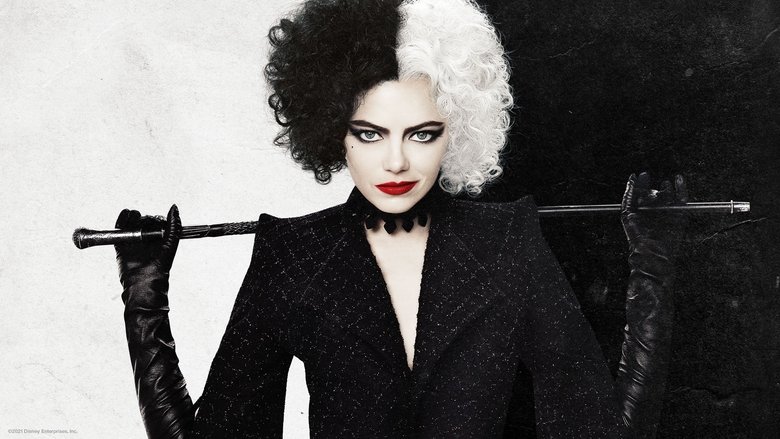
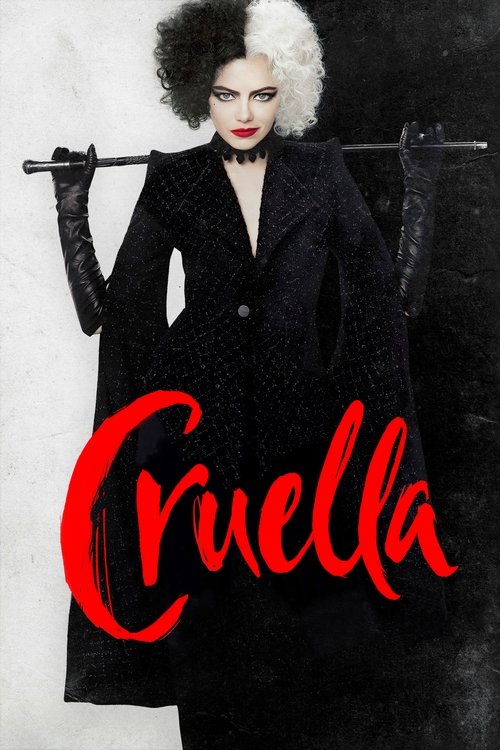
"Hello cruel world."
Cruella - Symbolism & Philosophy
Symbols & Motifs
Dalmatians
The Dalmatians in "Cruella" symbolize both trauma and power. Initially, they are instruments of Estella's childhood trauma, as she believes they caused her mother's death. Later, by taming and controlling the Baroness's Dalmatians, Cruella reclaims her power over her past and turns a symbol of her fear into one of her strength and authority.
The Baroness uses her three Dalmatians as intimidating status symbols. Estella witnesses them pushing her mother off a cliff. As Cruella, she later kidnaps the dogs, and in the film's climax, they obey her commands, signifying a shift in power. The post-credits scene shows her gifting Dalmatian puppies, Pongo and Perdita, to Roger and Anita.
Fashion and Clothing
Fashion serves as Cruella's primary weapon and form of self-expression. Her designs are a visual representation of her rebellion, creativity, and inner turmoil. Clothing is used to construct and deconstruct identity, with Estella hiding behind disguises and Cruella making spectacular, statement-making appearances. The contrast between the Baroness's structured, classic designs and Cruella's deconstructed, punk-inspired creations highlights their conflicting ideologies.
Cruella's fashion stunts are central to the plot, from the fiery reveal of her red dress to the dress made of garbage bags and the gown adorned with moth cocoons. Each outfit is a calculated move in her public battle against the Baroness. The film's costume design, by Jenny Beavan, won an Academy Award for its significance to the narrative.
Hellman Hall / Hell Hall
The imposing estate symbolizes oppressive power and inherited legacy. Initially named Hellman Hall, it represents the Baroness's cold, tyrannical reign. By the end, Cruella reclaims it and renames it "Hell Hall," symbolically shedding the patriarchal "man" from the name and embracing her own devilish persona. It becomes the seat of her newfound power and the birthplace of her future exploits.
Hellman Hall is the site of Catherine's death and the Baroness's lavish parties. In the film's climax, Estella stages her own "death" there, leading to the Baroness's downfall. Cruella inherits the estate and in the final scene, alters the sign to read "Hell Hall," a direct nod to the location in "101 Dalmatians."
The Necklace
The necklace is a key to Estella's past and her true identity. It represents her birthright and the hidden truth about her parentage. For Estella, it's a cherished link to her adoptive mother, Catherine. For the Baroness, it's a symbol of a past she tried to erase. The struggle to reclaim the necklace drives much of the plot and unlocks the central mystery of the film.
Catherine gives the necklace to Estella before she dies. Estella later sees the Baroness wearing it, which triggers her quest for revenge. The necklace contains a key that unlocks a box with Estella's birth certificate, revealing the Baroness is her mother.
Philosophical Questions
Are people born 'bad,' or are they made so by their circumstances?
The film directly engages with the 'nature vs. nurture' debate. Estella is told by her mother that she has a 'bad' side, Cruella. Later, she discovers her biological mother is a murderous narcissist, suggesting a genetic component to her dark tendencies. However, her transformation is triggered by the trauma of her adoptive mother's death and the injustices she suffers under the Baroness. The film avoids a simple answer, suggesting that while one might be born with certain predispositions ('born brilliant, born bad, and a little bit mad'), it is trauma, experience, and conscious choice that ultimately shape who a person becomes.
Can revenge ever be a form of justice?
Cruella's entire mission is fueled by a desire for revenge against the Baroness for murdering her mother. Her methods are theatrical, disruptive, and often illegal, blurring the line between seeking justice and indulging in personal vengeance. The film presents her actions as both righteous—exposing a truly evil person—and morally gray. It asks the audience to consider whether the ends justify the means and at what point a quest for justice becomes a corrupting force in itself, as Cruella risks becoming as cruel as the woman she despises.
Is conformity a virtue or a cage?
From childhood, Estella is punished for her inability to conform. Her creativity and rebellious streak are seen as problematic. The world, especially the rigid high-fashion establishment of the Baroness, demands she suppress her true self. By embracing Cruella, she breaks free from the cage of conformity and finds immense power and success. The film champions individuality and rebellion as necessary forces for art and change, questioning the value of fitting in at the cost of one's unique identity.
Core Meaning
"Cruella" delves into the timeless debate of nature versus nurture, exploring how our innate predispositions are shaped by our experiences. It questions whether one is born wicked or becomes so through trauma and circumstance. The film suggests that embracing one's true, unconventional self, even the darker aspects, can be a form of empowerment and rebellion against a repressive society. It also serves as a cautionary tale about the corrupting influence of power and the consuming nature of revenge. Ultimately, the film posits that even those deemed 'bad' have a complex past that shapes their present, and that one's identity is a fluid and often conscious creation.