
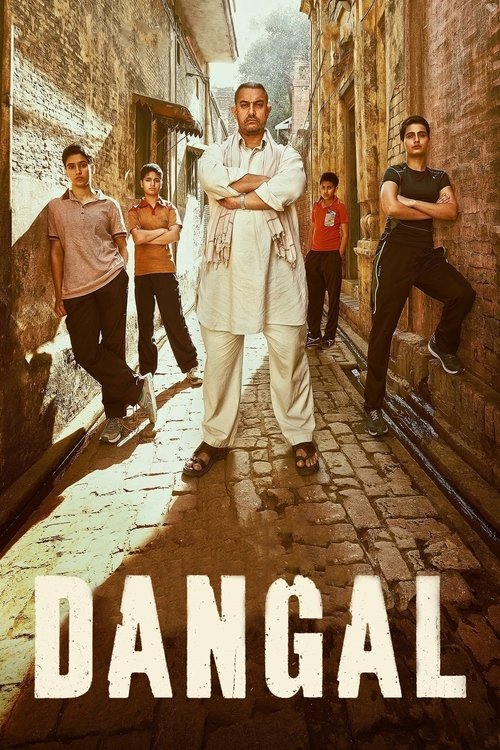
दंगल
Dangal - Symbolism & Philosophy
Symbols & Motifs
Cutting of the Hair
The forced cutting of Geeta and Babita's long hair is a powerful symbol of their sacrifice and their departure from traditional femininity. It represents their induction into a male-dominated world and the stripping away of societal expectations placed upon young girls. It's a visual metaphor for breaking free from restrictive norms.
Early in their training, Mahavir takes the girls to a barber and has their hair cut short to prevent it from interfering with their wrestling. This moment is depicted as traumatic for the girls but is a pivotal turning point in their transformation into wrestlers.
The Wrestling Pit (Akhada)
The makeshift mud pit that Mahavir digs in his field symbolizes the foundation of their journey. It represents his resourcefulness, dedication, and the raw, unrefined beginnings of their training. It contrasts sharply with the professional mats of the National Sports Academy, symbolizing the clash between traditional, experience-based coaching and modern, institutionalized methods.
Unable to afford professional wrestling mats, Mahavir creates his own akhada for the girls to train in. This pit is where they learn their foundational skills and develop their strength and resilience. It's the crucible where their wrestling careers are forged.
The Gold Medal
The gold medal is the ultimate symbol of success, validation, and the fulfillment of a dream. It represents not just a personal achievement but a victory for the family, for women in sports, and for the nation. Mahavir's refrain, "Gold jeeti toh misal ban javegi" (If you win gold, you will become an example), elevates the medal from a mere prize to a legacy-defining achievement.
The quest for an international gold medal is the film's central motivation, established from the very beginning. It drives every decision Mahavir makes and every sacrifice the girls endure, culminating in the final, tense match of the Commonwealth Games.
Philosophical Questions
Does a parent have the right to impose their unfulfilled dreams on their children?
The film delves deep into this question through Mahavir's character. His methods are harsh and strip his daughters of a normal childhood. For a significant portion of the film, it appears he is motivated by his own selfish desires. However, the narrative also provides a counterargument: in their specific social context, Mahavir's forceful intervention is what saves them from a predetermined life of child marriage and domestic labor. The film doesn't offer a simple answer, instead presenting the complex reality where a parent's seemingly tyrannical ambition might also be the only path to liberation and a better future for their children.
What is the true cost of greatness?
"Dangal" meticulously documents the immense sacrifices required to achieve world-class success. The girls sacrifice their childhood, personal freedom, and even their physical appearance. The family sacrifices their social standing and financial stability. The film explores the idea that greatness is not just about talent but about an obsessive, all-consuming dedication that demands immense personal cost from the individual and those around them. It questions whether the glory of the final victory justifies the grueling and often painful journey.
Core Meaning
The core meaning of "Dangal" revolves around shattering patriarchal norms and championing female empowerment through unwavering determination. The film powerfully conveys the message that a gold medal is a gold medal, regardless of whether it is won by a son or a daughter. Director Nitesh Tiwari wanted to showcase the incredible true story of the Phogat family to inspire audiences, illustrating that with relentless hard work, love, and a strong vision, societal barriers can be broken. It explores the complexities of a father's ambition, which, while seemingly tyrannical at times, is ultimately rooted in a desire to provide his daughters a future beyond the conventional expectations of marriage and domesticity. The film is a testament to perseverance, the importance of family support, and the idea that talent and potential are not defined by gender.