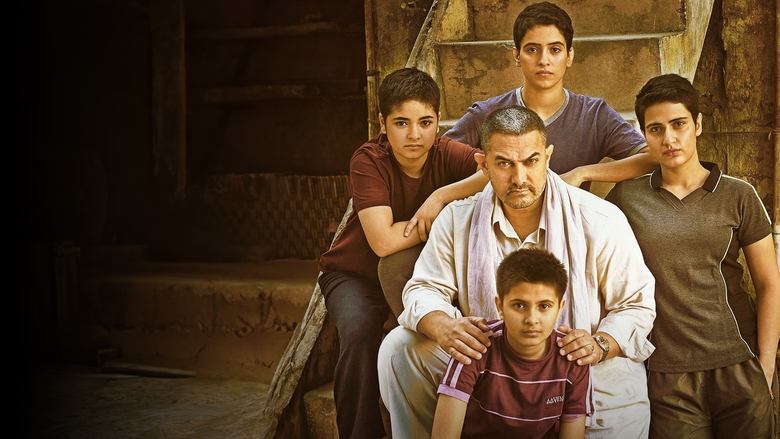
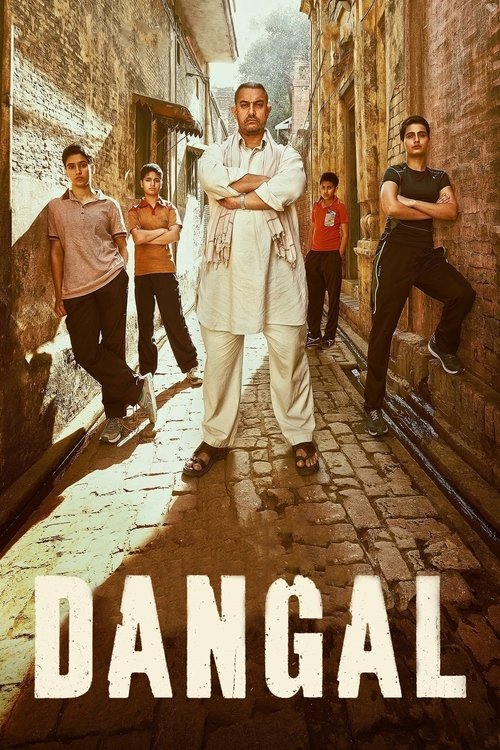
Dangal
A heart-pounding biographical drama that feels like a spirited wrestling match against patriarchy, leaving you breathless with its raw emotion and triumphant spirit.
Dangal

Dangal

दंगल

21 December 2016 India 161 min ⭐ 7.9 (1,076)
Director: Nitesh Tiwari
Cast: Aamir Khan, Fatima Sana Shaikh, Sanya Malhotra, Zaira Wasim, Suhani Bhatnagar
Drama Family Comedy
Female Empowerment and Gender Equality Ambition and Perseverance Father-Daughter Relationship Nationalism and Patriotism
Budget: $10,400,000
Box Office: $311,000,000

Overview

"Dangal" (which translates to "Wrestling Bout") is a 2016 Indian biographical sports drama that tells the extraordinary true story of Mahavir Singh Phogat, a former amateur wrestler from Haryana. Harboring an unfulfilled dream of winning an international gold medal for India, Mahavir pins his hopes on his future son. However, destiny blesses him with four daughters.

Initially dejected, Mahavir has a profound realization when his two eldest daughters, Geeta and Babita, come home after thrashing two boys who had insulted them. He sees the same fire and potential in them and decides to train them to become world-class wrestlers, defying the deeply entrenched societal norms and gender biases of his village. The film chronicles the grueling and often harsh training regimen he imposes, their initial resentment, and their eventual understanding of his vision for their future. It follows their journey from a makeshift mud pit in their village to the international wrestling stage, culminating in Geeta's historic participation in the Commonwealth Games.


Core Meaning

The core meaning of "Dangal" revolves around shattering patriarchal norms and championing female empowerment through unwavering determination. The film powerfully conveys the message that a gold medal is a gold medal, regardless of whether it is won by a son or a daughter. Director Nitesh Tiwari wanted to showcase the incredible true story of the Phogat family to inspire audiences, illustrating that with relentless hard work, love, and a strong vision, societal barriers can be broken. It explores the complexities of a father's ambition, which, while seemingly tyrannical at times, is ultimately rooted in a desire to provide his daughters a future beyond the conventional expectations of marriage and domesticity. The film is a testament to perseverance, the importance of family support, and the idea that talent and potential are not defined by gender.

Thematic DNA

Female Empowerment and Gender Equality 35%
Ambition and Perseverance 30%
Father-Daughter Relationship 25%
Nationalism and Patriotism 10%

Female Empowerment and Gender Equality

This is the central theme of the film. Mahavir's decision to train his daughters in the male-dominated sport of wrestling is a direct challenge to the patriarchal mindset of rural Haryana. The film highlights the societal ridicule and opposition he faces. Geeta and Babita's journey, from having their hair cut short to wrestling boys, symbolizes their break from traditional gender roles. The famous dialogue, "Maari chhoriyan chhoron se kam hain ke?" (Are my daughters any less than sons?), encapsulates this theme perfectly, questioning the deep-seated gender bias.

Ambition and Perseverance

Mahavir's personal, unfulfilled ambition to win a gold medal for India becomes the driving force of the narrative. This obsession is transferred to his daughters, who endure immense physical and emotional hardship. The film meticulously portrays the grueling training, the sacrifices made by the entire family, and the relentless pursuit of a single goal. It underscores the idea that champions are not born but are forged through immense love, hard work, and dedication.

Father-Daughter Relationship

The film explores the complex and evolving relationship between Mahavir and his daughters. Initially, he is a harsh, almost tyrannical, coach who they resent. As they begin to understand his motives—to save them from a life of child marriage and give them a future—their resentment turns into respect and shared determination. The dynamic shifts again when Geeta goes to the National Sports Academy and clashes with her father over coaching methods, leading to a powerful and emotional confrontation that tests their bond.

Nationalism and Patriotism

Mahavir's primary motivation is to see India win a gold medal on the international stage. This patriotic fervor is instilled in his daughters and serves as the ultimate goal of their struggle. The film refrains from overt jingoism but effectively uses the backdrop of international competition to evoke feelings of national pride. The climax, featuring the Indian national anthem, is a powerful moment that culminates this theme, emphasizing that Geeta's personal victory is also a victory for the nation.

Character Analysis

Mahavir Singh Phogat

Aamir Khan

Archetype: Mentor / Antihero
Key Trait: Obsessive Determination

Motivation

His primary motivation is to win an international gold medal for India, a dream he was unable to achieve himself. This singular focus drives him to defy societal norms, push his daughters to their absolute limits, and sacrifice his own comfort and social standing.

Character Arc

Mahavir begins as a man defeated by circumstance, forced to give up his wrestling dream. His character is initially defined by a desperate desire for a son to fulfill this dream. Upon discovering his daughters' potential, he transforms into a relentlessly driven and authoritarian coach, often perceived as cruel. His arc involves learning to balance his harsh methods with paternal love and eventually understanding that his role is to empower his daughters to fight their own battles, culminating in a moment of immense pride where he realizes his dream through them.

Geeta Phogat

Fatima Sana Shaikh / Zaira Wasim

Archetype: Hero
Key Trait: Resilient

Motivation

Initially, her motivation is simply to appease her domineering father. Over time, it evolves into a personal ambition to prove herself and win for her country. Her motivation is tested and refined through conflict, failure, and the eventual realization of her father's wisdom.

Character Arc

Geeta's journey is one of transformation from a resentful child forced into a brutal sport to a confident world champion. Her arc includes a phase of rebellion at the National Sports Academy, where she is tempted by distractions and clashes with her father's 'old-school' techniques. She suffers defeats, which humble her and lead her back to her father's guidance. Her final victory is not just a physical win but an emotional one, signifying her maturity and the successful synthesis of her father's foundational training with her own experience.

Babita Kumari

Sanya Malhotra / Suhani Bhatnagar

Archetype: Ally / The Loyalist
Key Trait: Supportive

Motivation

Babita is motivated by a deep sense of loyalty to her father and sister, and a shared commitment to their collective goal. She is a constant source of support for Geeta and a dedicated student of her father's teachings.

Character Arc

Babita follows in her older sister's footsteps, sharing the same harsh training and journey. Her character arc is less about rebellion and more about steadfast support and quiet determination. She acts as Geeta's conscience, especially during Geeta's rebellious phase at the academy, reminding her of their father's sacrifices and their roots. Her own success later in the film validates their father's methods and reinforces the family's shared dream.

Symbols & Motifs

Cutting of the Hair

Meaning:

The forced cutting of Geeta and Babita's long hair is a powerful symbol of their sacrifice and their departure from traditional femininity. It represents their induction into a male-dominated world and the stripping away of societal expectations placed upon young girls. It's a visual metaphor for breaking free from restrictive norms.

Context:

Early in their training, Mahavir takes the girls to a barber and has their hair cut short to prevent it from interfering with their wrestling. This moment is depicted as traumatic for the girls but is a pivotal turning point in their transformation into wrestlers.

The Wrestling Pit (Akhada)

Meaning:

The makeshift mud pit that Mahavir digs in his field symbolizes the foundation of their journey. It represents his resourcefulness, dedication, and the raw, unrefined beginnings of their training. It contrasts sharply with the professional mats of the National Sports Academy, symbolizing the clash between traditional, experience-based coaching and modern, institutionalized methods.

Context:

Unable to afford professional wrestling mats, Mahavir creates his own akhada for the girls to train in. This pit is where they learn their foundational skills and develop their strength and resilience. It's the crucible where their wrestling careers are forged.

The Gold Medal

Meaning:

The gold medal is the ultimate symbol of success, validation, and the fulfillment of a dream. It represents not just a personal achievement but a victory for the family, for women in sports, and for the nation. Mahavir's refrain, "Gold jeeti toh misal ban javegi" (If you win gold, you will become an example), elevates the medal from a mere prize to a legacy-defining achievement.

Context:

The quest for an international gold medal is the film's central motivation, established from the very beginning. It drives every decision Mahavir makes and every sacrifice the girls endure, culminating in the final, tense match of the Commonwealth Games.

Memorable Quotes

Mhaari chhoriyan chhoron se kam hain ke?

— Mahavir Singh Phogat

Context:

This line is spoken by Mahavir at various points, often to his wife or to dismissive villagers, to justify his belief in his daughters' potential.

Meaning:

Translating to "Are my daughters any less than boys?", this is the film's most iconic line. It encapsulates the core theme of gender equality and serves as Mahavir's defiant challenge to the patriarchal society that questions his decision to train his daughters.

Gold jeeti toh misal ban javegi... aur misalein di jaati hai beta, bhooli nahi jaati.

— Mahavir Singh Phogat

Context:

Mahavir says this to Geeta over the phone before her final Commonwealth Games match, urging her to aim for nothing less than gold to make a lasting impact.

Meaning:

"If you win gold, you will become an example... and examples are given, my child, not forgotten." This quote highlights Mahavir's vision. He isn't just training his daughter to win a medal; he's training her to create a legacy that will inspire generations of girls to come.

Main tera baap hoon, hamesha tujhe bachane nahi aaunga.

— Mahavir Singh Phogat

Context:

This is said during a poignant moment where Mahavir has to let Geeta take charge of her own fight, emphasizing that a coach or a parent can only guide, but the final effort must come from the individual.

Meaning:

"I am your father, I won't always be there to save you." This line signifies a crucial lesson in self-reliance. Mahavir teaches Geeta that while he can provide her with the skills and training, she is the one who ultimately has to fight her own battles in the ring and in life.

Philosophical Questions

Does a parent have the right to impose their unfulfilled dreams on their children?

The film delves deep into this question through Mahavir's character. His methods are harsh and strip his daughters of a normal childhood. For a significant portion of the film, it appears he is motivated by his own selfish desires. However, the narrative also provides a counterargument: in their specific social context, Mahavir's forceful intervention is what saves them from a predetermined life of child marriage and domestic labor. The film doesn't offer a simple answer, instead presenting the complex reality where a parent's seemingly tyrannical ambition might also be the only path to liberation and a better future for their children.

What is the true cost of greatness?

"Dangal" meticulously documents the immense sacrifices required to achieve world-class success. The girls sacrifice their childhood, personal freedom, and even their physical appearance. The family sacrifices their social standing and financial stability. The film explores the idea that greatness is not just about talent but about an obsessive, all-consuming dedication that demands immense personal cost from the individual and those around them. It questions whether the glory of the final victory justifies the grueling and often painful journey.

Alternative Interpretations

While overwhelmingly praised, "Dangal" also sparked critical debate, particularly from a feminist perspective. Some critics argued that the film, despite its message of female empowerment, ultimately glorifies a patriarch who imposes his own dreams on his daughters. In this interpretation, Mahavir's actions are seen not as liberating but as another form of patriarchal control, where the daughters' bodies and lives become instruments for fulfilling his ambition. They argue that Geeta and Babita never truly get to choose their path; their 'choice' is made for them by a domineering father. This reading suggests the film celebrates a male savior who 'allows' women to succeed, rather than depicting women achieving success on their own terms. The debate centers on whether Mahavir is a progressive visionary who breaks barriers for his daughters or a tyrant who forces them into a life of hardship to satisfy his own ego.

Cultural Impact

"Dangal" was not just a massive commercial success, becoming one of the highest-grossing Indian films globally, but it also had a significant cultural impact. Released in 2016, it amplified the national conversation in India about gender equality and the empowerment of women, particularly in the context of sports and deeply conservative rural areas. The film's success in countries like China, where it became a phenomenal hit, sparked discussions on similar themes of patriarchal pressure and the importance of female education and ambition.

Critically, the film was universally acclaimed for its powerful storytelling, authentic performances, and emotional depth. Critics praised Aamir Khan's transformative performance and the raw, compelling portrayals by the new actresses. It won numerous awards, including the Best Film award at the 62nd Filmfare Awards and was named Best Film of 2016 in a poll of 23 Indian critics. The film's realistic and thrillingly choreographed wrestling sequences set a new standard for sports biopics in Bollywood. "Dangal" resonated with audiences for its inspiring true story and its blend of intense emotion, humor, and patriotism, making the Phogat sisters household names and national icons.

Audience Reception

Audience reception for "Dangal" was overwhelmingly positive and enthusiastic. Viewers lauded it as one of the best films of the year and a masterpiece, praising its powerful emotional core, inspiring story, and brilliant performances from the entire cast, especially Aamir Khan and the four actresses playing Geeta and Babita. The film's blend of humor, drama, and thrilling wrestling sequences was highly appreciated, with many viewers reporting that it left them emotional and inspired. The father-daughter relationship was a key aspect that resonated deeply with the audience. While a minority found Mahavir's methods too harsh, the vast majority connected with the underlying message of empowerment and parental sacrifice. The movie managed to transcend demographics, becoming a beloved family entertainer that also sparked important conversations.

Interesting Facts

  • Aamir Khan underwent a dramatic physical transformation for the role, first gaining weight to 96 kgs with 38% body fat to portray the older Mahavir, and then losing 25 kgs in five months to depict the younger, fitter version of the character.
  • The lead actresses, Fatima Sana Shaikh and Sanya Malhotra, along with the younger actors Zaira Wasim and Suhani Bhatnagar, underwent rigorous wrestling training for nearly a year with coach Kripa Shankar Patel Bishnoi to make the wrestling sequences look authentic.
  • Fatima Sana Shaikh sustained a rib fracture and Sanya Malhotra had a hamstring injury during their intense training, but both continued to prepare for their roles.
  • The film is based on the true story of Mahavir Singh Phogat and his daughters Geeta Phogat and Babita Kumari, who became India's first world-class female wrestlers.
  • Aamir Khan had interviewed the real Phogat sisters on his talk show 'Satyamev Jayate' in 2014, months before he was approached with the script for the film.
  • The antagonist coach at the National Sports Academy, Pramod Kadam, is a fictional character created for cinematic drama; in reality, there was no such villainous coach in Geeta Phogat's life.
  • In the film's climax, Mahavir is locked in a room during Geeta's final match. This was a fictionalized event to heighten the drama. The real national coach at the time, P.R. Sondhi, took issue with his portrayal, stating that while he had barred Mahavir from the training camp for interfering, he would never do such a thing.
  • The final Commonwealth Games match in the film is shown as a nail-biting, down-to-the-wire bout. In reality, Geeta Phogat dominated her opponent, winning the match comfortably in two rounds with a score of 1-0, 7-0.

⚠️ Spoiler Analysis

Click to reveal detailed analysis with spoilers

Frequently Asked Questions

Explore More About This Movie

Dive deeper into specific aspects of the movie with our detailed analysis pages

Comments (0)

Leave a comment

No comments yet. Be the first to share your thoughts!