
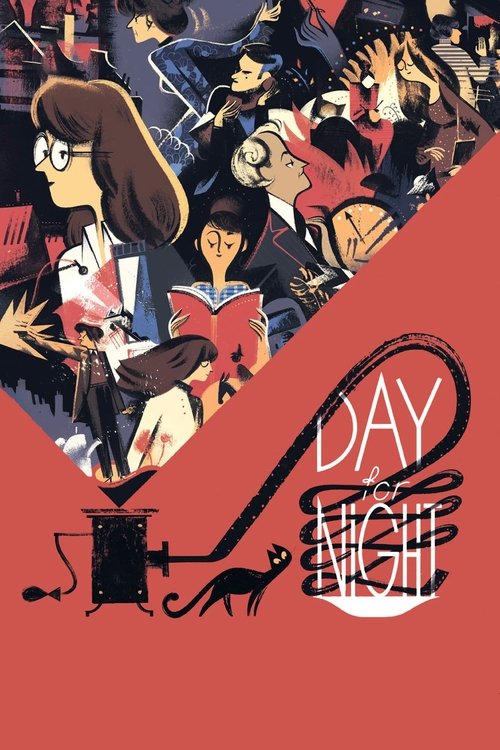
La Nuit américaine
"A movie for people who love movies."
Day for Night - Symbolism & Philosophy
Symbols & Motifs
The "Day for Night" Filter
It symbolizes the illusion of cinema. Just as a filter can turn bright daylight into artificial darkness, filmmaking transforms the mundane reality of actors and sets into a cohesive, emotional narrative.
The title itself refers to this technique (nuit américaine). It is explicitly explained during a scene where a car crash is filmed in broad daylight but will appear as night on screen.
The Recurring Dream
Represents the pure, childhood obsession with cinema. It connects the adult director's professional struggles with his original, innocent love for the medium.
Ferrand has a recurring black-and-white dream where, as a young boy, he steals publicity stills of Citizen Kane from a movie theater grate.
The Vase of Flowers
Symbolizes continuity and the persistence of the filmic reality over actual time. It shows the meticulous attention to detail required to maintain the illusion.
A prop vase is moved from one spot to another to match a shot filmed days or weeks earlier, highlighting the disjointed nature of shooting schedules.
The Cat
Represents the uncontrollable nature of reality that directors try to tame. It serves as a humorous counterpoint to the director's desire for total control.
A scene requires a kitten to eat from a tray, but the cat refuses to cooperate, forcing the crew to try multiple cats until one finally performs the "role" correctly.
Philosophical Questions
Is art more important than life?
The film asks whether the sacrifice of personal relationships and stability is worth the creation of a fleeting illusion. Characters repeatedly choose the film over their personal well-being, suggesting a worldview where art is the only ordering principle in a chaotic universe.
What is the nature of truth in cinema?
Through the 'Day for Night' technique and the constant faking of doors, snow, and views, the film explores how 'truth' in art is constructed entirely of lies. It questions whether the emotional truth of a scene validates the artificial means used to create it.
Core Meaning
At its heart, Day for Night is an exploration of the dichotomy between art and life. Truffaut posits that for filmmakers, the creation of cinema is often more vivid, structured, and manageable than the messy reality of existence. The film serves as a defense of the "family" of the crew and the collective effort required to create illusions. It argues that while movies may be artificial (like the "Day for Night" technique itself), the emotions and dedication poured into them are profoundly real.