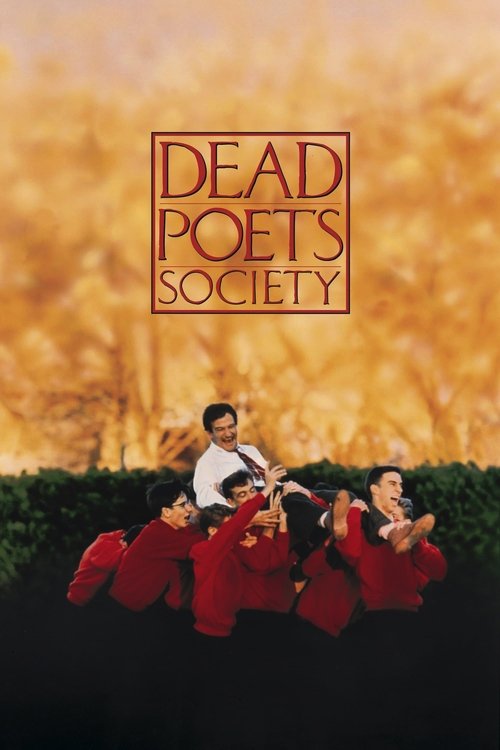
"He was their inspiration. He made their lives extraordinary."
Director: Peter Weir
Cast: Robin Williams, Robert Sean Leonard, Ethan Hawke, Josh Charles, Gale Hansen
Dead Poets Society — Characters & Cast
Character Analysis
John Keating
Robin Williams
Motivation
Keating is motivated by a deep-seated belief that life should be lived with passion and individuality. He wants to save his students from leading lives of "quiet desperation." He teaches them to think for themselves and to value art and beauty not as academic exercises, but as the very essence of what makes life worth living. His teaching is a rebellion against the conformity he experienced at Welton.
Character Arc
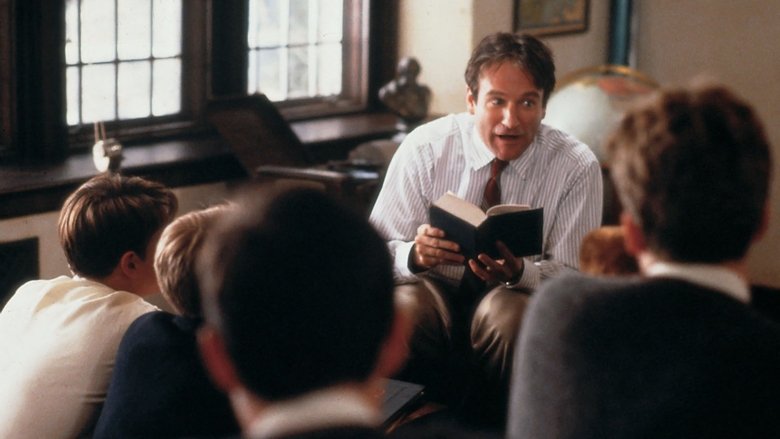
John Keating, a Welton alumnus himself, returns to his old school as an English teacher. He is a static character in that his core beliefs do not change; rather, his purpose is to be a catalyst for change in his students. He challenges the school's rigid traditions with his passionate and unorthodox teaching methods. His arc is one of impact and consequence: he successfully inspires the boys to embrace individualism, but his methods are ultimately deemed too radical, leading to his dismissal following Neil's suicide. He leaves knowing he has made a lasting, positive impact on at least some of his students.
Neil Perry
Robert Sean Leonard
Motivation
Neil is motivated by a desperate desire for self-determination and to live a life that is his own, not one dictated by his father. His passion for acting becomes the central focus of this motivation, as it is the one thing that makes him feel truly alive and free from the immense pressure to become a doctor.
Character Arc
Neil begins as a bright, popular, and seemingly perfect student, but he lives under the oppressive control of his domineering father. Inspired by Keating, he discovers a passion for acting and gains the courage to defy his father by taking the lead role in a play. This act of rebellion is his moment of self-realization. However, when his father crushes his dream and decides to send him to military school, Neil cannot see a future where he can be his true self. Feeling utterly trapped, his arc ends tragically as he takes his own life, becoming a martyr for the cause of individuality.
Todd Anderson
Ethan Hawke
Motivation
Todd's primary motivation is to overcome his crippling shyness and the fear of not living up to the expectations set by his parents and his brother's reputation. He is motivated by a deep-seated desire to express the thoughts and feelings he keeps locked inside.
Character Arc
Todd starts the film as an painfully shy and introverted new student, overshadowed by the legacy of his successful older brother. He is terrified of public speaking and believes his thoughts are worthless. Through Keating's patient encouragement and Neil's friendship, Todd slowly gains confidence. His breakthrough moment comes when Keating coaxes a spontaneous poem out of him in front of the class. His arc culminates in the final scene where he, the most timid of the boys, is the first to stand on his desk in defiance of Headmaster Nolan, showing he has truly found his voice and overcome his fear.
Headmaster Gale Nolan
Norman Lloyd
Motivation
Nolan is motivated by the preservation of Welton's traditions and reputation. He genuinely believes that the school's structured, disciplined approach is the only correct way to educate young men and prepare them for success. He sees Keating's teachings not as inspirational, but as dangerous and disruptive to the established order.
Character Arc
Headmaster Nolan is the embodiment of Welton's rigid, traditionalist values. He is a static character who serves as the primary antagonist to Keating's progressive ideas. From the beginning, he is suspicious of Keating's methods. After Neil's death, he seeks to restore order by finding a scapegoat, ultimately forcing the boys to sign a document blaming Keating for the tragedy. His arc is not one of change, but of reasserting the status quo, representing the powerful and unyielding force of conformity that the boys must confront.
Cast
Explore More About This Movie
Dive deeper into specific aspects of the movie with our detailed analysis pages