Dead Poets Society
"He was their inspiration. He made their lives extraordinary."
Overview
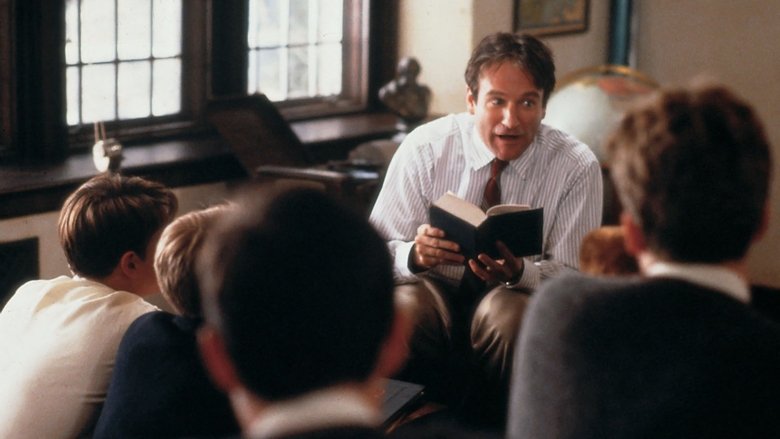
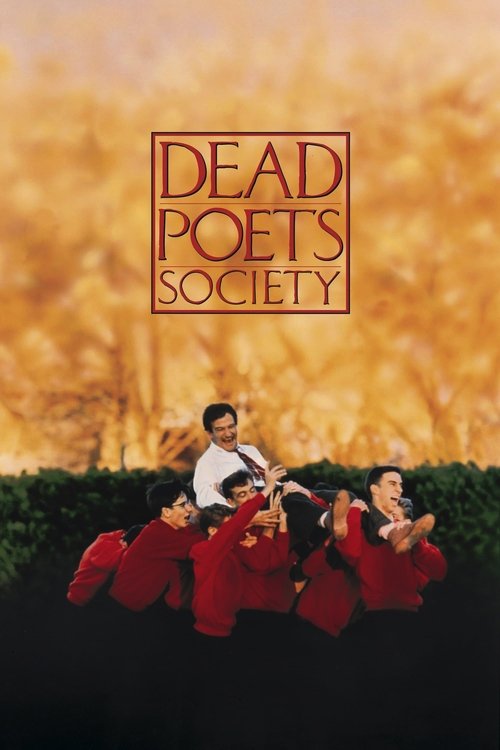
Set in 1959 at the fictional, elite, and conservative Welton Academy in Vermont, "Dead Poets Society" tells the story of John Keating, a new English teacher who uses unorthodox methods to inspire his students. Through the lens of poetry, he encourages them to break free from conformity, challenge the status quo, and "seize the day" (Carpe Diem).
A group of boys, led by the charismatic Neil Perry and the shy Todd Anderson, are profoundly affected by Keating's teachings. They secretly resurrect the "Dead Poets Society," a club Keating was part of as a student, where they meet in a cave to read poetry and express their individuality. The students begin to pursue their passions: Neil discovers a love for acting against his domineering father's wishes, Knox Overstreet romantically pursues a local girl, and Todd slowly finds his own voice.
However, their newfound freedom comes into sharp conflict with the rigid traditions of Welton and the expectations of their parents. The school's administration, particularly the stern Headmaster Gale Nolan, views Keating's methods with suspicion. This clash of ideologies builds towards a tragic climax that challenges the boys' loyalty and courage, leaving a lasting impact on their lives and the institution itself.

Core Meaning
The core meaning of "Dead Poets Society" revolves around the profound importance of individualism and the courage to live an authentic life in the face of stifling conformity. Director Peter Weir, through Tom Schulman's Oscar-winning screenplay, posits that a true education is not merely the absorption of facts but the cultivation of independent thought and the nurturing of the human spirit. The film champions the idea of "Carpe Diem" – seizing the day – urging individuals to pursue their passions and make their lives extraordinary, rather than succumbing to societal pressures and predetermined paths.
It critiques rigid, authoritarian educational systems that prioritize discipline and tradition over creativity and personal growth. The film argues that art, particularly poetry, is not a trivial pursuit but essential to the human experience – it is what we "stay alive for." Ultimately, the message is a powerful, albeit tragic, reminder that while rebellion against conformity has consequences, the suppression of one's true self can lead to an even greater loss. The film leaves the audience to ponder the true cost of both defiance and compliance.
Thematic DNA
Conformity vs. Individuality
This is the central conflict of the film. Welton Academy is built on the "four pillars" of Tradition, Honor, Discipline, and Excellence, which enforce a culture of rigid conformity. The students are expected to follow a predetermined path to success (Ivy League, then a career in medicine or law). John Keating arrives as a force of individuality, encouraging his students to think for themselves, find their own voice, and resist the pressures to conform. This struggle is embodied by the students: Neil's desire to act clashes with his father's expectations, Todd struggles to break out of his shyness, and Charlie's rebellious acts directly challenge the school's authority.
Carpe Diem (Seize the Day)
The Latin phrase "Carpe Diem" is the film's most famous motto, introduced by Keating on the first day. It is a call to action for the students to make their lives extraordinary and to live life to the fullest, aware of their own mortality. The boys interpret this in various ways: Neil pursues acting, Knox pursues love, and the group revives the Dead Poets Society to "suck out all the marrow of life." The film explores both the liberating and the potentially reckless sides of this philosophy, questioning whether the boys truly grasp Keating's caveat that there is "a time for daring and a time for caution."
The Power of Art and Literature
The film argues that the arts, especially poetry, are vital for a meaningful life. Keating teaches that while pursuits like medicine, law, and business are necessary to sustain life, "poetry, beauty, romance, love, these are what we stay alive for." Poetry becomes the medium through which the boys discover their passions, express their emotions, and connect with each other. It is presented not as a dry academic subject, but as a living, breathing force that can ignite the imagination and challenge the status quo.
Rebellion and Its Consequences
Inspired by Keating, the students rebel against the oppressive culture of Welton in various ways, from reviving the secret society to publishing defiant articles. The film shows that such rebellion can be liberating and lead to personal growth. However, it also underscores the serious consequences. Charlie is punished, Keating is fired, and most tragically, Neil's inability to reconcile his passion with his father's authority leads to his suicide. The film doesn't offer easy answers, suggesting that while fighting for one's soul is a noble battle, it is a war with real casualties.
Character Analysis
John Keating
Robin Williams
Motivation
Keating is motivated by a deep-seated belief that life should be lived with passion and individuality. He wants to save his students from leading lives of "quiet desperation." He teaches them to think for themselves and to value art and beauty not as academic exercises, but as the very essence of what makes life worth living. His teaching is a rebellion against the conformity he experienced at Welton.
Character Arc
John Keating, a Welton alumnus himself, returns to his old school as an English teacher. He is a static character in that his core beliefs do not change; rather, his purpose is to be a catalyst for change in his students. He challenges the school's rigid traditions with his passionate and unorthodox teaching methods. His arc is one of impact and consequence: he successfully inspires the boys to embrace individualism, but his methods are ultimately deemed too radical, leading to his dismissal following Neil's suicide. He leaves knowing he has made a lasting, positive impact on at least some of his students.
Neil Perry
Robert Sean Leonard
Motivation
Neil is motivated by a desperate desire for self-determination and to live a life that is his own, not one dictated by his father. His passion for acting becomes the central focus of this motivation, as it is the one thing that makes him feel truly alive and free from the immense pressure to become a doctor.
Character Arc
Neil begins as a bright, popular, and seemingly perfect student, but he lives under the oppressive control of his domineering father. Inspired by Keating, he discovers a passion for acting and gains the courage to defy his father by taking the lead role in a play. This act of rebellion is his moment of self-realization. However, when his father crushes his dream and decides to send him to military school, Neil cannot see a future where he can be his true self. Feeling utterly trapped, his arc ends tragically as he takes his own life, becoming a martyr for the cause of individuality.
Todd Anderson
Ethan Hawke
Motivation
Todd's primary motivation is to overcome his crippling shyness and the fear of not living up to the expectations set by his parents and his brother's reputation. He is motivated by a deep-seated desire to express the thoughts and feelings he keeps locked inside.
Character Arc
Todd starts the film as an painfully shy and introverted new student, overshadowed by the legacy of his successful older brother. He is terrified of public speaking and believes his thoughts are worthless. Through Keating's patient encouragement and Neil's friendship, Todd slowly gains confidence. His breakthrough moment comes when Keating coaxes a spontaneous poem out of him in front of the class. His arc culminates in the final scene where he, the most timid of the boys, is the first to stand on his desk in defiance of Headmaster Nolan, showing he has truly found his voice and overcome his fear.
Headmaster Gale Nolan
Norman Lloyd
Motivation
Nolan is motivated by the preservation of Welton's traditions and reputation. He genuinely believes that the school's structured, disciplined approach is the only correct way to educate young men and prepare them for success. He sees Keating's teachings not as inspirational, but as dangerous and disruptive to the established order.
Character Arc
Headmaster Nolan is the embodiment of Welton's rigid, traditionalist values. He is a static character who serves as the primary antagonist to Keating's progressive ideas. From the beginning, he is suspicious of Keating's methods. After Neil's death, he seeks to restore order by finding a scapegoat, ultimately forcing the boys to sign a document blaming Keating for the tragedy. His arc is not one of change, but of reasserting the status quo, representing the powerful and unyielding force of conformity that the boys must confront.
Symbols & Motifs
Standing on the Desk
Standing on the desk symbolizes the act of looking at the world from a different perspective, breaking free from convention, and challenging established norms. It's a physical manifestation of Keating's core lesson to think for oneself.
Keating first stands on his desk to demonstrate this principle to his students. The motif returns in the film's powerful final scene. After Keating is fired, Todd Anderson initiates a defiant tribute by standing on his own desk and proclaiming, "O Captain! My Captain!" a gesture then repeated by many of his classmates, showing that Keating's lesson in independent thought has taken root.
The Cave
The cave where the Dead Poets Society meets symbolizes a sanctuary from the oppressive, structured world of Welton Academy. It is a space of freedom, creativity, intellectual exploration, and authentic self-expression where the boys can escape conformity.
After learning about Keating's time in the club, the boys find the old Indian cave and resurrect the Dead Poets Society. It is here, by candlelight, that they share poetry, play music, and bond outside the watchful eyes of the administration. It's important to note the cave seen in the film was not a real cave but a set piece made of latex.
Puck's Crown
The crown of thorns worn by Neil as Puck in "A Midsummer Night's Dream" symbolizes both his liberation and his martyrdom. In the role, he feels truly alive and free, but the crown also foreshadows the suffering and sacrifice that will result from his defiance against his father.
Neil wears the crown during his triumphant performance in the play, the one moment where he fully embraces his passion. Later that night, after his father crushes his dreams, Neil puts the crown back on in his room before taking his own life, tragically linking his moment of greatest joy to his ultimate despair.
Ripping out the Textbook Introduction
The act of tearing out the introduction to their poetry textbook, which promotes a rigid, mathematical way of understanding poetry, is a symbolic rejection of the orthodox, uninspired, and oppressive teaching methods of Welton Academy. It represents a cleansing of the old to make way for a new, passionate engagement with art.
In one of his first classes, Mr. Keating decries J. Evans Pritchard's essay on "Understanding Poetry" as "excrement." He instructs his shocked students to rip the entire introduction out of their books, a bold and liberating act that signals the beginning of their unconventional education.
Memorable Quotes
Carpe diem. Seize the day, boys. Make your lives extraordinary.
— John Keating
Context:
Keating says this during his first class with the boys. He has them look at pictures of former Welton students, now long dead, to impress upon them the fleeting nature of life and the importance of making the most of their time.
Meaning:
This is the film's central thesis. It is a powerful call to action, urging the students to live in the present and to strive for a life of passion and meaning, rather than one of mundane conformity. It encapsulates Keating's entire philosophy of education and life.
We don't read and write poetry because it's cute. We read and write poetry because we are members of the human race. And the human race is filled with passion. And medicine, law, business, engineering, these are noble pursuits and necessary to sustain life. But poetry, beauty, romance, love, these are what we stay alive for.
— John Keating
Context:
Keating delivers this speech to his class to justify the importance of their studies in his English class, contrasting it with the practical, career-focused education prioritized by Welton and their parents.
Meaning:
This quote eloquently defines the film's view on the humanities. It argues that while practical pursuits are necessary for survival, it is art and passion that give life its meaning and purpose. It elevates the arts from a mere hobby to an essential component of the human experience.
O Captain! My Captain!
— Todd Anderson and other students
Context:
Keating tells the boys they can call him "Mr. Keating" or, if they're slightly more daring, "O Captain! My Captain!" The line is reprised in the emotional final scene. As a disgraced Keating leaves the classroom, Todd Anderson stands on his desk and shouts the phrase, prompting several other boys to do the same, in a final, courageous salute to their mentor.
Meaning:
This quote, from a Walt Whitman poem about Abraham Lincoln, is used as a term of respect and endearment for Mr. Keating. In the end, it becomes a powerful symbol of loyalty, defiance, and a final acknowledgment from the students that they have internalized his lessons of independent thought, even at the risk of expulsion.
I went to the woods because I wished to live deliberately, to front only the essential facts of life, and see if I could not learn what it had to teach, and not, when I came to die, discover that I had not lived.
— Neil Perry (quoting Henry David Thoreau)
Context:
This is the passage the boys recite to open their meetings in the cave. It sets the tone for their secret gatherings and reinforces the "Carpe Diem" philosophy they are trying to embrace.
Meaning:
This quote from Thoreau's "Walden" serves as the unofficial mantra for the resurrected Dead Poets Society. It encapsulates their mission to escape the superficial and structured life at Welton to experience a more authentic, meaningful existence. It's about sucking "out all the marrow of life."
Philosophical Questions
What is the true purpose of education?
The film presents a direct conflict between two educational philosophies. Welton Academy's approach is pragmatic and traditional, aimed at preparing boys for prestigious careers by instilling discipline and conformity. Mr. Keating's philosophy, rooted in Transcendentalist ideas of nonconformity and self-reliance, argues that education's purpose is to teach students how to think for themselves and to live meaningful, passionate lives. The film forces the audience to question whether education should be a means to an end (a good job) or an end in itself (a good life).
To what extent should one 'seize the day'?
"Carpe Diem" is the film's central message, but its application is complex. Keating encourages his students to make their lives extraordinary, but also warns that "a wise man understands" there's a time for daring and a time for caution. The film explores the spectrum of this idea. Neil's passionate pursuit of acting is liberating, but his inability to confront his father has tragic consequences. Charlie's rebellious outbursts are bold but lead to punishment. The film doesn't provide a clear answer, instead posing the question of how to balance living passionately with navigating the realistic constraints and consequences of the world.
What is the relationship between the individual and society?
"Dead Poets Society" is a microcosm of the eternal struggle between individual desire and societal expectation. The students are pressured to conform to the roles laid out for them by their parents and their school. Keating encourages them to find their own voices and follow their own paths. Neil's tragedy highlights the devastating outcome when this conflict becomes irreconcilable. The film explores the courage it takes to maintain one's beliefs in the face of overwhelming pressure and asks what our responsibility is to ourselves versus our responsibility to the institutions and communities we are a part of.
Alternative Interpretations
While widely celebrated as an inspirational film, "Dead Poets Society" has also been subject to critical alternative interpretations. One prominent critique argues that John Keating is not an inspirational hero but a reckless and irresponsible teacher. This view suggests that Keating's methods, while charismatic, are self-indulgent and fail to provide his impressionable students with the necessary guidance to navigate the consequences of their rebellion. He encourages them to defy authority but offers little practical advice on how to deal with the inevitable backlash, which ultimately contributes to Neil Perry's tragic end. Critic Roger Ebert, for instance, argued that at the end of the semester, the students "all really love is the teacher," not the poetry itself, and called the film "a collection of pious platitudes masquerading as a courageous stand."
Another interpretation posits that the film is not a simple story of heroic individuals versus a villainous system, but a more nuanced tragedy about the clash of ideals. In this reading, neither Keating's unchecked romanticism nor Nolan's rigid traditionalism is presented as a perfect model. Keating's philosophy, when naively adopted by the boys (e.g., Neil's dishonesty with his father, Charlie's reckless stunts), leads to disaster. This suggests the film is a cautionary tale about the dangers of idealism without pragmatism and the difficulty of enacting meaningful change within an entrenched system.
Finally, some have viewed the film through a queer theory lens, suggesting that the intense, homosocial bonds of the all-boys school and the passionate, artistic rebellion contain coded explorations of burgeoning sexuality and non-normative identity, even if never explicitly stated.
Cultural Impact
"Dead Poets Society" was a commercial and critical success upon its release in 1989, grossing over $235 million worldwide against a $16.4 million budget and earning Tom Schulman an Academy Award for Best Original Screenplay. It received widespread acclaim, holding an 85% approval rating on Rotten Tomatoes and an "A+" CinemaScore from audiences, indicating a profound connection with viewers.
The film's mantra, "Carpe Diem," became a cultural touchstone, widely quoted and embraced as a philosophy for living a more passionate and meaningful life. The movie has had a significant and lasting impact on the perception of education and mentorship. Many educators have cited Robin Williams' portrayal of John Keating as an inspiration for their own teaching careers. The film champions a more holistic, student-centered approach to education that values creativity and critical thinking over rote memorization and conformity.
The film solidified Robin Williams' status as a versatile actor capable of powerful dramatic performances, earning him an Oscar nomination for Best Actor. It also served as a launchpad for its young cast, including Ethan Hawke and Robert Sean Leonard. The movie's themes of nonconformity, self-discovery, and challenging authority have resonated with generations of young people, solidifying its place as an enduring coming-of-age classic. Its influence continues to be seen in pop culture; for example, the final "O Captain! My Captain!" scene was widely reenacted on social media as a tribute after Robin Williams' death in 2014.
Audience Reception
Audience reception for "Dead Poets Society" has been overwhelmingly positive since its release. It holds a rare "A+" grade on CinemaScore, a testament to its immediate and powerful emotional impact on viewers. Audiences consistently praise the film for its inspirational message, the moving performances (particularly Robin Williams's career-defining dramatic turn), and its emotional depth. Many viewers find the themes of individuality, nonconformity, and seizing the day to be deeply resonant and life-affirming.
The main points of praise often center on the character of John Keating as the ideal inspirational teacher and the film's powerful, tear-jerking climax. However, some points of criticism from audiences mirror those of professional critics, with a minority finding the film emotionally manipulative or its philosophy somewhat simplistic and one-sided. Neil Perry's suicide is a controversial and deeply affecting moment; while most see it as a tragic indictment of oppressive authority, some question Keating's role and responsibility in the events leading up to it. Despite these minor criticisms, the overall verdict from audiences is that "Dead Poets Society" is a beloved and enduring classic, a movie that many count among their all-time favorites for its ability to inspire and move them.
Interesting Facts
- The character of John Keating was based on screenwriter Tom Schulman's real-life English teacher at Montgomery Bell Academy, Samuel F. Pickering Jr.
- In the original script by Tom Schulman, Mr. Keating was slowly dying of Hodgkin's lymphoma, which was meant to explain his urgency to teach the boys to 'seize the day.' Director Peter Weir had this removed, believing it was stronger without this justification.
- Actors considered for the role of John Keating before Robin Williams was cast included Liam Neeson, Dustin Hoffman, Mel Gibson, and Tom Hanks.
- Director Peter Weir had the young actors live together during filming to build the authentic chemistry and camaraderie seen on screen.
- Roughly 15% of Robin Williams' dialogue was improvised, including the scene where he impersonates Marlon Brando and John Wayne doing Shakespeare.
- Ethan Hawke initially found Robin Williams' constant joking on set irritating, but Williams later helped Hawke get his first agent.
- The cave where the society meets was not a real location but a set constructed from latex, based on the real Wolf Cave in Delaware.
- The film was originally set to be filmed in Georgia, but the location was moved to Delaware because creating fake snow was too expensive, and Delaware offered the chance for real snow.
⚠️ Spoiler Analysis
Click to reveal detailed analysis with spoilers
Frequently Asked Questions
Explore More About This Movie
Dive deeper into specific aspects of the movie with our detailed analysis pages
Comments (0)
No comments yet. Be the first to share your thoughts!