
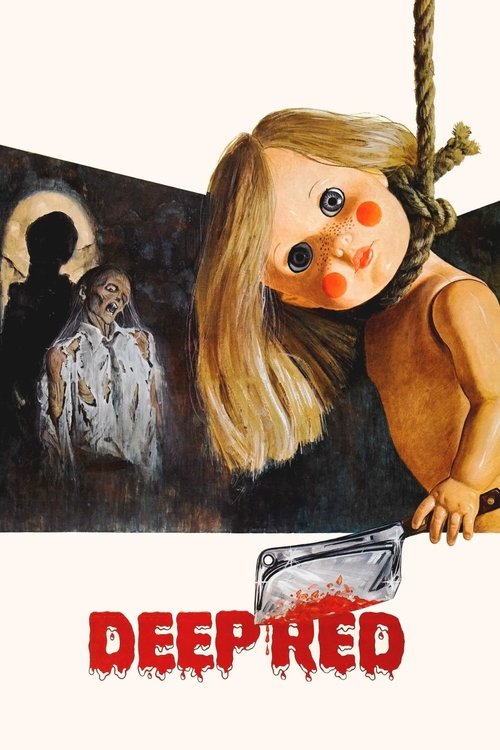
Deep Red
A baroque symphony of violence and repressed memory. Amidst the crimson shadows of Turin, a jazz pianist's obsession with a missing image unravels a grotesque tapestry of childhood trauma, captured through a voyeuristic, restless camera.
Deep Red
Deep Red

Profondo rosso

"When was the last time you were really scared?"

07 March 1975 Italy 127 min ⭐ 7.7 (1,560)
Director: Dario Argento
Cast: David Hemmings, Daria Nicolodi, Gabriele Lavia, Macha Méril, Eros Pagni
Thriller Mystery Horror
The Fallibility of Vision and Memory Gender Roles and Inversion Trauma and the Monstrous Mother The Haunted Architecture of Modernity
Box Office: $2,900,000

Deep Red - Ending Explained

⚠️ Spoiler Analysis

The central twist reveals that the "missing painting" Marcus thought he saw was never a painting at all. It was a mirror reflecting the face of the killer, Martha (Carlo's mother), who was hiding in the hallway when Marcus entered. This means Marcus looked directly at the killer but his mind processed it as art to cope with the shock.

Martha is revealed to be a murderous matriarch who killed her husband years ago (the scene in the prologue) to prevent him from institutionalizing her. Carlo witnessed this as a child, traumatizing him. He was not the killer, but he helped cover for his mother. In the end, Martha is killed when her necklace gets caught in the elevator bars, decapitating her—a gruesome poetic justice linking back to the theme of being bound by the past.

Alternative Interpretations

The Generational Guilt Theory: Some critics interpret the film as an allegory for Italy's post-fascist generational trauma. The "monstrous mother" represents the buried, violent history of the previous generation that refuses to die and continues to infect the youth (Carlo).

The Crisis of Masculinity: The film can be read as a deconstruction of the male gaze. Marcus is consistently passive and wrong, while Gianna is the active, rational force. The "castration" anxiety is symbolized by the violent attacks and Marcus's inability to solve the mystery without female help.

Queer Reading: The character of Carlo and his relationship with Marcus, along with the flamboyant, non-conforming characters in the film, offer a subtext about homosexuality and repression in conservative Italian society.