劇場版「鬼滅の刃」無限列車編
"With your blade, bring an end to the nightmare."
Demon Slayer -Kimetsu no Yaiba- The Movie: Mugen Train - Symbolism & Philosophy
Symbols & Motifs
The Mugen (Infinity) Train
The train itself symbolizes an endless journey, not just physically but also into the depths of the mind. Its name, "Mugen," translates to "Infinity," reflecting Enmu's power to trap his victims in endless, pleasant dreams. It represents a space where the boundaries between reality, dreams, and nightmares blur, and where the slayers must fight an internal battle before they can confront the external threat.
The entire first half of the film is set on the Mugen Train. The demon Enmu literally fuses with the train, making the setting and the antagonist one and the same. The train cars become extensions of his body, and the journey becomes a descent into the subconscious of the main characters.
Spiritual Core (Seishin no Kaku)
Represented in Tanjiro's dream as a warm, sun-like orb floating in a beautiful lake, the spiritual core symbolizes the essence of a person's being—their soul, will, and inner strength. It is depicted as a place of immense beauty and light, signifying Tanjiro's inherent kindness and purity. Its destruction would mean the death of the spirit.
Enmu tasks his human minions with entering the slayers' dreams to find and destroy their spiritual cores. The intruder who enters Tanjiro's subconscious is overwhelmed by its warmth and beauty, unable to carry out the evil act, which highlights Tanjiro's unwavering goodness.
Flame
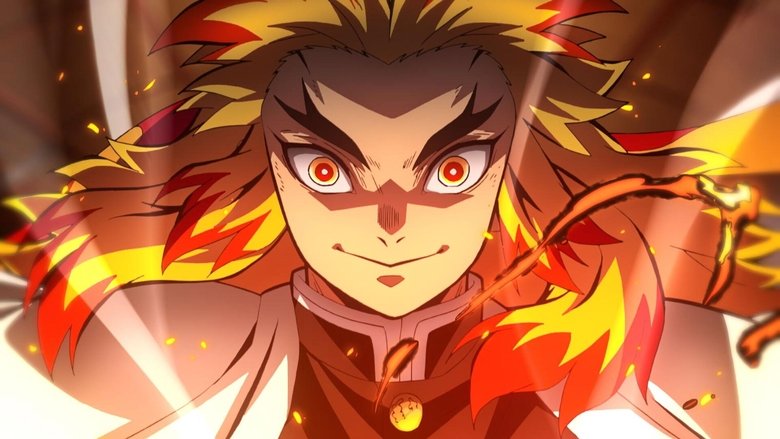
Flame symbolizes passion, honor, and the bright, burning intensity of a life lived to its fullest potential, however short. It is intrinsically linked to Kyojuro Rengoku, the Flame Hashira. His final words, "Set your heart ablaze," transform the flame into a metaphor for enduring willpower and the legacy one passes on to others.
Rengoku's Flame Breathing techniques manifest as spectacular displays of fire, visually representing his power and personality. The symbol culminates in his final charge against Akaza and his parting words to Tanjiro, cementing the flame as a symbol of his indomitable spirit.
Tanjiro's Hanafuda Earrings
The Hanafuda earrings, depicting a rising sun, symbolize hope, legacy, and a connection to the powerful Sun Breathing technique. The sun is the ultimate weakness of demons, and thus the earrings represent the greatest threat to them and humanity's hope for victory. They also link Tanjiro to a powerful lineage of demon slayers, hinting at his hidden potential.
Tanjiro wears the earrings throughout the film. They are a constant visual reminder of the legacy passed down from his father. Muzan Kibutsuji, the demon king, has a particular hatred for these earrings, which is why he tasks Enmu with killing Tanjiro specifically.
Philosophical Questions
What is the true meaning of strength?
The film explores this question through the dichotomy between Rengoku and Akaza. Akaza champions physical perfection, regeneration, and eternal life as the pinnacle of strength, viewing human frailty as pathetic. Rengoku, conversely, defines strength not by physical prowess alone but by moral fortitude and the will to protect others. He argues that the human condition, with its limitations and mortality, is the source of a different, more profound strength. His ultimate sacrifice, saving everyone at the cost of his own life, serves as the film's answer: true strength lies in fulfilling one's duty and protecting the preciousness of ephemeral life.
Is it better to live a short, meaningful life or a long, empty one?
The central conflict presents a choice between a finite human life filled with purpose and an infinite demonic existence centered on a hunger for power. Akaza's offer of immortality to Rengoku is a temptation to abandon human purpose for endless battle. Rengoku's emphatic rejection and subsequent heroic death champions the idea that a life's value is measured by its impact and the fulfillment of one's duties, not its duration. The legacy and inspiration he leaves behind in his short life are portrayed as being far more powerful than Akaza's countless years of existence.
Core Meaning
The core message of "Mugen Train" revolves around the profound strength of the human will and the beautiful, tragic impermanence of life. The film posits that true strength lies not in physical power or immortality, but in the unwavering resolve to protect others and uphold one's duty, even in the face of insurmountable odds and certain death. It explores the idea that the very finiteness of human life—the fact that we age and die—is what makes it precious and noble. Kyojuro Rengoku's character arc is the primary vessel for this message, as he chooses his mortal duty over the temptation of demonic immortality, leaving a lasting legacy that inspires the younger generation to "set their hearts ablaze" and persevere through loss.