Skip to content
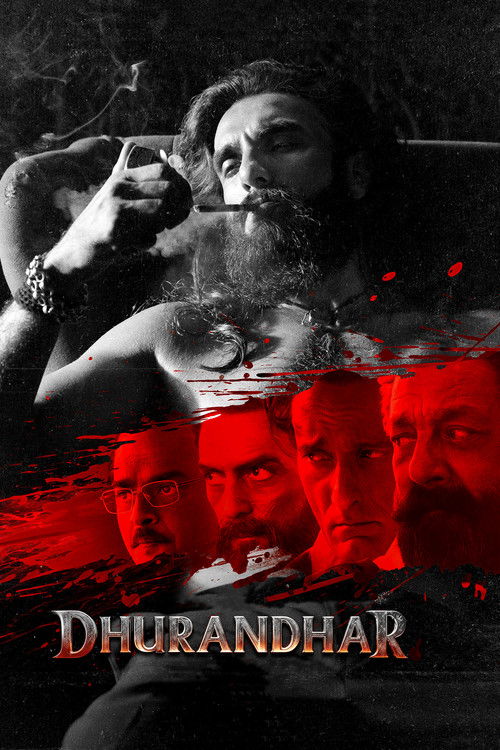
Dhurandhar
A grim, visceral descent into espionage where lethal geopolitical subterfuge collides with burning patriotism, following a lone operative embedded deep within the blood-slicked alleys of Karachi's criminal underworld.
Dhurandhar

Dhurandhar

धुरंधर

05 December 2025 India 214 min 7.3 (348)

Director: Aditya Dhar

Cast: Ranveer Singh, Akshaye Khanna, R. Madhavan, Arjun Rampal, Sanjay Dutt

Crime Action Thriller The Cost of Deep Identity Erasure & Isolation Asymmetric Warfare & Realpolitik Symbiosis of Crime, Politics, and Radicalism Unsung Sacrifice and Institutional Memory
Budget: $24,000,000
Box Office: $136,599,112

Overview

Directed and written by Aditya Dhar, Dhurandhar (2025) is an expansive, grounded espionage action thriller produced by Jio Studios and B62 Studios. Spanning decades of tense geopolitical hostilities in South Asia, the film serves as the opening chapter of a two-part covert-warfare epic.

The narrative kicks off against the backdrop of historical flashpoints, including the 1999 IC-814 Kandahar hijacking and the 2001 Indian Parliament attack. Confronted with systemic intelligence vulnerabilities and cross-border asymmetric warfare, Indian intelligence director Ajay Sanyal initiates a deep-cover counter-terrorism offensive known as Operation Dhurandhar to deploy an operative across the border and dismantle terror infrastructure at its source before operations reach Indian soil.

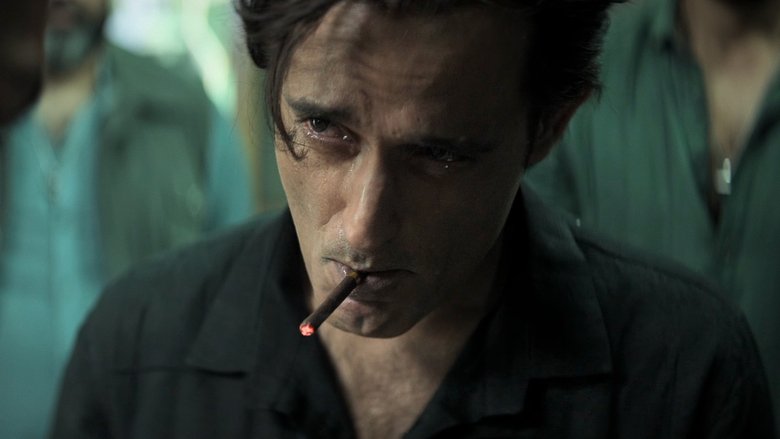
At the center of this mission is Jaskirat Singh Rangi, an operative erased from official state records who assumes the identity of Hamza Ali Mazari. Infiltrating the volatile Lyari underworld of Karachi, Pakistan, Hamza must navigate the lethal nexus between violent street syndicates, corrupt political corridors, and military intelligence handlers as the boundaries between his true self and his cover identity begin to erode.
Core Meaning

Aditya Dhar crafts Dhurandhar as an unvarnished deconstruction of the physical and psychological toll of deep-cover espionage. The film's overarching message underscores that national security is sustained through nameless operatives who sacrifice their lives, morals, and identities in the shadows without ever receiving public recognition. Furthermore, it critiques institutional bureaucracy and historical appeasement, advocating for proactive, strategic counter-intelligence while exposing the symbiotic machinery linking political power, organized crime, and terror networks.

Thematic DNA

The Cost of Deep Identity Erasure & Isolation 40%
Asymmetric Warfare & Realpolitik 25%
Symbiosis of Crime, Politics, and Radicalism 20%
Unsung Sacrifice and Institutional Memory 15%

The Cost of Deep Identity Erasure & Isolation

Explores the psychological trauma endured by Jaskirat as he transforms into Hamza. Living years immersed in Karachi's criminal element requires him to commit morally compromising acts, severing ties with home and conscience.

Asymmetric Warfare & Realpolitik

Explored through Ajay Sanyal’s doctrinal pivot from defensive reaction to offensive deterrence, analyzing how modern counter-terrorism requires operating in legal and ethical gray zones.

Symbiosis of Crime, Politics, and Radicalism

Visualized through the power dynamics of Lyari, where gang lords, local politicians, and militant handlers sustain one another for financial and ideological leverage.

Unsung Sacrifice and Institutional Memory

Examines how covert operatives are disavowed by design, contrasting the public spotlight of diplomacy with the lonely deaths of field assets.

Character Analysis

Jaskirat Singh Rangi / Hamza Ali Mazari

Ranveer Singh

Archetype: Antihero / Deep-Cover Operative Key Trait: Stoic resilience, bilingual adaptability, lethal ruthlessness

Motivation

To dismantle terror logistics and protect the homeland from within hostile territory.

Character Arc

Transforms from a disciplined operative into an entrenched, ruthless Karachi underworld figure known as Sher-e-Baloch.

Ajay Sanyal

R. Madhavan

Archetype: The Mentor / Master Strategist Key Trait: Hawkish intellect, calculating composure, unwavering resolve

Motivation

To establish strategic deterrence against asymmetric and proxy warfare.

Character Arc

Evolves from a constrained intelligence director to the architect of a proactive, offensive national defense doctrine.

All 5 characters and cast

Symbols & Motifs

The Forged Passport / Identity Documents

Meaning:

Symbolizes the complete erasure of the self and highlights the extreme fragility of an undercover operative's existence.

Context:

Carried by Hamza throughout his deployment across the border to maintain his fabricated persona.

The Lyari Alleyways

Meaning:

A labyrinthine motif representing moral decay, claustrophobia, and the chaotic underbelly where state machinery loses control to criminal warlords.

Context:

Serves as the primary urban battleground and backdrop for Hamza's infiltration into Karachi's underworld.

The Chessboard / Strategic Map

Meaning:

Reflects national security as a cold, calculating game of attrition where human beings are treated as expendable pieces.

Context:

Used recurrently in Ajay Sanyal’s high-level operational briefings and planning rooms.

Counterfeit Currency Bundles

Meaning:

Represents terror financing and the subversion of economic sovereignty.

Context:

Acts as a plot catalyst connecting organized street crime directly to militant logistics and operations.

The Gun at the Back of the Neck

Meaning:

Embodies national vulnerability, the humiliation of hostage negotiation, and the burning drive for strategic retribution.

Context:

Introduced during the opening IC-814 hijack sequence at Kandahar and echoed in subsequent confrontations.

Memorable Quotes

Hindu badi hee darpok qaum hai... pados me hi rahte hai hum, gude bhar ka jor laga lo aur bigad lo.
— Zahoor Mistry (Vivek Sinha)

Context

Spoken inside the hijacked IC-814 flight at Kandahar during the prisoner exchange negotiations.

Meaning

Serves as a provocative taunt highlighting perceived Indian vulnerability, acting as the psychological catalyst that ignites Ajay Sanyal’s resolve to launch Operation Dhurandhar.

India's top most enemies are Indians themselves; Pakistan always comes second in the list.
— Ajay Sanyal (R. Madhavan)

Context

Uttered during a high-level national security briefing in New Delhi.

Meaning

Critiques internal bureaucratic paralysis, political infighting, and systemic intelligence leaks that undermine national defence from within.

All 3 quotes

Philosophical Questions

Can an operative commit murder, trafficking, and betrayal under an assumed identity without losing their original moral soul?

Explored through Hamza's prolonged immersion in Lyari's criminal hierarchy, where surviving undercover forces him to perpetrate extreme violence and sever his moral ties to his past.

Is a democratic nation justified in adopting extrajudicial, covert assassination tactics to preempt asymmetric aggression?

Examined via Ajay Sanyal’s institutional push for proactive deterrence, challenging standard legal boundaries in favor of preemptive security measures.

Does a sovereign state have the ethical right to completely erase an agent's existence and disavow their humanity for the collective security of millions?

Reflected in Jaskirat's complete identity erasure from official records, turning him into a ghost asset whose sacrifices will never be publicly acknowledged.

Alternative Interpretations

Critical and audience discourse around the film highlights diverse viewpoints:

Full ending explanation

Cultural Impact

Released in December 2025, Dhurandhar tapped directly into contemporary South Asian geopolitical discourse, exploring the evolution of Indian military-intelligence doctrine toward proactive preemption. It broke away from conventional Bollywood spy tropes by prioritizing docudrama-style tactical realism reminiscent of Zero Dark Thirty and Munich. Grossing over ₹1,350 crore worldwide, the blockbuster sparked mainstream conversations regarding historical intelligence failures, political accountability, and covert ethics.

Audience Reception

Dhurandhar received widespread critical and audience acclaim for its immersive world-building, authentic set design of Lyari, and Vikash Nowlakha’s gritty cinematography alongside Shashwat Sachdev’s musical score. Ranveer Singh's restrained, brooding performance earned significant praise, as did the magnetic presence of Akshaye Khanna and Sanjay Dutt. Conversely, criticisms centered on the 214-minute runtime, pacing lags in intermediate stretches, and the film's ideological framing of regional history.

Interesting Facts

  • Aditya Dhar filmed Dhurandhar and its sequel Dhurandhar: The Revenge back-to-back between July 2024 and late 2025 with an estimated combined budget of ₹250–255 crore.
  • Filming took place across international locations in Bangkok, Thailand (used to recreate Karachi and Lyari urban layouts) alongside extensive schedules in Ladakh, Punjab, Himachal Pradesh, Chandigarh, and Maharashtra.
  • At 214 minutes (over 3.5 hours), the film is one of the longest modern Indian action-espionage releases, opting for slow-burn world-building rather than rapid episodic pacing.
  • Ranveer Singh underwent rigorous physical and linguistic training to capture the stoic, understated demeanor and non-verbal intensity of a deep-cover operative.
  • Aditya Dhar conducted extensive research into declassified intelligence operations, gang conflict archives in Sindh, and geopolitical dossiers from 1999 to the late 2000s.

Easter Eggs

Ajay Sanyal modeled on Ajit Doval

The character directly mirrors India’s National Security Advisor and former intelligence director in his operational philosophy and strategic doctrine.

Inspiration from Major Mohit Sharma

Hamza Ali Mazari / Jaskirat draws inspiration from real-life deep-cover Indian military operatives who operated undercover under aliases such as Iftikhar Bhatt.

Historical Karachi figures Chaudhry Aslam, Ilyas Kashmiri, and Nabeel Gabol

SP Chaudhary Aslam references Karachi encounter specialist Chaudhry Aslam Khan, Major Iqbal mirrors militant commander Ilyas Kashmiri, and Jameel Jamali is based on politician Nabeel Gabol.

Callback to Uri: The Surgical Strike

The dialogue 'ghar me ghusega bhi aur marega bhi' deliberately references the operational universe and thematic philosophy established in Aditya Dhar's previous film.

Authentic Kandahar IC-814 Tarmac Recreation

The opening sequence painstakingly reconstructs the exact tail numbering, negotiation dynamics, and atmospheric conditions of the December 1999 hijacking.

Frequently Asked Questions

Explore More About This Movie

Dive deeper into specific aspects of the movie with our detailed analysis pages

Comments (0)

Leave a comment

No comments yet. Be the first to share your thoughts!

Similar Movies