Skip to content
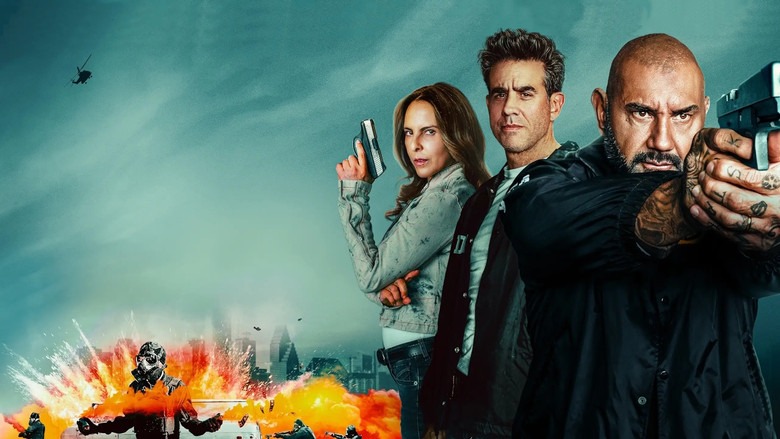
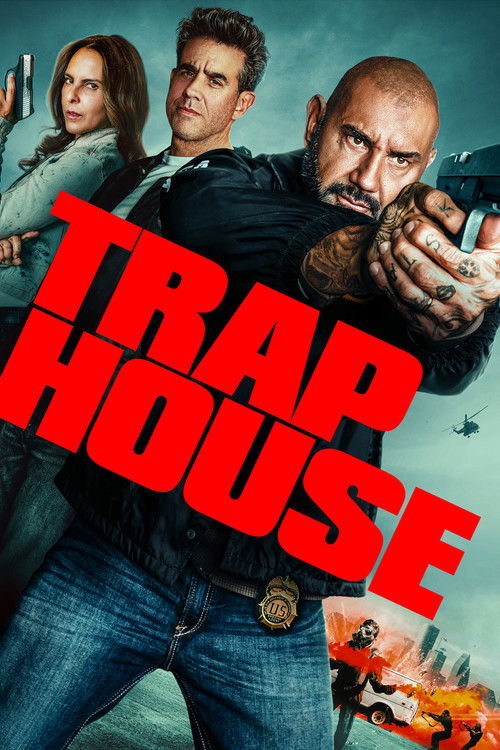
Trap House
A sun-baked borderlands neo-noir pulsing with kinetic desperation, where youthful idealism collides with brutal underworld violence like a match struck in a subterranean tunnel full of fumes.
Trap House

Trap House

"This isn't a raid. It's a reckoning."

14 November 2025 United Kingdom 103 min 6.7 (311)

Director: Michael Dowse

Cast: Dave Bautista, Jack Champion, Sophia Lillis, Whitney Peak, Bobby Cannavale

Crime Action Thriller Generational Inheritance and Paternal Duty Institutional Failure and the DEA Safety Net The Moral Ambiguity of Vigilante Justice Compartmentalization and the Toll of Double Lives

Overview

Set along the tense US–Mexico border in El Paso, Texas, Trap House centers on Ray Seale, a battle-hardened undercover Drug Enforcement Administration (DEA) agent, and his longtime partner Andre "Wash" Washburn. When a high-stakes DEA raid on a cartel-operated smuggling tunnel goes awry and claims the life of their fellow agent Manny Padilla, the fallen operative's family is left financially devastated by bureaucratic institutional neglect, threatening to displace Padilla's surviving child, Jesse.

Refusing to let their friend's life fall apart, Ray's high school son, Cody, devises an audacious plan. Cody recruits a circle of peers—all offspring of federal law enforcement—to weaponize their parents' classified intelligence, tactical playbooks, surveillance devices, and non-lethal gear to execute targeted heists against local cartel "trap houses" (covert stash and processing locations).

What begins as an amateur Robin Hood venture rapidly spirals into a deadly game of cat and mouse. As Ray and his DEA task force investigate the mysterious, precision robberies rocking the El Paso underworld, both the law and a ruthless Ciudad Juárez cartel close in on the rogue teenagers, pushing family loyalty and moral boundaries to the absolute brink.
Core Meaning

Director Michael Dowse and screenwriters Gary Scott Thompson and Tom O'Connor construct Trap House as an examination of generational inheritance, moral rationalization, and the systemic failures of state institutions.

The film explores how children internalize the violence, secrecy, and tactical pragmatism modeled by their parents. By pitting DEA agents against their own children who mimic their exact methodologies, the narrative illustrates how institutional cynicism breeds vigilantism. The core message argues that when legitimate systems fail to protect and support the vulnerable, the next generation will bypass the rule of law to enforce their own crude version of justice—inheriting both the tools and the moral hazards of the generation that raised them.

Thematic DNA

Generational Inheritance and Paternal Duty 35%
Institutional Failure and the DEA Safety Net 25%
The Moral Ambiguity of Vigilante Justice 20%
Compartmentalization and the Toll of Double Lives 20%

Generational Inheritance and Paternal Duty

Revealed through Ray and Cody's fractured relationship. Ray attempts to shield Cody from the violence of his profession, unaware that Cody has observed and internalized every tactic. The teenagers' heist operations serve as a shadow version of their parents' operational unit.

Institutional Failure and the DEA Safety Net

Sparked by the death of Agent Padilla and the agency's inadequate death benefits. The bureaucratic machine views agents as expendable assets, driving the teenagers to resort to crime to prevent Jesse's eviction and relocation.

The Moral Ambiguity of Vigilante Justice

Explored through the escalation of the teens' operations. The teenagers justify stealing cartel drug money as a victimless crime with noble intent, but the film progressively strips away this romanticized illusion as lethal real-world consequences erupt.

Compartmentalization and the Toll of Double Lives

Portrayed through the secret-keeping pervading both law-enforcement work and suburban family life. Undercover agents live behind walls of deception, which directly conditions their children to operate clandestine lives of their own.

Character Analysis

Ray Seale

Dave Bautista

Archetype: The Weary Protector / Veteran Enforcer Key Trait: Stoic, tactically proficient, quietly vulnerable.

Motivation

Motivated to keep his son safe while dismantling cartel pipelines along the border.

Character Arc

A hardened DEA operative grieving his late wife and coping with the death of a team member; moves from authoritarian detachment to actively covering up for his son after discovering his criminal enterprise.

Cody Seale

Jack Champion

Archetype: The Rebellious Ringmaster / Vigilante Child Key Trait: Observant, resourceful, recklessly idealistic.

Motivation

Driven by loyalty to his orphaned friend Jesse and a desire to prove himself capable of righting systemic wrongs.

Character Arc

Transforms from an overconfident teen tactician executing amateur heists into a sobered survivor forced to face lethal real-world stakes.

All 5 characters and cast

Symbols & Motifs

The Borderland Smuggling Tunnels

Meaning:

Physically represents the hidden underworld connecting nations, crimes, and families. They symbolize the subterranean truths lurking beneath clean suburban surfaces.

Context:

Serves as narrative bookends to the story, framing key tactical breaches and the film's climactic confrontation.

The Trap House / Stash Location

Meaning:

A symbol of illicit accumulation and systemic decay. To the cartel, it represents distribution; to the DEA, a tactical objective; to the teenagers, an ATM of poetic justice.

Context:

Serves as the primary targets for the teenagers' rogue heists throughout El Paso.

Classified DEA Intel and Tactical Surveillance Gear

Meaning:

Symbolizes the unintended weapons parents pass down to their children. Technology meant for federal border enforcement becomes the instrument of domestic rebellion.

Context:

Stolen from federal parents and repurposed by Cody and his friends to plan and execute operations.

The Beer Truck

Meaning:

An illusion of mundane normalcy that conceals high-grade narcotics, mirroring how suburban family exteriors mask lethal border conflicts.

Context:

Utilized during the teenagers' climactic heist, which unexpectedly yields narcotics instead of cash.

Memorable Quotes

Who’d be dumb enough to steal from ’em anyway?
— Ray Seale

Context

Spoken by Ray while surveying a freshly raided cartel stash house.

Meaning

Highlights dramatic irony, as Ray is unknowingly investigating his own son's handiwork while completely underestimating the teenagers' tactical audacity.

You don't cross that line thinking you can just walk back across it when you're done.
— Ray Seale

Context

Delivered during an interrogation and confrontation sequence regarding the moral boundaries of border enforcement and lawbreaking.

Meaning

Emphasizes the permanent moral and psychological consequences of crossing into criminality, foreshadowing the fallout of Cody's heist campaign.

All 3 quotes

Philosophical Questions

Is vigilantism justified when institutional welfare systems fail?

The film explores whether breaking the law to remedy systemic injustice retains moral legitimacy or inevitably corrupts those who attempt it, as the teenagers' noble heist quickly escalates into lethal violence.

Can law enforcement preserve justice if it shields itself from accountability?

By having Ray manufacture a false cover-up to protect his son from prosecution, the narrative interrogates whether parental loyalty fatally compromises objective justice and institutional integrity.

To what extent are children doomed to replicate their parents’ violence?

The plot examines behavioral determinism within households immersed in tactical combat and state secrecy, demonstrating how children adopt the covert methods modeled by their law enforcement parents.

Alternative Interpretations

The Dangerous Illusion Reading (False Resolution): While the surface resolution shows Cody safe and Jesse supported, Ray achieves this by murdering cartel operatives in the tunnel and fabricating an alibi. Under this reading, Ray did not save Cody from crime; he permanently initiated him into a corrupt culture where law enforcement operates outside legal constraints to protect its own.

Full ending explanation

Cultural Impact

Trap House represents a hybrid subgenre described by commentators as "Sicario meets The Goonies" or Red Dawn in the modern borderlands, juxtaposing gritty R-rated cartel action with adolescent caper tropes.

The narrative contributes to ongoing public dialogues regarding federal law enforcement and first responders' safety nets, highlighting the inadequate institutional support for fallen agents' families. While having a modest theatrical run grossing approximately $126,039 in November 2025, the film achieved significant streaming traction, debuting on Prime Video in December 2025 and rising to the #2 spot on Netflix in the United States by early March 2026.

Audience Reception

Critical reception was mixed, holding around a 50%–55% approval rating on Rotten Tomatoes. Reviewers praised Dave Bautista's grounded, soulful performance and Michael Dowse's sustained tactical tension, though several critics felt the film suffered from an identity crisis when balancing grim cartel violence with high school adventure elements.

Audience ratings hovered between 40%–49%. Viewers embraced the film as an engaging, fast-paced action-thriller on streaming platforms, though some noted that the premise of teenagers outsmarting ruthless drug cartels required substantial suspension of disbelief.

Interesting Facts

  • Director Michael Dowse was hired merely weeks before production commenced following the departure of the previous director, reuniting him with Dave Bautista after their 2019 collaboration on Stuber.
  • Principal photography began on April 1, 2024, with extensive shooting taking place in and around Albuquerque, New Mexico, which doubled for El Paso, Texas.
  • The original screenplay was penned by Gary Scott Thompson, creator of The Fast and the Furious franchise, alongside Tom O’Connor (The Hitman's Bodyguard).
  • Dave Bautista produced the film through his Dogbone Entertainment banner alongside Scott Free Productions and Signature Films, marking one of the first projects he shepherded from inception to final picture-lock.
  • Renowned filmmaker Ridley Scott served as an executive producer on the project via Scott Free Productions.
  • Trap House served as the inaugural theatrical release for the distribution company Aura Entertainment in November 2025.

Easter Eggs

Collaboration Reunions and Franchise Casting

The film reunites Dave Bautista with director Michael Dowse (Stuber) and casts Sophia Lillis alongside rising young franchise stars like Jack Champion (Avatar: The Way of Water).

Cinematographic Homage to Tactical Action Cinema

Cinematographer Matt Flannery incorporates gritty, grounded camera tracking during tunnel firefights and breaches, referencing his acclaimed visual work on Gareth Evans' The Raid films and Gangs of London.

Tony Dalton's Underworld Casting

Tony Dalton's cartel role serves as a meta-reference to his celebrated, menacing portrayal of Lalo Salamanca in Better Call Saul, evoking an instantly recognizable underworld aura.

Frequently Asked Questions

Explore More About This Movie

Dive deeper into specific aspects of the movie with our detailed analysis pages

Comments (0)

Leave a comment

No comments yet. Be the first to share your thoughts!

Similar Movies