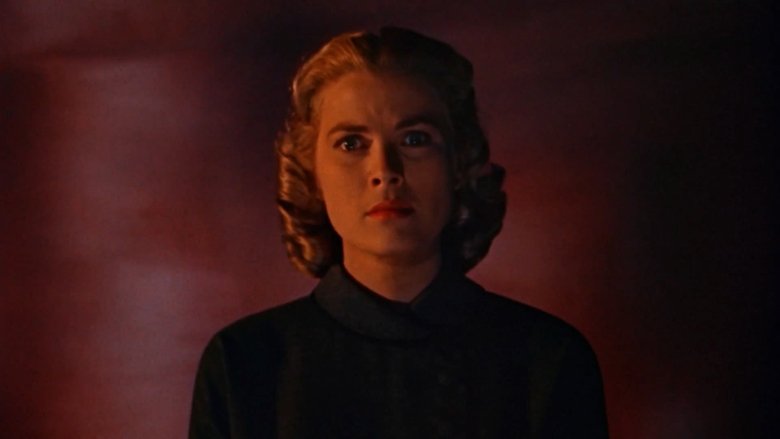
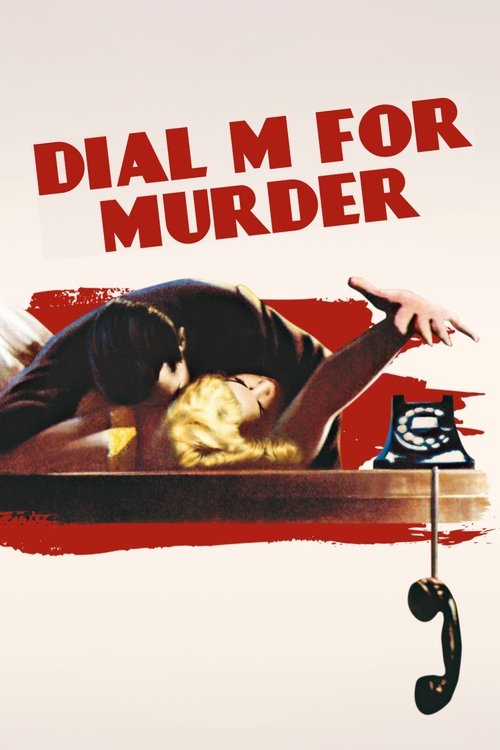
"Is this the man she was waiting for... or the man who was waiting for her?"
Director: Alfred Hitchcock
Cast: Ray Milland, Grace Kelly, Robert Cummings, John Williams, Anthony Dawson
Dial M for Murder — Characters & Cast
Character Analysis
Tony Wendice
Ray Milland
Motivation
His primary motivation is financial greed. A former professional tennis player, he married his wife Margot for her money and has grown accustomed to a luxurious lifestyle. He fears that if Margot divorces him over her affair, he will be left with nothing. The murder is not a crime of passion or jealousy, but a cold business decision to secure his financial future.
Character Arc
Tony begins as a cool, calculating planner, completely in control. He is charming, ruthless, and intellectually vain. His arc is one of devolution. When his perfect plan fails, he is forced to improvise, becoming increasingly tangled in his own web of lies. His composure slowly cracks under Inspector Hubbard's methodical pressure, until his final, desperate act of using the hidden key exposes his guilt, transforming him from a master manipulator into a trapped criminal.
Margot Wendice
Grace Kelly
Motivation
Initially, her motivation is to navigate the emotional complexities of her marriage and her affair with Mark. After the attack, her motivation is simply to survive—first the physical assault, and then the psychological and legal assault orchestrated by her husband. She is largely unaware of the true extent of Tony's plot for most of the film.
Character Arc
Margot starts as a somewhat passive character, trapped by her affair and her husband's manipulative kindness. Her arc is a journey from victim to survivor, and then back to victim under the law. Her pivotal moment is fighting back and killing Swann. Afterward, she becomes increasingly vulnerable and emotionally detached, especially after being wrongly convicted and sentenced to death. Her innocence and helplessness are what ultimately drive Mark and Hubbard to uncover the truth.
Chief Inspector Hubbard
John Williams
Motivation
Hubbard is motivated by a professional and moral commitment to justice. He is driven by inconsistencies in the case that don't add up, particularly the matter of the latchkey. His determination to solve the puzzle, even after a conviction has been secured, shows his dedication to uncovering the absolute truth rather than settling for an easy answer.
Character Arc
Hubbard initially appears as a polite, methodical, and perhaps unremarkable police inspector. His arc is one of revealing his true, brilliant intellect. He seems to accept Tony's framing of Margot at first, but subtle details niggle at him. He moves from a procedural investigation to a clever, psychological game, laying an elaborate trap for Tony. He remains the calm, moral center of the film, his persistance ensuring that true justice prevails.
Mark Halliday
Robert Cummings
Motivation
His motivation is his love for Margot and his unwavering belief in her innocence. After she is convicted, he becomes singularly focused on saving her from execution, willing to challenge both Tony and the police to find a way to exonerate her.
Character Arc
Mark begins as the 'other man', a crime writer who loves Margot. His arc is one of growing desperation and proactive involvement. Initially an outsider to the central crime, he refuses to believe Margot is guilty. He transitions from a passive lover to an amateur detective, attempting to use his knowledge of crime fiction to concoct a story to save Margot, inadvertently hitting close to the truth and helping Inspector Hubbard corner Tony.
Cast
Explore More About This Movie
Dive deeper into specific aspects of the movie with our detailed analysis pages