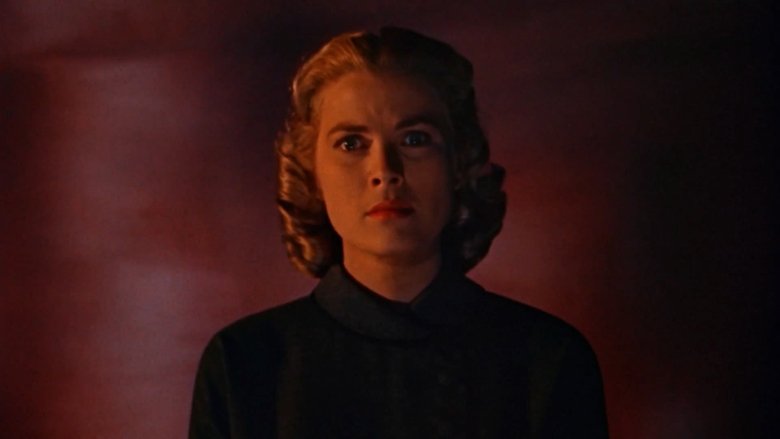
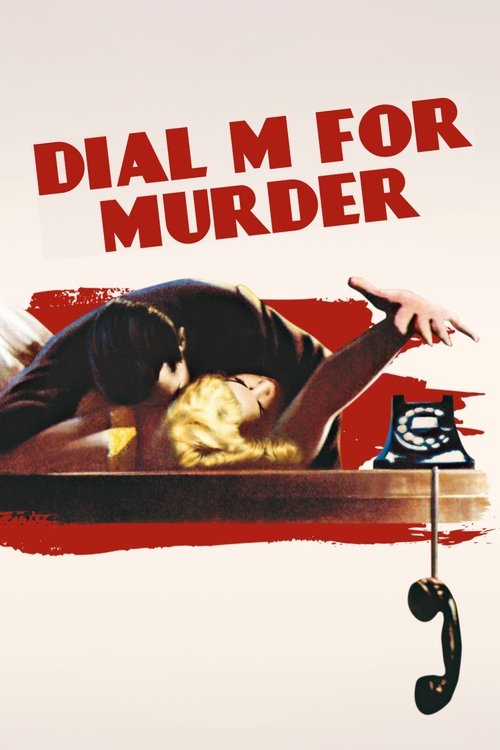
"Is this the man she was waiting for... or the man who was waiting for her?"
Dial M for Murder - Symbolism & Philosophy
Symbols & Motifs
The Latchkey
The key symbolizes power, control, and access. Initially, it represents domestic ownership. By stealing Margot's key, Tony strips her of her power and transfers it to Swann, the intruder. The key's journey—from Margot's handbag, to under the stair carpet, to Swann's pocket, and the eventual swap of keys—becomes the central thread of the plot. Ultimately, control of the key determines who holds power, with Inspector Hubbard using it as the final tool to spring the trap on Tony.
The key is a constant focus. Tony hides Margot's key under the stair carpet for Swann to use. After the failed murder, Tony mistakenly takes Swann's key from his pocket and returns it to Margot's bag. This mistake is what Inspector Hubbard eventually discovers, proving Margot could not have planted the key back herself and leading to the climax where Tony uses the hidden key, incriminating himself.
The Telephone
The telephone acts as the primary instrument of the murder plot, a lifeline twisted into a weapon. It is the trigger for the attack, meant to signal the moment of Margot's death. It symbolizes the intrusion of external threat into the domestic space and Tony's detached, remote-controlled method of violence. The title itself emphasizes the phone's central role in the meticulously planned, yet ultimately failed, crime.
Tony's plan hinges on him calling the flat from a party at a precise time. When Margot answers the phone, Swann is supposed to attack. The phone call is the link between Tony's alibi and the crime scene, a seemingly innocuous action that initiates the intended violence.
The Scissors
The scissors represent the intrusion of chance and feminine resourcefulness into a masculine, rigidly planned crime. Intended as a domestic tool, they become an improvised weapon of survival. While Tony's plan involves a scarf for a clean, silent strangulation, the scissors introduce chaos, violence, and unforeseen consequences, ultimately upending his entire scheme.
As Swann attacks Margot from behind the curtains, she fumbles behind her on the desk, grabbing a pair of scissors. In a desperate act of self-defense, she stabs him in the back, killing him. Hitchcock took great care filming this scene, reportedly agonizing over getting the 'gleam' of the scissors just right.
Philosophical Questions
Can a 'perfect' plan ever account for the unpredictability of human nature?
The film relentlessly explores this question through Tony's meticulously crafted plot. He architects a crime that seems flawless on paper, treating people like chess pieces. However, he fails to predict Margot's instinct for survival and Swann's slight incompetence. The film argues that no amount of intellectual planning can fully contain the variables of fear, desperation, and chance. It suggests a fundamental flaw in the idea of a 'perfect crime,' positing that human behavior will always be the unpredictable element that unravels the most logical of schemes.
What is the nature of justice: is it the punishment of the guilty or the exoneration of the innocent?
The film's second half shifts its focus from the crime to the pursuit of justice. The legal system fails, convicting and sentencing an innocent woman to death. True justice is ultimately delivered not by the courts, but by the dogged determination of Inspector Hubbard. His motivation isn't simply to punish Tony, but to prove Margot's innocence. The film suggests that justice is an intellectual puzzle requiring the dismantling of lies, and that its true triumph lies in the restoration of innocence, a theme crystallized in the final scene where Margot is freed and Tony is trapped by his own cleverness.
Core Meaning
The core meaning of "Dial M for Murder" explores the vanity and folly of attempting to orchestrate a "perfect crime." Director Alfred Hitchcock dissects the illusion of control, demonstrating how meticulous intellectual planning is ultimately vulnerable to chance, human nature, and unforeseen complications. The film serves as a cautionary tale about greed and the dark complexities of a marriage poisoned by deceit, where charm and civility mask murderous intent. It posits that true justice isn't just about punishment but about the clever unraveling of a seemingly perfect lie.