The core meaning of "Dilwale Dulhania Le Jayenge" revolves around the synthesis of tradition and modernity. Director Aditya Chopra's central idea was to present a romance where the rebellious spirit of youth does not reject cultural values but instead seeks to win them over. The film posits that love and individual choice can coexist with familial respect and patriarchal approval. Raj's decision not to elope with Simran but to instead earn her father's blessing is the cornerstone of this message. It champions a new path for young Indians, particularly those in the diaspora, suggesting that one can be modern and independent while still honoring the 'Indian' family system and its values.
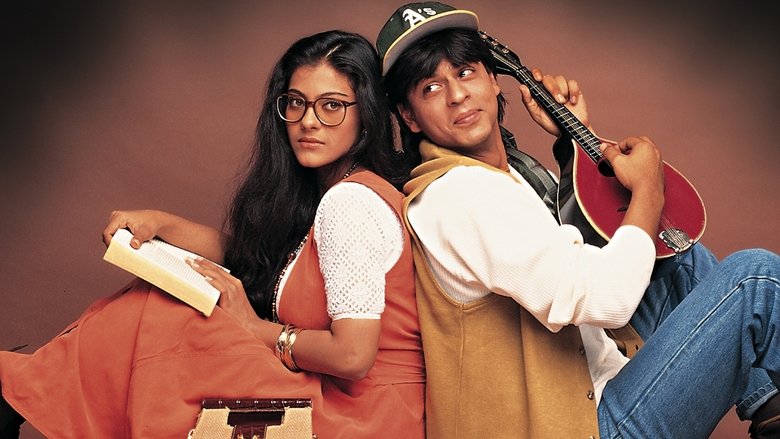
A vibrant, continent-spanning romantic epic where youthful rebellion harmonizes with deep-rooted tradition, painting a lush tapestry of love's triumphant journey against all odds.
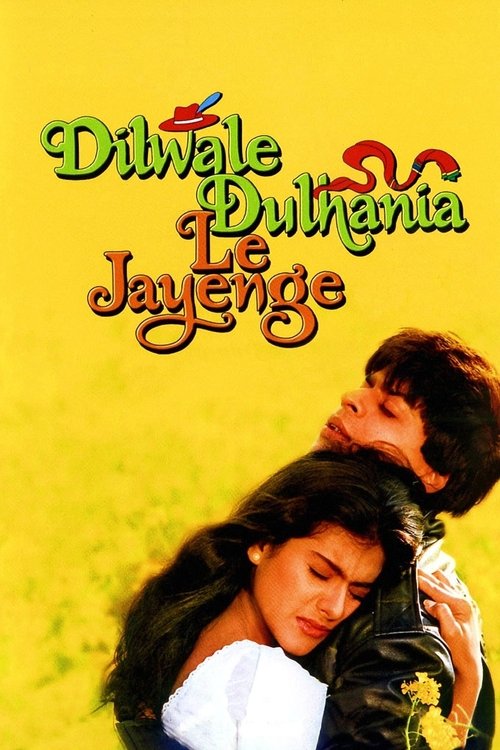
Dilwale Dulhania Le Jayenge
दिलवाले दुल्हनिया ले जायेंगे
"Come… Fall In love, All Over Again…"
20 October 1995
India
190 min
8.5
(4,508)
Director: Aditya Chopra
Cast: Kajol, Shah Rukh Khan, Amrish Puri, Farida Jalal, Anupam Kher
Drama
Comedy
Romance
Tradition vs. Modernity
Diaspora and Indian Identity
The Sanctity of Consent and Parental Approval
Patriarchy and Female Agency
Budget:
$13,200,000
Box Office:
$100,000,000
Dilwale Dulhania Le Jayenge — Symbolism & Philosophy
Symbols & Motifs
The Train
Meaning:
The train symbolizes both the beginning and the culmination of Raj and Simran's journey. It represents fate, connection, and the pivotal moments of choice that define their love story. It is a modern vessel carrying them towards their destiny, while also being the stage for the final, traditional act of patriarchal blessing.
Context:
Raj and Simran's story begins on a train in Europe where he first tries to woo her. The most iconic use is in the climax: Raj is on a departing train, and Baldev finally releases Simran's hand, telling her to go live her life. She runs to catch Raj's outstretched hand, a scene that has become one of the most famous in Bollywood history.
Mustard Fields (Sarson Ke Khet)
Meaning:
The vibrant yellow mustard fields of Punjab symbolize romance, homeland, and the pure, idyllic nature of Raj and Simran's love. They represent a return to roots and the dreamlike, almost mythical space where their love can finally blossom on Indian soil.
Context:
The iconic song "Tujhe Dekha Toh Yeh Jaana Sanam" is set in these fields. It marks the reunion of Raj and Simran in India and is a powerful visual representation of their love, contrasting sharply with the European landscapes from the first half of the film.
The Swiss Cowbell
Meaning:
The cowbell is a personal symbol of Simran's trip to Europe and her encounter with Raj. It represents her brief taste of freedom, her secret love, and a tangible connection to the man she wants to be with. It is a piece of their modern, Western love story that she carries into her traditional world in India.
Context:
Raj buys a Swiss cowbell and cheekily gives it to Simran in Switzerland. She brings it back to India and hangs it in her room. The sound of the bell later alerts her to Raj's presence in Punjab, acting as a secret signal of their shared past and hopeful future.
Feeding Pigeons
Meaning:
This act symbolizes a connection to Indian culture and tradition, and a moment of bonding between two seemingly opposed characters. It humanizes the stern patriarch, Baldev, and demonstrates Raj's ability to connect with him on a fundamental, cultural level, showing his 'Indianness'.
Context:
In London, Baldev Singh is shown feeding pigeons daily, a ritual that connects him to his home in Punjab. Later, in India, Raj joins him in this activity. This shared, unscripted moment is one of the first where Baldev warms up to Raj, seeing him not as a Westernized brat but as someone who understands and respects Indian traditions.
Philosophical Questions
Can true love and individual freedom coexist with deep-rooted tradition and familial duty?
This is the central question of the film. DDLJ explores this through the conflict between Simran's desire to marry for love and her father's insistence on an arranged marriage. The film's answer is a resounding 'yes,' but with a significant condition: freedom of choice must be legitimized by traditional authority. Raj's entire mission in the second half is to prove that his modern love is worthy of traditional sanction. The film proposes an idealistic compromise where the individual heart's desire is fulfilled not through rebellion, but through the consent of the family, suggesting that personal happiness and collective honor are not mutually exclusive.
What constitutes 'Indianness,' especially for those living in the diaspora?
The film delves into the complexities of cultural identity for Non-Resident Indians. Is 'Indianness' about geography, or is it a set of values one can carry anywhere? Baldev Singh believes it's about strict adherence to customs he remembers from his homeland. Raj, on the other hand, suggests a more fluid identity: one can embrace Western lifestyles (fashion, education, carefree attitudes) while retaining a core of 'Hindustani' values, particularly regarding family and honor. The film champions Raj's model, suggesting that identity is defined by inner values rather than external practices.
Core Meaning
Explore More About This Movie
Dive deeper into specific aspects of the movie with our detailed analysis pages