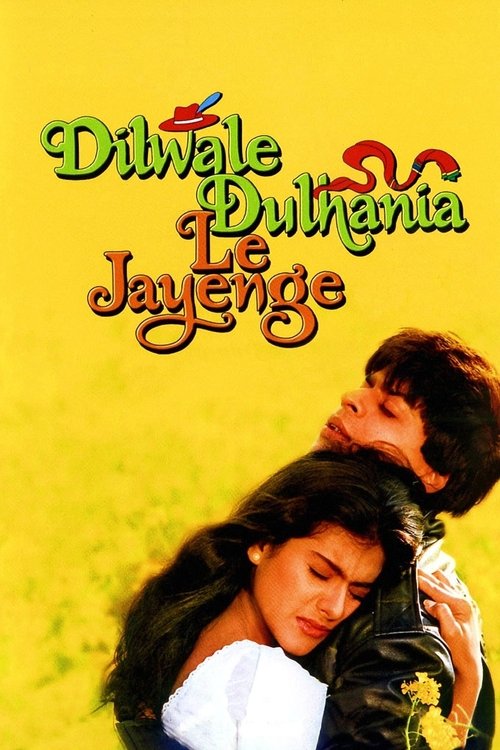
Dilwale Dulhania Le Jayenge
दिलवाले दुल्हनिया ले जायेंगे
"Come… Fall In love, All Over Again…"
Overview
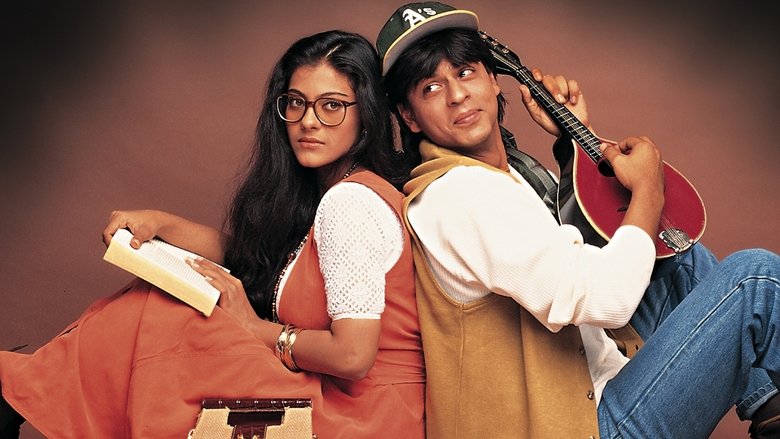
"Dilwale Dulhania Le Jayenge" (DDLJ) tells the story of Raj Malhotra (Shah Rukh Khan) and Simran Singh (Kajol), two young Non-Resident Indians (NRIs) living in London. Raj is a wealthy, carefree flirt, while Simran is a dutiful daughter from a conservative family, dreaming of love but bound by tradition. They meet on a Eurail trip across Europe and, despite initial clashes, fall deeply in love.
Their romance is cut short when Simran's stern father, Chaudhary Baldev Singh (Amrish Puri), takes the family to Punjab, India, to fulfill a promise: Simran's arranged marriage to Kuljeet (Parmeet Sethi), the son of his childhood friend. Heartbroken, Raj follows Simran to India. Instead of eloping, he resolves to win the approval of her entire family, especially her uncompromising father, believing that true love must be blessed by elders to succeed.
Core Meaning
The core meaning of "Dilwale Dulhania Le Jayenge" revolves around the synthesis of tradition and modernity. Director Aditya Chopra's central idea was to present a romance where the rebellious spirit of youth does not reject cultural values but instead seeks to win them over. The film posits that love and individual choice can coexist with familial respect and patriarchal approval. Raj's decision not to elope with Simran but to instead earn her father's blessing is the cornerstone of this message. It champions a new path for young Indians, particularly those in the diaspora, suggesting that one can be modern and independent while still honoring the 'Indian' family system and its values.
Thematic DNA
Tradition vs. Modernity
This is the central conflict of the film. It's embodied in the contrast between the first half set in modern, liberal Europe and the second half in traditional, rural Punjab. Simran is caught between her modern desires for love and freedom, nurtured by her Western upbringing, and her father's rigid adherence to Indian traditions and the arranged marriage system. Raj, though Westernized in his mannerisms, ultimately chooses the traditional path of seeking parental consent over the modern solution of eloping, aiming to bridge this gap. The film ultimately argues for a harmonious blend of both, where modern love is validated by traditional approval.
Diaspora and Indian Identity
DDLJ was a pioneering film in its positive portrayal of Non-Resident Indians (NRIs). It explores the anxieties and affirmations of Indian identity for those living abroad. Baldev Singh desperately clings to his homeland's values in a foreign land, while Simran and Raj must navigate their dual identities. Raj's climactic declaration, "I am a Hindustani, and I know what a Hindustani girl's izzat (honour) is worth," serves as a powerful affirmation of his underlying Indian values despite his Western lifestyle, reshaping the NRI from a stereotypically decadent figure to a hero who upholds national identity.
The Sanctity of Consent and Parental Approval
The film's most significant narrative choice is Raj's refusal to elope. Simran's mother, Lajjo, even encourages them to run away, representing a more pragmatic view born from her own suppressed desires. However, Raj insists on winning Baldev's approval, framing the father's consent as the ultimate prize. This theme elevates the idea that a marriage is not just a union of two individuals but of two families. The climax, where Baldev finally lets Simran go, isn't just permission; it's a validation of their love within the traditional family structure, a concept that strongly resonated with audiences.
Patriarchy and Female Agency
The film operates within a deeply patriarchal framework, where the ultimate decision-making power rests with the father, Baldev Singh. Simran's agency is limited; she begs her father for a month of freedom and can only dream of a life she cannot choose. Her mother, Lajjo, represents a generation of women whose dreams were sacrificed for duty. While Simran does fall in love and stays true to her choice, her happiness is ultimately granted by a man—first by Raj who fights for her, and finally by her father who lets her go. Critics often point to this as a significant limitation of the film's progressive message.
Character Analysis
Raj Malhotra
Shah Rukh Khan
Motivation
Initially motivated by the thrill of the chase, his core motivation becomes a deep, sincere love for Simran. This love is so profound that he is willing to abandon his carefree lifestyle and fight for her in the most traditional way possible—by convincing her patriarchal father that he is worthy.
Character Arc
Raj begins as an irresponsible, rich NRI brat who flunks university and prioritizes fun. His meeting with Simran transforms him. He evolves from a flirtatious prankster into a determined and respectful man who is willing to undergo hardship and risk his life to win the approval of Simran's family. His arc is about discovering maturity and the true meaning of love, which he defines not by rebellion (eloping) but by winning respect (earning her father's blessing).
Simran Singh
Kajol
Motivation
Her primary motivation is to find a balance between her personal happiness and her family's honor. She yearns for the epic love she has read about in poetry but is terrified of disappointing her stern father. Ultimately, she wants to be with Raj, but the conflict arises from her deep-seated respect for her family's traditions.
Character Arc
Simran starts as a dutiful, repressed, and romantic dreamer, trapped between her conservative father's expectations and her own desires. Her trip to Europe is a brief rebellion that awakens her spirit. After falling for Raj, her arc becomes a quiet struggle between her duty to her family and her love for him. While she doesn't actively defy her father for most of the film, her silent suffering and unwavering love for Raj represent her internal rebellion, culminating in her willingness to elope before Raj proposes his alternative plan.
Chaudhary Baldev Singh
Amrish Puri
Motivation
His motivation is rooted in preserving Indian culture and family honor in a foreign land. He fears that the Western world will corrupt his daughters and believes an arranged marriage in his home village in Punjab is the only way to ensure Simran maintains her cultural purity. His promise to his friend is a matter of unwavering honor.
Character Arc
Baldev is the film's primary antagonist, an unyielding patriarch who embodies rigid tradition and nostalgia for his homeland. He is initially portrayed as a loving but incredibly strict father. His arc is one of gradual softening. Through Raj's persistent efforts to show respect and prove his worthiness, Baldev's stern exterior begins to crack. His final act of letting Simran go is a monumental shift, representing his acceptance that his daughter's happiness is more important than his rigid adherence to a promise. He learns that true honor lies in love, not just tradition.
Lajwanti 'Lajjo' Singh
Farida Jalal
Motivation
Motivated by a deep empathy for her daughter, Lajjo does not want Simran to suffer the same fate of unfulfilled desires that she did. She sees Raj as the key to Simran's happiness and becomes his secret ally within the household, driven by a mother's selfless love.
Character Arc
Lajjo is the sympathetic heart of the family. She has lived a life of sacrifice, putting her husband's and family's needs before her own dreams. Her arc is about finding the courage to support her daughter's happiness, even if it means defying her husband. She transitions from a silent supporter of Simran to an active enabler, culminating in her telling Simran to elope with Raj, a moment of profound rebellion against the patriarchal norms she has lived by.
Symbols & Motifs
The Train
The train symbolizes both the beginning and the culmination of Raj and Simran's journey. It represents fate, connection, and the pivotal moments of choice that define their love story. It is a modern vessel carrying them towards their destiny, while also being the stage for the final, traditional act of patriarchal blessing.
Raj and Simran's story begins on a train in Europe where he first tries to woo her. The most iconic use is in the climax: Raj is on a departing train, and Baldev finally releases Simran's hand, telling her to go live her life. She runs to catch Raj's outstretched hand, a scene that has become one of the most famous in Bollywood history.
Mustard Fields (Sarson Ke Khet)
The vibrant yellow mustard fields of Punjab symbolize romance, homeland, and the pure, idyllic nature of Raj and Simran's love. They represent a return to roots and the dreamlike, almost mythical space where their love can finally blossom on Indian soil.
The iconic song "Tujhe Dekha Toh Yeh Jaana Sanam" is set in these fields. It marks the reunion of Raj and Simran in India and is a powerful visual representation of their love, contrasting sharply with the European landscapes from the first half of the film.
The Swiss Cowbell
The cowbell is a personal symbol of Simran's trip to Europe and her encounter with Raj. It represents her brief taste of freedom, her secret love, and a tangible connection to the man she wants to be with. It is a piece of their modern, Western love story that she carries into her traditional world in India.
Raj buys a Swiss cowbell and cheekily gives it to Simran in Switzerland. She brings it back to India and hangs it in her room. The sound of the bell later alerts her to Raj's presence in Punjab, acting as a secret signal of their shared past and hopeful future.
Feeding Pigeons
This act symbolizes a connection to Indian culture and tradition, and a moment of bonding between two seemingly opposed characters. It humanizes the stern patriarch, Baldev, and demonstrates Raj's ability to connect with him on a fundamental, cultural level, showing his 'Indianness'.
In London, Baldev Singh is shown feeding pigeons daily, a ritual that connects him to his home in Punjab. Later, in India, Raj joins him in this activity. This shared, unscripted moment is one of the first where Baldev warms up to Raj, seeing him not as a Westernized brat but as someone who understands and respects Indian traditions.
Memorable Quotes
Bade bade deshon mein aisi choti choti baatein hoti rehti hai, Senorita.
— Raj Malhotra
Context:
Raj says this multiple times throughout the first half of the film, often after a mishap or a moment of playful teasing with Simran during their European tour. It's his signature way of breaking the ice and showing his charming personality.
Meaning:
Translating to "In big countries, such small things keep happening, Senorita," this is Raj's charming, nonchalant catchphrase. It encapsulates his carefree and optimistic attitude, used to downplay awkward or tense situations and to flirt with Simran. It has become one of the most iconic and quoted lines in Bollywood history.
Ja Simran ja, jee le apni zindagi.
— Chaudhary Baldev Singh
Context:
Spoken by Baldev Singh at the train station as Raj is being forced to leave. After witnessing the depth of Raj and Simran's love, he has a change of heart and releases Simran's hand, allowing her to run and join Raj on the departing train.
Meaning:
"Go Simran go, live your life." This is the climactic line of the film and represents the ultimate catharsis. It signifies the patriarch's consent and blessing, the resolution of the central conflict. It's a powerful moment of liberation, not just for Simran, but for the idea that tradition can bend for the sake of happiness.
Raj, agar yeh tujhe pyaar karti hai, toh yeh palat ke dekhegi. Palat... Palat... Palat...
— Raj Malhotra
Context:
Raj says this to himself at a train station in Europe as Simran walks away after they part ways. He stakes his hope on this small gesture, and when she does turn around, it marks the unspoken confirmation of their mutual love.
Meaning:
"Raj, if she loves you, she will turn back to look. Turn... Turn... Turn..." This line is a test of love, a classic trope in romantic cinema. It's Raj's moment of vulnerability and hope, externalizing his inner belief that their connection is real. Simran turning back confirms their unspoken feelings for each other.
Main ek Hindustani hoon, aur main jaanta hoon ki ek Hindustani ladki ki izzat kya hoti hai.
— Raj Malhotra
Context:
The morning after they get drunk and are forced to share a room, Simran wakes up horrified, believing something happened between them. Raj first pretends it did, but then delivers this line to reassure her that he would never disrespect her honor, solidifying her trust in him.
Meaning:
"I am an Indian, and I know what an Indian girl's honor is worth." This is a pivotal line where Raj defines his character. Despite his modern, flirtatious exterior, he reveals a deep-seated respect for traditional Indian values. It's the moment he assures Simran (and the audience) of his noble intentions, bridging the gap between his Westernized persona and his Indian soul.
Philosophical Questions
Can true love and individual freedom coexist with deep-rooted tradition and familial duty?
This is the central question of the film. DDLJ explores this through the conflict between Simran's desire to marry for love and her father's insistence on an arranged marriage. The film's answer is a resounding 'yes,' but with a significant condition: freedom of choice must be legitimized by traditional authority. Raj's entire mission in the second half is to prove that his modern love is worthy of traditional sanction. The film proposes an idealistic compromise where the individual heart's desire is fulfilled not through rebellion, but through the consent of the family, suggesting that personal happiness and collective honor are not mutually exclusive.
What constitutes 'Indianness,' especially for those living in the diaspora?
The film delves into the complexities of cultural identity for Non-Resident Indians. Is 'Indianness' about geography, or is it a set of values one can carry anywhere? Baldev Singh believes it's about strict adherence to customs he remembers from his homeland. Raj, on the other hand, suggests a more fluid identity: one can embrace Western lifestyles (fashion, education, carefree attitudes) while retaining a core of 'Hindustani' values, particularly regarding family and honor. The film champions Raj's model, suggesting that identity is defined by inner values rather than external practices.
Alternative Interpretations
While widely celebrated as a timeless romance, DDLJ has also been subject to critical re-evaluation, particularly through a feminist lens. One major alternative interpretation views the film not as a progressive love story, but as a reinforcement of patriarchy. This perspective argues that Simran's agency is severely limited; her happiness is ultimately a gift from two men—first Raj, who decides the 'correct' way to win her, and finally her father, who 'gives' her away. The film's central message, that a father's approval is paramount, is seen as upholding the very patriarchal structure it seems to challenge.
Another interpretation focuses on Raj's character, arguing that his initial behavior towards Simran is not charmingly flirtatious but rather a form of harassment. His persistent, unsolicited advances and pranks in Europe could be read as creepy and invasive by contemporary standards. From this viewpoint, the film romanticizes stalking and toxic behavior, setting a problematic precedent for romantic heroes in Bollywood. Therefore, instead of a wholesome icon, Raj can be interpreted as a 'red flag' hero whose actions are excused by the film's fairytale narrative.
Cultural Impact
"Dilwale Dulhania Le Jayenge" is not merely a film; it is a cultural phenomenon that fundamentally altered the landscape of Bollywood. Released in 1995, a period of economic liberalization in India, DDLJ perfectly captured the aspirations and conflicts of a new generation. It became a catalyst for the globalization of Indian cinema, pioneering the 'NRI nostalgia' genre that targeted the lucrative diaspora market by celebrating Indian values within a Western context. This blend of Swiss landscapes and Punjabi traditions became a blockbuster formula, inspiring countless films like "Yeh Jawaani Hai Deewani" and "Humpty Sharma Ki Dulhania".
The film cemented Shah Rukh Khan's status as the 'King of Romance' and the on-screen pairing of Khan and Kajol became legendary. Its visual language, from the mustard fields to the climactic train scene, has been endlessly referenced and parodied in pop culture. DDLJ's most significant legacy is its record-shattering theatrical run at Mumbai's Maratha Mandir theatre, where it was screened daily for over two decades, making it the longest-running film in Indian history. This unprecedented longevity is a testament to its timeless appeal, with its dialogues and songs becoming integral to weddings and cultural celebrations across the globe. The film is considered a definitive Bollywood romance and a touchstone for generations of moviegoers.
Audience Reception
"Dilwale Dulhania Le Jayenge" was met with widespread acclaim and became an all-time blockbuster upon its release. Audiences were captivated by the powerful on-screen chemistry between Shah Rukh Khan and Kajol, the memorable soundtrack, and the picturesque European and Indian locations. The film's blend of modern romance and traditional family values struck a deep chord with both domestic and NRI audiences, who saw their own cultural dichotomies reflected on screen. The emotional climax, where the stern father finally gives his blessing, was particularly praised and often met with cheers and tears in theaters. The film's record-breaking, multi-decade run at the Maratha Mandir theatre is a testament to its enduring popularity, with audiences returning repeatedly, often mouthing dialogues and singing along with the songs. While some modern critics point out its problematic gender politics and Raj's initially questionable behavior, the overwhelming audience verdict for decades has been one of adoration for what is considered the quintessential Bollywood love story.
Interesting Facts
- Aditya Chopra's first choice for the role of Raj was not Shah Rukh Khan. He initially envisioned the story as a romance between an Indian girl and an American man, and considered casting Tom Cruise.
- Shah Rukh Khan initially turned down the role of Raj, as he was famous for playing villainous and anti-hero roles and was not interested in a 'lover boy' part. It took a lot of convincing from Aditya and Yash Chopra to get him on board. Saif Ali Khan was also offered the role.
- The film's title, "Dilwale Dulhania Le Jayenge," was suggested by actress Kirron Kher. It was the first Bollywood film to give a 'Title Suggested by' credit.
- The iconic scene where Raj and Baldev feed pigeons together was an impromptu addition, improvised by Shah Rukh Khan and Amrish Puri.
- During the song "Ruk Ja O Dil Deewane," director Aditya Chopra did not tell Kajol that Shah Rukh Khan was going to drop her at the end of a dance move, in order to capture her genuine, surprised reaction on camera.
- DDLJ holds the record for the longest-running film in the history of Indian cinema. It ran uninterruptedly at the Maratha Mandir theatre in Mumbai for over 1000 weeks (nearly 20 years) after its release in 1995.
- Shah Rukh Khan's iconic leather jacket was purchased by Uday Chopra from a Harley-Davidson store in California for $400.
- This film marked the on-screen acting debut of Karan Johar, who played one of Raj's friends. He also served as an assistant director on the film.
- Aditya Chopra wrote the entire script in just three to four weeks.
- The song "Mehndi Laga Ke Rakhna" was originally written for another film but was ultimately used in DDLJ.
Easter Eggs
Anupam Kher's character, Dharamvir Malhotra, lists his 'failed' forefathers to Raj. In this scene, Anupam Kher used the names of his actual uncles and grandfather.
This adds a layer of personal, meta-humor to the scene. It's an inside joke that grounds the character's quirky family history in the actor's own lineage, making the bond between the on-screen father and son feel more authentic and playful.
The character name 'Raj' was an homage to the legendary actor-director Raj Kapoor, whose on-screen name was often Raj.
Aditya Chopra named the protagonist after one of Hindi cinema's most iconic figures, who was himself a master of romance. This subtly positions Shah Rukh Khan's character within a lineage of great cinematic lovers, elevating his status and connecting DDLJ to the golden age of Bollywood.
⚠️ Spoiler Analysis
Click to reveal detailed analysis with spoilers
Frequently Asked Questions
Explore More About This Movie
Dive deeper into specific aspects of the movie with our detailed analysis pages
Comments (0)
No comments yet. Be the first to share your thoughts!