Doctor Who: The Day of the Doctor - Symbolism & Philosophy
Symbols & Motifs
The Moment (Sentient Weapon)
The Moment symbolizes conscience, choice, and the possibility of a different path. As a sentient weapon, it judges its user and refuses to be a simple tool of destruction. Its interface, taking the form of 'Bad Wolf'/Rose Tyler, represents the Doctor's own conscience and his connection to humanity, which ultimately helps guide him toward a more compassionate solution.
The War Doctor intends to use The Moment to end the Time War. Instead of simply activating, it creates a bridge between his past and future selves, forcing him to witness the long-term consequences of his actions before committing to them, thereby symbolizing the weight and gravity of the choice before him.
3D Time Lord Paintings
The Time Lord art, which are moments frozen in time ('stasis cubes'), symbolizes the idea that history is not static and can be revisited and even changed. They represent a 'bigger on the inside' perspective on history, suggesting hidden depths and possibilities within a single moment.
Initially a mystery for UNIT and the Eleventh Doctor to solve at the National Gallery, the paintings become the key to the Zygon invasion plot. Ultimately, this technology provides the very method by which the Doctors save Gallifrey—by freezing the entire planet within a single moment, effectively placing it inside a painting and a pocket universe.
The Fez
The fez is a recurring symbol of the Eleventh Doctor's childish eccentricity and his tendency to find joy and silliness even in the darkest of times. It represents a part of his personality that the more hardened Tenth and War Doctors initially disdain but is part of his coping mechanism.
The fez appears when a time fissure opens in the National Gallery, with the Eleventh Doctor gleefully claiming it. The Tenth Doctor expresses his disapproval, and it's later shot by Queen Elizabeth I. Its reappearance highlights the comedic interaction and personality clashes between the different incarnations.
The Fourth Doctor's Scarf
The iconic, multi-colored scarf is a powerful symbol of the show's long history and its enduring legacy. It represents the classic era of Doctor Who and the connection between the modern show and its roots.
The scarf is worn by UNIT scientist Osgood, who is portrayed as a devoted fan of the Doctor. This serves as a visual nod to the show's dedicated fanbase. The scarf also appears in the final scene, worn by the Curator (Tom Baker), solidifying the link to the show's past and its future.
Philosophical Questions
Can a person be defined by a single, terrible act?
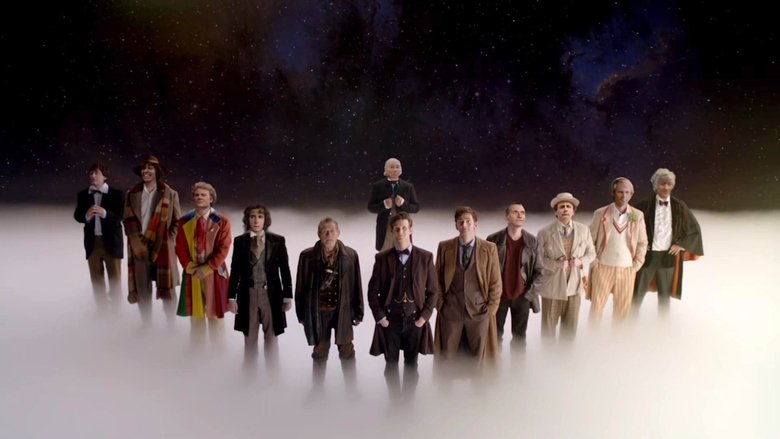
The film explores this question through the character of the War Doctor. He believes his decision to end the Time War strips him of his identity and the right to his name. The narrative argues against this, suggesting that a person is the sum of all their parts, including their potential for future good. By allowing him to see the men he will become—heroes who save countless worlds—the film posits that one's identity is not fixed by their darkest moment, but is an ongoing process of becoming.
Is it ever justifiable to commit a monstrous act for the 'greater good'?
This is the classic utilitarian dilemma at the heart of the story. The War Doctor is prepared to kill billions to save trillions. The film initially presents this as a tragic necessity but ultimately rejects it. Through Clara's intervention, it champions a deontological perspective—that some actions are inherently wrong, regardless of the outcome. The film's message is that there is always 'another way,' and that the true victory lies in adhering to one's moral principles even in the face of annihilation.
How does confronting our past shape our future?
The Tenth and Eleventh Doctors have tried to forget the War Doctor and his actions, but this has left them haunted. The special forces them to literally face their past. The exploration shows that only by confronting and integrating the most painful parts of one's history can one truly heal and move forward. Instead of being destroyed by his past, the Doctor integrates it and is given a new, hopeful future—a mission to find Gallifrey.
Core Meaning
The core meaning of "The Day of the Doctor" revolves around the themes of redemption, self-forgiveness, and reclaiming one's identity. The film revisits the darkest moment in the Doctor's life—his decision to end the Time War by committing a double genocide—and reframes it not as an act of destruction, but as a moment of ultimate salvation. Director Nick Hurran and writer Steven Moffat aimed to transform the Doctor's foundational trauma into a narrative of hope. The message is that one is not defined by their worst actions, but by their capacity to learn, to grow, and to choose a better path, even when it seems impossible. By having his future selves stand with him, the War Doctor is reassured that the man he will become is a good man, worthy of the name 'Doctor'. The film ultimately asserts that being 'the Doctor' is not about being a warrior, but about being a savior, a healer, and a beacon of hope.