Doctor Who: The Day of the Doctor
Overview
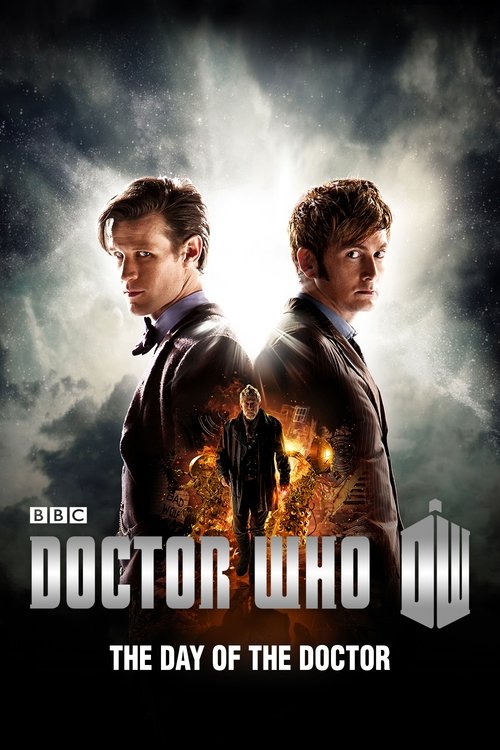
"Doctor Who: The Day of the Doctor" is the 50th-anniversary special of the iconic British science fiction series. The story weaves together three distinct timelines. In the present day, the Eleventh Doctor (Matt Smith) and his companion Clara Oswald (Jenna Coleman) are summoned by UNIT to investigate mysterious, three-dimensional paintings at the National Gallery in London. Simultaneously, the Tenth Doctor (David Tennant) finds himself in Elizabethan England, entangled with Queen Elizabeth I (Joanna Page) and facing a threat from the shape-shifting Zygons.
The central thread connecting these events is the previously unseen 'War Doctor' (John Hurt), an incarnation born out of the necessity of the great Time War. On the final day of the war, he stands ready to use a sentient superweapon known as 'The Moment' to annihilate both his own people, the Time Lords, and their mortal enemies, the Daleks, to end the catastrophic conflict. The Moment, however, manifests an interface in the form of Rose Tyler (Billie Piper) and opens fissures in time, uniting the three Doctors. This forces the War Doctor to confront his future selves and the immense guilt and sorrow his decision will cause, leading them all to question if there might be another way.
Core Meaning
The core meaning of "The Day of the Doctor" revolves around the themes of redemption, self-forgiveness, and reclaiming one's identity. The film revisits the darkest moment in the Doctor's life—his decision to end the Time War by committing a double genocide—and reframes it not as an act of destruction, but as a moment of ultimate salvation. Director Nick Hurran and writer Steven Moffat aimed to transform the Doctor's foundational trauma into a narrative of hope. The message is that one is not defined by their worst actions, but by their capacity to learn, to grow, and to choose a better path, even when it seems impossible. By having his future selves stand with him, the War Doctor is reassured that the man he will become is a good man, worthy of the name 'Doctor'. The film ultimately asserts that being 'the Doctor' is not about being a warrior, but about being a savior, a healer, and a beacon of hope.
Thematic DNA
Redemption and Self-Forgiveness
The central theme is the Doctor's journey to forgive himself for the atrocities of the Time War. The modern Doctor has been characterized by the immense guilt of his past actions. The special externalizes this internal conflict by bringing three of his incarnations together. The War Doctor, burdened by his imminent decision, sees the men he will become—the flippant Tenth and the forgetful Eleventh—as a consequence of his sin. However, by uniting and witnessing each other's pain and inherent goodness, they are able to collectively re-evaluate their darkest day. Clara Oswald plays a pivotal role in reminding them of their true nature, urging them to 'Be a Doctor.' The ultimate decision to save Gallifrey rather than destroy it is a powerful act of self-redemption, fundamentally changing the Doctor's personal history and future trajectory.
War and its Consequences
The film delves into the brutal reality of war and the impossible choices it forces upon individuals. The Time War is depicted as a devastating conflict that has pushed both the Time Lords and the Daleks to the brink of mutual destruction. The War Doctor embodies the soldier who has lost his way, renouncing his name because he feels he can no longer live up to its ideals. His willingness to sacrifice his own people highlights the terrible cost of war. The parallel plot involving UNIT and the Zygons, where Kate Stewart is prepared to detonate a nuclear warhead under London to prevent an invasion, mirrors the Doctor's own terrible choice, emphasizing that such desperate measures are a recurring tragedy.
Identity and the Nature of 'The Doctor'
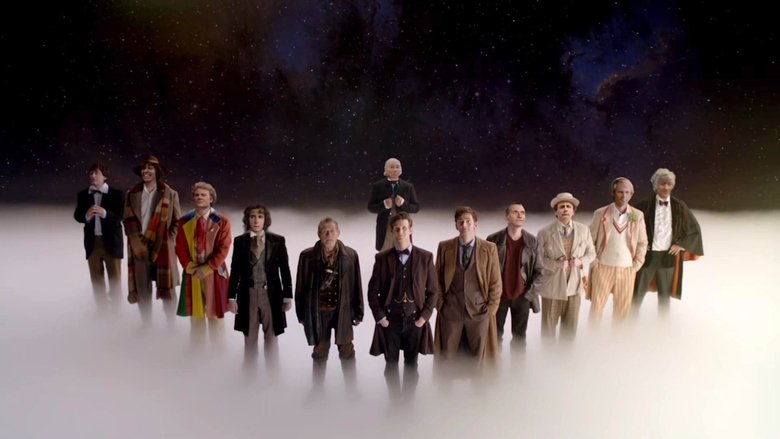
The special is a deep exploration of what it means to be 'the Doctor'. By introducing the War Doctor, the narrative questions the established numbering and persona of the character. This incarnation, who rejected his title, is ultimately re-embraced and validated by his future selves. The film posits that being the Doctor is not about a perfect, unblemished record, but about the constant effort to do the right thing, especially when it's hard. The memorable quote, "Great men are forged in fire. It is the privilege of lesser men to light the flame," encapsulates the idea that his wartime experiences, however brutal, were essential in shaping the hero he would become. The final union of all thirteen Doctors to save Gallifrey solidifies the idea that despite their different faces and personalities, they are all fundamentally the same man, united by a single, defining promise.
The Power of Memory and Hope
Memory—both painful and forgotten—is a driving force in the narrative. The Tenth and Eleventh Doctors have spent centuries running from the memory of the Time War, trying to forget the man who fought it. The Moment's intervention forces them to confront this suppressed trauma. The resolution, however, isn't about erasing the past, but re-contextualizing it. By saving Gallifrey, the Doctor is given a new hope and a new mission: to find his lost home. The appearance of the Curator (Tom Baker) at the end reinforces this, suggesting that looking back at old faces and memories can provide comfort and a path forward.
Character Analysis
The Eleventh Doctor
Matt Smith
Motivation
His primary motivation is to protect the present and future, often by ignoring the painful parts of his past. Throughout the special, this evolves into a motivation to heal his past self and rewrite his greatest regret.
Character Arc
The Eleventh Doctor begins the story as the 'man who forgets,' actively running from the trauma of the Time War. His quirky and childlike demeanor is a mask for his deep-seated pain. When confronted by his past selves, he is forced to face the decision he's long tried to bury. His arc is one of acceptance and healing. By the end, he is no longer running from his past but has embraced it, finding a new purpose in the quest to find Gallifrey.
The Tenth Doctor
David Tennant
Motivation
He is motivated by a fierce desire to atone for his perceived sins during the Time War, often acting as a swashbuckling hero to overcompensate for his inner turmoil.
Character Arc
The Tenth Doctor, positioned chronologically just before his regeneration, is the 'man who regrets.' He carries the weight of the Time War openly, his charm and wit barely concealing a deep melancholy. Initially, he clashes with his future self's apparent flippancy about their shared past. His journey in the special involves coming to terms with the idea that redemption is possible and that he doesn't have to bear the burden alone. His famous line, 'I don't want to go,' is repeated, but this time in a context of moving on from a moment of unity rather than facing his own demise.
The War Doctor
John Hurt
Motivation
His sole motivation is to end the unimaginable horror of the Time War, believing that destroying both sides is the only way to save the universe.
Character Arc
The War Doctor is the incarnation who has disavowed his name, seeing himself as a warrior rather than a 'Doctor.' He is weary, pragmatic, and resolved to make a terrible choice for the 'greater good.' His arc is the heart of the film. Through his interactions with his future selves and The Moment, he rediscovers his essential nature. He learns that even in the darkest of times, the answer is not to be a warrior but to be a 'Doctor.' He goes from a state of grim resignation to one of joyful hope, finally accepting himself as a true incarnation of the Doctor before regenerating.
Clara Oswald
Jenna Coleman
Motivation
Her motivation is to help the Doctor and to ensure he lives up to his own ideals. She refuses to accept that destroying Gallifrey was the only option and pushes him to be the hero she knows he is.
Character Arc
Clara's arc in this special is to solidify her role as more than just a companion; she becomes the Doctor's moral compass. Freed from the 'Impossible Girl' mystery, she is given a pivotal role in the central drama. It is her plea that breaks through the Doctors' shared guilt, reminding them of the promise associated with their name. She represents the human perspective that helps the Doctor see beyond the impossible choices of a Time Lord, pushing them to find a better way.
The Moment / Rose Tyler
Billie Piper
Motivation
The Moment's motivation is to be used by someone worthy, and to ensure that the monumental decision to use it is made with full awareness of the consequences. It seeks to judge its user and, in this case, to save him from himself.
Character Arc
As the interface of a sentient weapon, The Moment's arc is to guide the War Doctor to a better choice. Taking the form of 'Bad Wolf,' an echo of a future companion, it acts as a catalyst for the entire plot. It doesn't provide easy answers but instead forces the Doctor to confront himself—literally. Its development is in choosing to offer the Doctor a path to redemption rather than simply fulfilling its function as a weapon of mass destruction.
Symbols & Motifs
The Moment (Sentient Weapon)
The Moment symbolizes conscience, choice, and the possibility of a different path. As a sentient weapon, it judges its user and refuses to be a simple tool of destruction. Its interface, taking the form of 'Bad Wolf'/Rose Tyler, represents the Doctor's own conscience and his connection to humanity, which ultimately helps guide him toward a more compassionate solution.
The War Doctor intends to use The Moment to end the Time War. Instead of simply activating, it creates a bridge between his past and future selves, forcing him to witness the long-term consequences of his actions before committing to them, thereby symbolizing the weight and gravity of the choice before him.
3D Time Lord Paintings
The Time Lord art, which are moments frozen in time ('stasis cubes'), symbolizes the idea that history is not static and can be revisited and even changed. They represent a 'bigger on the inside' perspective on history, suggesting hidden depths and possibilities within a single moment.
Initially a mystery for UNIT and the Eleventh Doctor to solve at the National Gallery, the paintings become the key to the Zygon invasion plot. Ultimately, this technology provides the very method by which the Doctors save Gallifrey—by freezing the entire planet within a single moment, effectively placing it inside a painting and a pocket universe.
The Fez
The fez is a recurring symbol of the Eleventh Doctor's childish eccentricity and his tendency to find joy and silliness even in the darkest of times. It represents a part of his personality that the more hardened Tenth and War Doctors initially disdain but is part of his coping mechanism.
The fez appears when a time fissure opens in the National Gallery, with the Eleventh Doctor gleefully claiming it. The Tenth Doctor expresses his disapproval, and it's later shot by Queen Elizabeth I. Its reappearance highlights the comedic interaction and personality clashes between the different incarnations.
The Fourth Doctor's Scarf
The iconic, multi-colored scarf is a powerful symbol of the show's long history and its enduring legacy. It represents the classic era of Doctor Who and the connection between the modern show and its roots.
The scarf is worn by UNIT scientist Osgood, who is portrayed as a devoted fan of the Doctor. This serves as a visual nod to the show's dedicated fanbase. The scarf also appears in the final scene, worn by the Curator (Tom Baker), solidifying the link to the show's past and its future.
Memorable Quotes
Great men are forged in fire. It is the privilege of lesser men to light the flame.
— The War Doctor
Context:
The War Doctor says this to the Tenth and Eleventh Doctors as they stand on the brink of using The Moment together. It is his justification for the terrible act he believes he must commit, seeing it as a necessary, albeit horrific, foundation for the Doctor's future.
Meaning:
This quote encapsulates the idea that true heroism and character are born from immense hardship and difficult choices. The War Doctor acknowledges the terrible role he must play, understanding that his sacrifice will allow for the emergence of the 'great men' his future selves will become.
You were the Doctor on the day it wasn’t possible to get it right.
— The Eleventh Doctor
Context:
Spoken in the barn on Gallifrey, as the Tenth and Eleventh Doctors decide to stand with the War Doctor to share his burden. This moment of solidarity and forgiveness is a turning point for all three of them.
Meaning:
This line offers absolution to the War Doctor and, by extension, to the Doctor as a whole. It acknowledges that he was faced with an impossible choice where there was no 'right' answer. It reframes his action not as a failure, but as doing the best one could in an unbearable situation, thus validating his place as a true Doctor.
Gallifrey stands!
— The Eleventh Doctor
Context:
After all thirteen Doctors successfully freeze Gallifrey in a pocket universe, the Eleventh Doctor joyfully proclaims this to Clara, realizing their impossible plan has worked and that his people are not gone, merely lost.
Meaning:
A triumphant declaration that reverses one of the foundational tragedies of the modern series. This line signifies a monumental shift in the show's mythology, turning a story of loss into one of hope and giving the Doctor a new, overarching mission: to find his home.
I don't want to go.
— The Tenth Doctor
Context:
The Tenth Doctor says this to the Eleventh Doctor just before departing in his TARDIS. The Eleventh Doctor's knowing, sad reply, 'He always says that,' underscores the cyclical nature of his grief and loneliness at that point in his life.
Meaning:
This quote is a direct callback to the Tenth Doctor's final words before his regeneration. Its use here is poignant, as he isn't facing death, but rather the end of this brief, healing reunion with his other selves. It shows his reluctance to return to his own lonely timeline, now knowing the burden he carries alone.
Philosophical Questions
Can a person be defined by a single, terrible act?
The film explores this question through the character of the War Doctor. He believes his decision to end the Time War strips him of his identity and the right to his name. The narrative argues against this, suggesting that a person is the sum of all their parts, including their potential for future good. By allowing him to see the men he will become—heroes who save countless worlds—the film posits that one's identity is not fixed by their darkest moment, but is an ongoing process of becoming.
Is it ever justifiable to commit a monstrous act for the 'greater good'?
This is the classic utilitarian dilemma at the heart of the story. The War Doctor is prepared to kill billions to save trillions. The film initially presents this as a tragic necessity but ultimately rejects it. Through Clara's intervention, it champions a deontological perspective—that some actions are inherently wrong, regardless of the outcome. The film's message is that there is always 'another way,' and that the true victory lies in adhering to one's moral principles even in the face of annihilation.
How does confronting our past shape our future?
The Tenth and Eleventh Doctors have tried to forget the War Doctor and his actions, but this has left them haunted. The special forces them to literally face their past. The exploration shows that only by confronting and integrating the most painful parts of one's history can one truly heal and move forward. Instead of being destroyed by his past, the Doctor integrates it and is given a new, hopeful future—a mission to find Gallifrey.
Alternative Interpretations
While the primary interpretation of the ending is a straightforward tale of redemption, some alternative readings exist. One perspective suggests that the Curator's appearance could be a hallucination or a projection of the Eleventh Doctor's own subconscious, a way for him to give himself the hope and permission he needs to move forward. The Curator tells him nothing he doesn't technically already know or couldn't have surmised, simply reframing it. Another interpretation questions the stability of the new timeline. Given the complexities of 'timey-wimey' mechanics, some viewers have debated whether the memories of this event would truly stick for the Tenth and War Doctors. The script itself suggests they won't remember the final outcome, implying that only the most recent Doctor in the timeline (the Eleventh) retains the full memory, ensuring that their past selves still experience the guilt that shapes them. This suggests that the redemption is more of a personal, internal one for the Eleventh Doctor, rather than a complete erasure of his past selves' suffering.
Cultural Impact
"The Day of the Doctor" was a global cultural event, transcending the boundaries of a typical television episode. Its simulcast in 94 countries set a Guinness World Record, demonstrating the show's massive international reach. The episode served as a celebratory 'love letter to the fans,' packed with references and appearances that honored the show's 50-year legacy while simultaneously propelling the narrative forward. Critically, it was met with widespread acclaim, praised for its ambitious storytelling, emotional depth, and the brilliant chemistry between the three lead actors. For the franchise, its impact was monumental. It fundamentally altered the Doctor's backstory, transforming his greatest shame—the destruction of Gallifrey—into his greatest achievement. This act of retroactive continuity (retcon) provided a new, hopeful direction for the series, establishing the 'Search for Gallifrey' as a new overarching quest. The introduction of the War Doctor also enriched the show's mythology, adding a previously unknown chapter to the Doctor's life. The special's success solidified Doctor Who's status as a jewel in the BBC's crown and a significant British cultural export.
Audience Reception
Audience reception for "The Day of the Doctor" was overwhelmingly positive, with many fans and critics hailing it as a masterful celebration of the show's history and a compelling story in its own right. Viewers widely praised the dynamic and witty interactions between Matt Smith, David Tennant, and John Hurt, whose chemistry was considered a major highlight. The return of David Tennant and Billie Piper was met with enthusiasm, and John Hurt's performance as the weary War Doctor was lauded as powerful and nuanced. The special's emotional core, particularly the redemption of the Doctor and the saving of Gallifrey, resonated deeply with the audience. The surprise cameos from Tom Baker and Peter Capaldi generated significant excitement. While some found the plot slightly convoluted ('messy' or 'crammed'), the general consensus was that the spectacle, humor, and emotional payoff more than compensated for any narrative complexities. It is widely regarded as one of the best episodes of the modern era and a fitting tribute for the 50th anniversary.
Interesting Facts
- The episode holds the Guinness World Record for the largest ever simulcast of a TV drama, being broadcast in 94 countries simultaneously.
- Christopher Eccleston, the Ninth Doctor, was approached to be part of the special but ultimately declined after discussions with writer Steven Moffat. The character of the War Doctor was then created specifically for John Hurt.
- The special was filmed and broadcast in 3D, a first for the show, which required every CGI shot to be rendered twice and extended the filming schedule.
- A prequel mini-episode titled 'The Night of the Doctor' was released online shortly before the special. It featured the return of Paul McGann as the Eighth Doctor and depicted his regeneration into the War Doctor. Its release was brought forward to prevent leaks.
- Billie Piper does not play Rose Tyler, but rather the sentient interface of the weapon 'The Moment,' which has chosen Rose's 'Bad Wolf' form. Steven Moffat felt that Rose's story was complete and bringing her back would diminish her original departure.
- Peter Capaldi makes his first, uncredited appearance as the Twelfth Doctor, with only his eyes and forehead being visible during the 'all thirteen Doctors' sequence.
- An ad-libbed line from John Hurt was cut from the final episode. When thrown into the Tower of London cell with the other two Doctors, he yelled, 'You can’t lock me up with these two, I’ll have my head off!'
- The original draft of the script started with the War Doctor's story, but Moffat later decided to begin with the Eleventh Doctor as he was the incumbent Doctor at the time of airing.
Easter Eggs
The opening sequence mimics the 1963 original, with the classic title sequence, theme arrangement, and a black-and-white shot of a policeman walking past a sign for 'I.M. Foreman,' the scrapyard where the TARDIS was first found.
This is a direct homage to the very first episode, 'An Unearthly Child,' grounding the 50th-anniversary special in the show's origins and celebrating its long history.
At Coal Hill School, where Clara teaches, the sign lists the Chairman of the Governors as 'I. Chesterton' and the Headmaster as 'W. Coburn'.
Ian Chesterton was one of the First Doctor's original companions and a teacher at the school. 'W. Coburn' refers to Waris Hussein and Anthony Coburn, the director and writer of the first-ever Doctor Who serial, respectively.
The code the Doctors use to start the calculation on the sonic screwdriver is 1716231163.
This is a reference to the original air time of 'An Unearthly Child': 5:16 PM (17:16) on 23/11/63.
In the UNIT Black Archive, there are photos of many of the Doctor's past companions.
This serves as a visual tribute to the many characters who have travelled with the Doctor over the show's 50-year history.
The Tenth Doctor tells the Eleventh 'I don't want to go,' and the Eleventh remarks 'He always says that.' The Eleventh Doctor also says 'reversing the polarity,' a famous catchphrase of the Third Doctor.
These lines are direct references to past Doctor incarnations, rewarding long-time viewers with familiar phrases and character beats. 'Reversing the polarity' is one of the most iconic phrases from the classic era.
A cameo appearance by Tom Baker, the iconic Fourth Doctor, as 'The Curator' of the National Gallery.
This was a major, unannounced surprise for fans. His mysterious character suggests he is a future incarnation of the Doctor who has retired. His line about 'revisiting a few of the old favourites' hints at the Doctor's ability to choose his appearance upon regeneration, and provides a heartwarming link between the show's past and future.
Osgood, the UNIT scientist, is wearing the Fourth Doctor's multi-colored scarf.
This is another visual homage to Tom Baker's Doctor, one of the most recognizable incarnations. It also establishes Osgood as a stand-in for the show's dedicated fanbase.
⚠️ Spoiler Analysis
Click to reveal detailed analysis with spoilers
Frequently Asked Questions
Explore More About This Movie
Dive deeper into specific aspects of the movie with our detailed analysis pages
Comments (0)
No comments yet. Be the first to share your thoughts!