
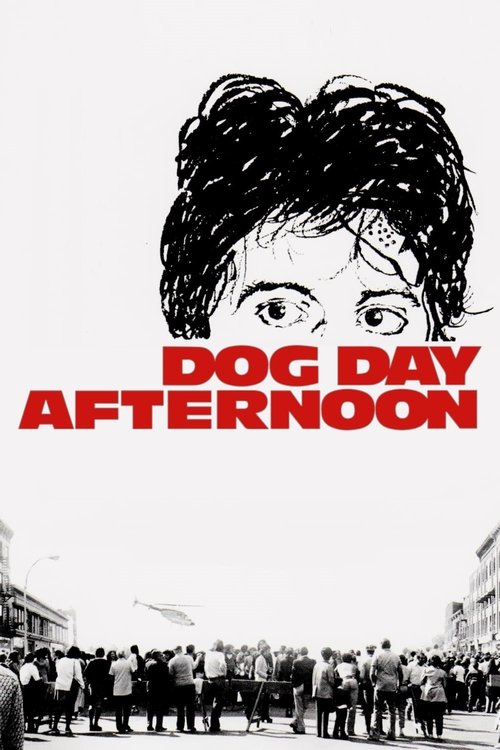
"Anything can happen during the dog days of summer. On August 22nd, 1972, everything did."
Director: Sidney Lumet
Cast: Al Pacino, John Cazale, Charles Durning, Chris Sarandon, James Broderick
Dog Day Afternoon — Characters & Cast
Character Analysis
Sonny Wortzik
Al Pacino
Motivation
Sonny's primary motivation is love and a misguided sense of responsibility. He is robbing the bank to get enough money for his partner, Leon, to have gender-affirming surgery. This act is born of desperation, a last resort after being failed by legitimate societal systems. He is driven by a desire to provide for and protect the person he loves, even if it means resorting to crime.
Character Arc
Sonny begins the film as a determined, if inept, bank robber. As the heist fails and becomes a protracted standoff, his character arc is one of rapid unraveling and transformation. He evolves from a criminal into a reluctant public figure, a mouthpiece for the disenfranchised, and a deeply vulnerable man forced to confront his personal failures on a public stage. His initial confidence devolves into desperation and finally, devastating acceptance of his fate as he loses everything he was fighting for.
Salvatore 'Sal' Naturile
John Cazale
Motivation
Sal's motivations are less clear than Sonny's, which makes him more frightening. He seems to be motivated by loyalty to Sonny and a fatalistic acceptance of a criminal path. He is repeatedly shown to be ready to kill if necessary, viewing it as the only way to maintain control and survive the situation. His most explicit desire is to escape to a place like Wyoming, a naive and impossible dream that highlights his disconnect from reality.
Character Arc
Sal's arc is tragically static. He enters the bank as a nervous but committed accomplice and remains a quiet, menacing, and unpredictable presence throughout. He does not evolve but rather disintegrates under the pressure. His anxiety and fear manifest as a stony, dangerous resolve. His journey is a descent into inevitable doom, a man who knows he is a "dead man walking" and can see no way out but through violence or death.
Detective Sergeant Eugene Moretti
Charles Durning
Motivation
Moretti is motivated by a professional duty to end the standoff without any casualties. He is a pragmatist, willing to negotiate and make concessions to keep the hostages safe. He is focused on resolving the crisis with the least amount of violence possible, putting him in direct conflict with both Sonny's erratic demands and the FBI's more aggressive tactics.
Character Arc
Moretti's arc is one of diminishing control. He starts as the primary negotiator, a seasoned, street-smart cop trying to de-escalate a dangerous situation through dialogue and psychological maneuvering. He builds a rapport with Sonny, however strained. His arc concludes as he is sidelined by the FBI, representing the replacement of street-level, human-to-human policing with a colder, more clinical federal approach.
Leon Shermer
Chris Sarandon
Motivation
Leon is motivated by a desire for survival and authenticity. While he is the reason for the robbery, he never asked for it and is horrified by Sonny's actions. His main goal is to get through his own personal and medical crisis. He seeks peace and the ability to live as himself, something that Sonny's violent, public spectacle actively undermines.
Character Arc
Leon appears only briefly but is central to the film's emotional core. His arc is revealed through a poignant and largely improvised phone call with Sonny. He has moved from a place of love and dependence on Sonny to a state of emotional exhaustion and self-preservation, having been institutionalized after a suicide attempt. He represents the real-world emotional fallout of Sonny's chaotic life and ultimately rejects Sonny's criminal means of 'helping' him, choosing his own well-being over the fraught relationship.
Cast
Explore More About This Movie
Dive deeper into specific aspects of the movie with our detailed analysis pages