
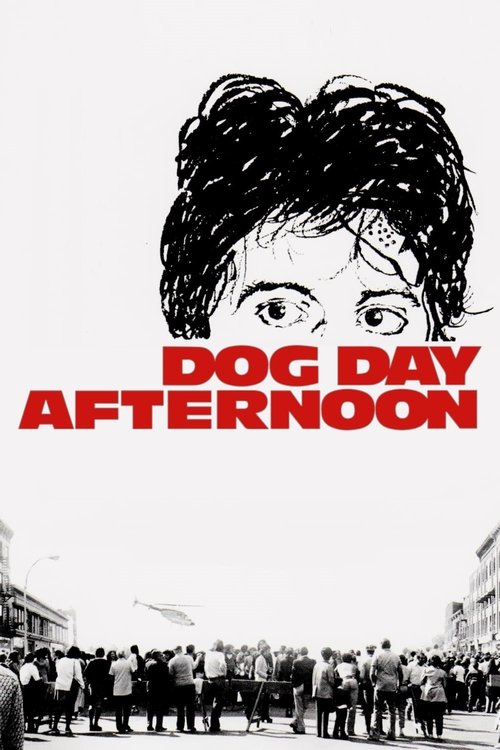
"Anything can happen during the dog days of summer. On August 22nd, 1972, everything did."
Dog Day Afternoon - Symbolism & Philosophy
Symbols & Motifs
The Oppressive Heat
The film is set on a scorching hot "dog day afternoon," which symbolizes the mounting pressure, tension, and claustrophobia of the situation. The heat is a palpable, oppressive force that mirrors the characters' frayed nerves and the inescapable nature of their predicament. It contributes to the feeling that everything is about to boil over.
The film's title itself emphasizes the heat. Characters are constantly shown sweating and looking exhausted. The oppressive atmosphere of the bank is amplified by the unrelenting summer weather, visually reinforcing the high-stakes, pressure-cooker environment both inside and outside the bank.
The Bank
The bank symbolizes the institutions of power and capitalism that have failed Sonny. It is a place of money, yet there is none for him when he needs it, reflecting his economic disenfranchisement. Trapped inside, the bank becomes a microcosm of society—a confined space where societal rules break down and new, temporary power structures are formed.
Almost the entire film is set within the confines of the First Brooklyn Savings Bank. The initial plan to quickly rob it fails, turning the building from a target into a prison. The interactions between Sonny, Sal, and the hostages within this space highlight themes of Stockholm syndrome and the breakdown of traditional authority.
The Crowd
The crowd that gathers outside the bank symbolizes the fickle nature of public opinion and the audience's role in the media spectacle. They are a volatile, unpredictable force, at times cheering for Sonny as an anti-hero and at other times simply hungry for a dramatic event. They represent a society that is both alienated from and fascinated by acts of rebellion.
The crowd is a constant presence, reacting to Sonny's every move. Their cheers fuel his performance, most notably when he chants "Attica! Attica!". They transform the crime scene into a public stage, blurring the line between a real crisis and a piece of theater.
Philosophical Questions
Can an immoral act be justified by a moral or loving intention?
The entire film hinges on this question. Sonny commits a dangerous crime—armed robbery and kidnapping—which is unequivocally wrong. However, his motivation is to help someone he loves achieve self-actualization. The film forces the audience to grapple with this conflict, creating sympathy for a man whose actions are illegal and reckless but whose intentions are rooted in love and desperation. It explores the gray area between right and wrong, asking whether the 'why' can ever excuse the 'what'.
Where is the line between news and entertainment?
"Dog Day Afternoon" meticulously documents the media's role in transforming a violent crime into a public spectacle. The news crews, the live reports, and the cheering crowds all blur the distinction between a real-life crisis and a television show. The film questions the ethics of media coverage, suggesting that the drive for ratings and a sensational story can overshadow the human tragedy at its center. Sonny's own awareness and manipulation of the cameras further complicates this, as he becomes both a subject of the news and a performer for it.
What is the nature of power and authority?
The film constantly interrogates power dynamics. Inside the bank, Sonny, an outcast, wields absolute power over his hostages, yet he is powerless against the police force surrounding him. The police have the power of the state, but are constrained by public opinion and the media. The crowd, individually powerless, wields collective power by turning Sonny into a folk hero. The film suggests that power is fluid, performative, and often illusory, shifting dramatically based on context and perception.
Core Meaning
At its heart, "Dog Day Afternoon" is a powerful statement about the desperation of the marginalized and the creation of spectacle by the mass media. Director Sidney Lumet wanted to explore the human story behind a bizarre headline, focusing on an anti-hero pushed to extremes by a society that has no place for him. The film is a raw and scathing critique of institutional power, from the police to the media, and a deeply empathetic portrait of a man's flawed attempt to care for someone he loves in the only way he knows how. It carries a message about how society's outcasts can become unwilling celebrities in a world hungry for entertainment, and the tragic consequences of that fleeting fame. The core idea is not about the crime itself, but about the deeply human, albeit misguided, motivations behind it and the societal failures that lead to such desperate acts.