"Wherever there is an unfortunate, God sends a dog."
Dogman - Symbolism & Philosophy
Symbols & Motifs
The Dogs
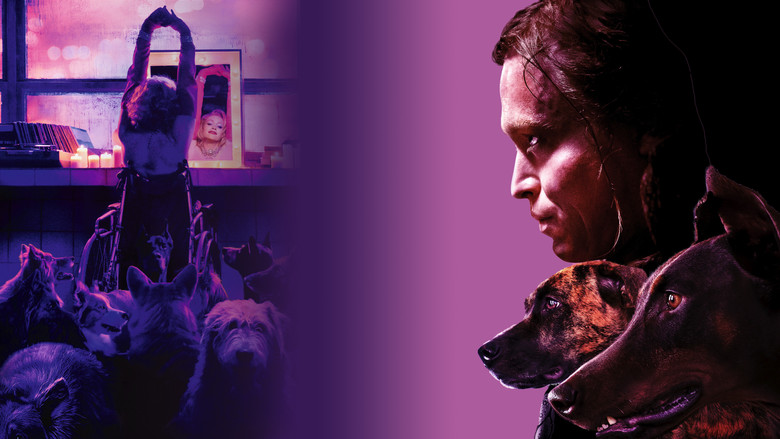
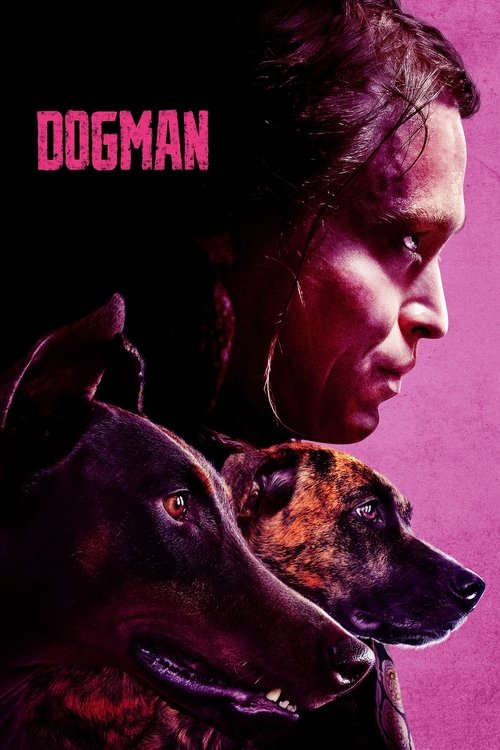
The dogs symbolize unconditional love, loyalty, and the family Douglas never had. They represent a purer, more honest form of connection than what he has experienced with humans. They are also a physical manifestation of his own repressed rage and power, acting as his protectors and instruments of vengeance.
From the moment they refuse to attack him in the cage as a child, the dogs are his constant companions. They live with him, protect him, and carry out his commands, whether it's stealing jewelry or attacking his enemies. In the end, they surround him as he dies, a final testament to their unbreakable bond.
Drag and Performance
Drag symbolizes escape, transformation, and the construction of identity. By embodying female icons like Édith Piaf, Douglas finds a strength and beauty that his broken body and traumatic past deny him. It's a form of armor and a way to process his pain through art, allowing him to become someone else entirely.
Douglas discovers performance through a drama teacher in his youth and later finds a community and a livelihood at a drag club. His performances are pivotal scenes, particularly his lip-syncing of Édith Piaf's songs, which emotionally resonate with his own life of struggle and resilience.
The Wheelchair
The wheelchair is a constant, physical representation of Douglas's trauma and limitations. It's a direct result of his father's cruelty and a symbol of his confinement and brokenness. However, it also underscores his incredible resilience, as he refuses to be defined solely by his disability.
Douglas is in a wheelchair or uses leg braces throughout most of the film. His physical struggle is a constant presence. The final, poignant act of him standing and walking on his own, despite knowing it will kill him, symbolizes his ultimate acceptance and defiance in the face of his lifelong suffering.
Shakespeare
Shakespeare represents the power of art and language to provide solace and understanding. For Douglas, the playwright's works offer a framework for his own tragic life, giving his suffering a sense of poetry and grandeur. It is his introduction to the idea of performance as a means of escape and self-expression.
A drama teacher introduces Douglas to Shakespeare in a juvenile home, which becomes a formative experience. He claims to know all the plays by heart and peppers his dialogue with Shakespearean references, viewing his own life through a tragic, theatrical lens.
Philosophical Questions
What is the nature of good and evil when societal structures fail?
The film explores this question through Douglas, a character who operates completely outside of the law. Abused and discarded by his family and society, he creates his own moral universe. His actions, such as stealing and unleashing his dogs on his enemies, are illegal and violent. However, the film presents them as acts of survival and even a form of vigilante justice against those who are more corrupt. It challenges the audience to consider whether traditional notions of right and wrong apply to someone who has only ever known cruelty from the established system.
Can unconditional love exist outside of humanity?
"Dogman" posits that the purest form of love and loyalty might come from the animal kingdom. Douglas's entire life is a testament to this idea. He is betrayed and brutalized by his own family but is saved and unconditionally accepted by a pack of dogs. The film suggests that the bond between Douglas and his dogs is more profound and genuine than any human relationship he could form, questioning whether humanity has lost the capacity for the kind of pure devotion that animals can offer.
How does art and performance help in overcoming trauma?
The film delves into how artistic expression can be a powerful tool for healing and self-discovery. Douglas uses his knowledge of Shakespeare and his passion for drag performance to escape the pain of his physical and emotional scars. By becoming someone else on stage, he finds a sense of freedom, control, and beauty that is absent from his real life. This suggests that art is not merely an escape but a vital mechanism for processing trauma and constructing a resilient identity.
Core Meaning
At its core, "Dogman" is an exploration of suffering and the healing power of unconditional love. Director Luc Besson presents a character broken by the cruelty of humanity who finds salvation and a sense of self through his bond with dogs. The film posits that love and art are the only true saviors in a world obsessed with money and power. It delves into the idea that trauma can either lead to immense darkness or a unique form of hope and resilience. Douglas's journey is a tragic fable about an outsider who rejects societal norms to create his own morality and family, ultimately questioning whether he is a monster or a product of the monsters that surrounded him. Besson himself considers the film to be the "essence" of his 40-year career, a culmination of his recurring themes about marginalized figures finding their strength.