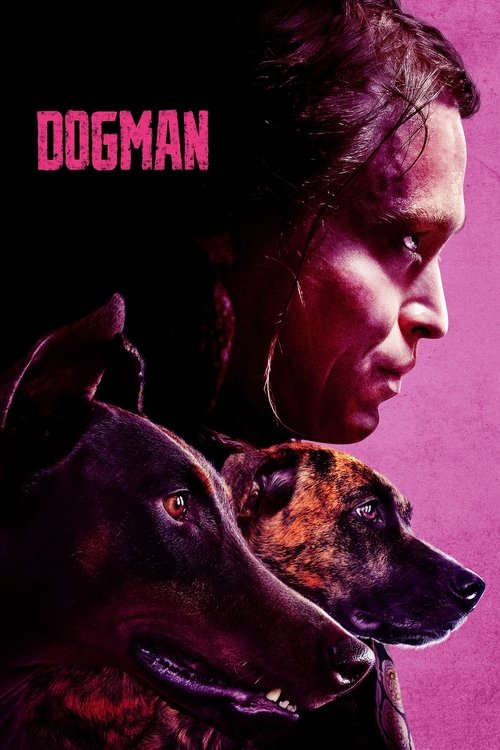
Dogman
A dark, genre-bending crime drama about a tormented soul finding salvation and unleashing chaos through the unconditional love of his canine army.
Dogman

Dogman

"Wherever there is an unfortunate, God sends a dog."

27 September 2023 France 115 min ⭐ 7.9 (1,264)
Director: Luc Besson
Cast: Caleb Landry Jones, Jojo T. Gibbs, Christopher Denham, Clemens Schick, John Charles Aguilar
Drama Crime Action
Trauma and Its Aftermath The Human-Animal Bond Identity, Performance, and Self-Acceptance Justice and Morality
Box Office: $4,082,217

Overview

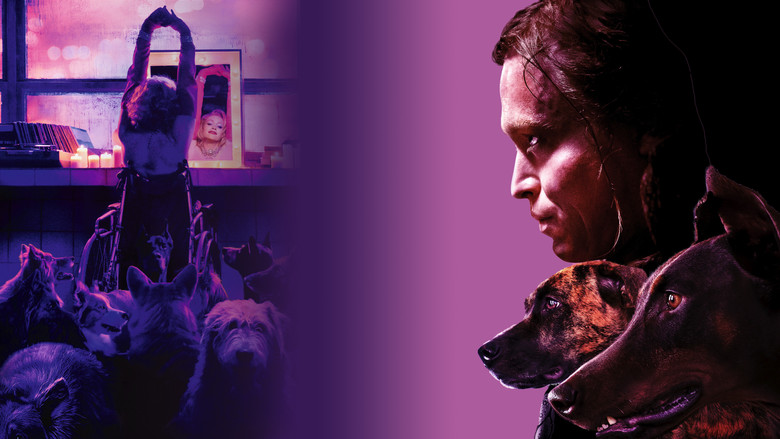
"Dogman" (2023), directed by Luc Besson, tells the story of Douglas (Caleb Landry Jones), a man left physically and emotionally scarred by a brutal childhood. Arrested in a drag outfit, covered in blood, and driving a truck full of dogs, Douglas recounts his life to a police psychiatrist, Evelyn (Jojo T. Gibbs). Through a series of flashbacks, we learn of the horrific abuse he suffered at the hands of his violent father, who locked him in a cage with dogs.

Instead of harming him, the dogs became his protectors and only family. This profound connection grants him an almost psychic control over his canine companions. As an adult, Douglas navigates life from a wheelchair, finding a sense of belonging and self-expression as a drag performer. He also utilizes his dogs' unique skills for survival, which leads him down a path of crime, stealing from the wealthy to care for his ever-growing pack and protect his community from local gangsters.

The film chronicles Douglas's journey as he builds a world for himself on the fringes of society, exploring themes of trauma, love, and what it means to be human when humanity has failed you. His actions eventually lead to a violent confrontation with a local crime lord, setting the stage for a tragic and dramatic climax.

Core Meaning

At its core, "Dogman" is an exploration of suffering and the healing power of unconditional love. Director Luc Besson presents a character broken by the cruelty of humanity who finds salvation and a sense of self through his bond with dogs. The film posits that love and art are the only true saviors in a world obsessed with money and power. It delves into the idea that trauma can either lead to immense darkness or a unique form of hope and resilience. Douglas's journey is a tragic fable about an outsider who rejects societal norms to create his own morality and family, ultimately questioning whether he is a monster or a product of the monsters that surrounded him. Besson himself considers the film to be the "essence" of his 40-year career, a culmination of his recurring themes about marginalized figures finding their strength.

Thematic DNA

Trauma and Its Aftermath 35%
The Human-Animal Bond 30%
Identity, Performance, and Self-Acceptance 20%
Justice and Morality 15%

Trauma and Its Aftermath

The film is fundamentally shaped by the profound trauma Douglas endures in his childhood. His abusive father locks him in a dog cage, an experience that physically paralyzes him and emotionally severs him from human connection. This initial trauma dictates his entire life, from his reliance on a wheelchair to his deep-seated distrust of people and his preference for the company of dogs. The narrative structure, a confession to a psychiatrist, is a direct exploration of this past and its psychological ramifications. The film examines how these scars manifest in his life as both a source of immense pain and the foundation of his unique strength and identity as the "Dogman".

The Human-Animal Bond

The central relationship in "Dogman" is the profound, almost telepathic connection between Douglas and his dogs. After being thrown to them as a child, they become his protectors, family, and allies, offering the unconditional love he never received from humans. This bond is portrayed as a pure and powerful force that transcends verbal communication. The dogs are not just pets but extensions of his will, acting as his legs, his protectors, and his partners in crime. The film explores this connection as the source of Douglas's salvation and power, showcasing a symbiotic relationship where man and animal find solace in each other.

Identity, Performance, and Self-Acceptance

Douglas grapples with a fractured identity, finding liberation through performance. Introduced to Shakespeare by a kind drama teacher, he learns that adopting a disguise can be freeing. This culminates in his life as a drag performer, where he finds a community and a way to express himself, lip-syncing to icons like Édith Piaf and Marlene Dietrich. His performances are not just a job but a crucial outlet for his pain and a way to inhabit a different, more powerful persona. This exploration of gender fluidity and theatricality is central to his journey of self-discovery and finding a place in a world that has rejected him.

Justice and Morality

Operating outside of societal laws, Douglas develops his own moral code. He uses his dogs to steal from the wealthy, but his crimes are framed as a means of survival for his canine family and a way to enact justice on those who exploit the vulnerable. He becomes a vigilante figure, protecting his community from a local gang. The film constantly blurs the line between hero and villain, forcing the audience to question whether his violent actions are justified given the extreme cruelty he has faced. His final confrontation is not just for survival but is a climactic act of defiance against the injustices of the world.

Character Analysis

Douglas "Doug" Munrow

Caleb Landry Jones

Archetype: Antihero / Tragic Hero
Key Trait: Resilient

Motivation

Douglas is primarily motivated by a deep-seated need for love, connection, and survival. Having been failed by humans, he dedicates his life to his dogs, who provide him with the unconditional love he craves. His actions, from stealing to enacting violence, are all driven by the need to protect and provide for his canine family and to find a semblance of justice and belonging in a cruel world.

Character Arc

Douglas begins as a powerless, abused child, finding his only connection with dogs. After escaping his traumatic home, he remains an outcast, physically and emotionally scarred. He finds a form of empowerment through drag performance and by training his dogs to act as extensions of his will, becoming a vigilante and criminal mastermind. His journey is one of reclaiming agency, but it leads him down a violent and tragic path. In the end, he confronts his past and accepts his fate, achieving a form of spiritual redemption even as his body gives out.

Evelyn Decker

Jojo T. Gibbs

Archetype: The Confessor / The Witness
Key Trait: Empathetic

Motivation

Her professional motivation is to assess Douglas's mental state for the police. However, as she listens to his story, her motivation becomes more personal. She is drawn in by his vulnerability and the parallels to her own life, seeking to understand the man behind the supposed "monster."

Character Arc

Evelyn is a police psychiatrist assigned to interrogate Douglas. Initially, she is a clinical observer, trying to understand the bizarre man before her. As Douglas tells his story, she becomes a compassionate listener, recognizing a shared experience of pain and suffering, as she is also dealing with an abusive relationship. Her role evolves from an interrogator to the sole human witness to Douglas's tragic life, and his story ultimately seems to impact her own path.

Mike Munrow

Clemens Schick

Archetype: The Tyrant / The Villain
Key Trait: Cruel

Motivation

His motivations appear to stem from a twisted and violent nature, justified by a fanatical and hypocritical interpretation of religion. He is driven by a need for control and dominance, showing no love or compassion for his son or the animals he brutalizes.

Character Arc

Mike is Douglas's abusive father and the source of all his trauma. He is depicted as a relentlessly cruel and violent religious fanatic who runs a dog-fighting ring. His character does not have a developmental arc; he is a static representation of pure evil. He locks his son in a cage and eventually shoots him, causing his paralysis. He ultimately dies in prison, unable to endure the same confinement he inflicted on his son.

Salma

Grace Palma

Archetype: The Mentor / The Lost Love
Key Trait: Kind

Motivation

Salma is motivated by a genuine desire to help the troubled children in her care. She sees a spark in Douglas and wants to nurture his talent and help him find an outlet for his emotions through art and theatre.

Character Arc

Salma is a kind-hearted drama teacher at the juvenile home where Douglas spends time. She introduces him to the world of Shakespeare and performance, providing him with a rare moment of human kindness and a crucial tool for his future survival and self-expression. She represents a fleeting glimpse of a normal, happy life that Douglas can never have. He develops a crush on her, but she eventually leaves to pursue her acting career.

Symbols & Motifs

The Dogs

Meaning:

The dogs symbolize unconditional love, loyalty, and the family Douglas never had. They represent a purer, more honest form of connection than what he has experienced with humans. They are also a physical manifestation of his own repressed rage and power, acting as his protectors and instruments of vengeance.

Context:

From the moment they refuse to attack him in the cage as a child, the dogs are his constant companions. They live with him, protect him, and carry out his commands, whether it's stealing jewelry or attacking his enemies. In the end, they surround him as he dies, a final testament to their unbreakable bond.

Drag and Performance

Meaning:

Drag symbolizes escape, transformation, and the construction of identity. By embodying female icons like Édith Piaf, Douglas finds a strength and beauty that his broken body and traumatic past deny him. It's a form of armor and a way to process his pain through art, allowing him to become someone else entirely.

Context:

Douglas discovers performance through a drama teacher in his youth and later finds a community and a livelihood at a drag club. His performances are pivotal scenes, particularly his lip-syncing of Édith Piaf's songs, which emotionally resonate with his own life of struggle and resilience.

The Wheelchair

Meaning:

The wheelchair is a constant, physical representation of Douglas's trauma and limitations. It's a direct result of his father's cruelty and a symbol of his confinement and brokenness. However, it also underscores his incredible resilience, as he refuses to be defined solely by his disability.

Context:

Douglas is in a wheelchair or uses leg braces throughout most of the film. His physical struggle is a constant presence. The final, poignant act of him standing and walking on his own, despite knowing it will kill him, symbolizes his ultimate acceptance and defiance in the face of his lifelong suffering.

Shakespeare

Meaning:

Shakespeare represents the power of art and language to provide solace and understanding. For Douglas, the playwright's works offer a framework for his own tragic life, giving his suffering a sense of poetry and grandeur. It is his introduction to the idea of performance as a means of escape and self-expression.

Context:

A drama teacher introduces Douglas to Shakespeare in a juvenile home, which becomes a formative experience. He claims to know all the plays by heart and peppers his dialogue with Shakespearean references, viewing his own life through a tragic, theatrical lens.

Memorable Quotes

Wherever there is an unfortunate, God sends a dog.

— Opening Title Card (quoting Alphonse de Lamartine)

Context:

This quote appears on screen at the very beginning of the film, setting the thematic tone for the entire story that is about to unfold.

Meaning:

This quote establishes the film's central thesis: that dogs are a divine source of comfort and salvation for those who are suffering. It frames Douglas's relationship with his dogs not as a strange obsession, but as a form of spiritual rescue in a world that has abandoned him.

I don't like people much. I like dogs better.

— Douglas Munrow

Context:

Douglas says this to Evelyn during his interrogation, explaining the foundation of his life and actions. It's a simple but profound statement that justifies his entire existence on the fringes of society with his pack.

Meaning:

This line succinctly summarizes Douglas's worldview, forged by years of human cruelty and the contrasting experience of unconditional canine love. It's a blunt and honest expression of his alienation from society and his deep-seated preference for the loyalty and purity he finds in his dogs.

The one thing we both have in common is pain.

— Douglas Munrow

Context:

Towards the end of his confession, Evelyn asks Douglas why he has shared his entire life story with her. He delivers this line, identifying her as a fellow sufferer, thus creating a bond of shared understanding between them.

Meaning:

This quote reveals the deep connection Douglas feels he has made with his psychiatrist, Evelyn. He recognizes her own hidden suffering and, in this moment, transcends the patient-doctor dynamic. It speaks to the universal nature of pain as a human connector and explains why he has chosen to be so open with her.

Philosophical Questions

What is the nature of good and evil when societal structures fail?

The film explores this question through Douglas, a character who operates completely outside of the law. Abused and discarded by his family and society, he creates his own moral universe. His actions, such as stealing and unleashing his dogs on his enemies, are illegal and violent. However, the film presents them as acts of survival and even a form of vigilante justice against those who are more corrupt. It challenges the audience to consider whether traditional notions of right and wrong apply to someone who has only ever known cruelty from the established system.

Can unconditional love exist outside of humanity?

"Dogman" posits that the purest form of love and loyalty might come from the animal kingdom. Douglas's entire life is a testament to this idea. He is betrayed and brutalized by his own family but is saved and unconditionally accepted by a pack of dogs. The film suggests that the bond between Douglas and his dogs is more profound and genuine than any human relationship he could form, questioning whether humanity has lost the capacity for the kind of pure devotion that animals can offer.

How does art and performance help in overcoming trauma?

The film delves into how artistic expression can be a powerful tool for healing and self-discovery. Douglas uses his knowledge of Shakespeare and his passion for drag performance to escape the pain of his physical and emotional scars. By becoming someone else on stage, he finds a sense of freedom, control, and beauty that is absent from his real life. This suggests that art is not merely an escape but a vital mechanism for processing trauma and constructing a resilient identity.

Alternative Interpretations

One interpretation of the film views Douglas's connection with his dogs as a supernatural or psychic phenomenon, suggesting he has a telepathic ability to command them, which pushes the film into the realm of a dark fairy tale or a gritty superhero origin story.

Another perspective is more psychological, interpreting the dogs as a manifestation of Douglas's own fractured psyche. They represent his id—his repressed rage, his survival instincts, and his capacity for violence—which he unleashes on the world that has hurt him. His control over them is symbolic of his attempt to master his own inner demons.

Furthermore, the ending can be read through a religious lens. Douglas, having suffered immensely and lived a life of perceived sin, walks toward a church to die. This act can be interpreted as him seeking divine redemption, a final confession before God. Some analyses have positioned him as a modern-day Job or even a Christ-like figure, a martyr who bears the weight of society's cruelty and finds a form of grace in his final moments.

Cultural Impact

"Dogman" served as a comeback film for director Luc Besson, his first since being cleared of rape allegations. Its premiere at the Venice Film Festival generated significant discussion, both for its bizarre premise and for Besson's return to the public eye. Critically, the film received a mixed reception; while many lauded Caleb Landry Jones's transformative and committed lead performance as a career-best, the screenplay and tonal inconsistencies drew criticism. Some critics found the film ludicrous and over-the-top, while others praised its emotional depth and originality.

The film joins a lineage of cinematic explorations of the 'loner antihero,' drawing comparisons to films like "Joker" and "Willard." However, Besson himself positioned it as a story of hope in contrast to the darkness of "Joker." The movie's blend of genres—crime thriller, psychological drama, action, and even dark comedy—makes it difficult to categorize, contributing to its divisive reception. While it did not achieve significant box office success, particularly in the domestic market, the film has found an audience that appreciates its unique vision and powerful central performance, sparking conversations about trauma, identity, and the profound nature of the human-animal bond.

Audience Reception

Audience reception for "Dogman" has been largely polarized, though many viewers have expressed strong admiration for Caleb Landry Jones's central performance, often calling it mesmerizing and the highlight of the film. Many dog lovers were particularly moved by the depiction of the profound bond between Douglas and his canine companions, finding the emotional core of the film to be powerful and heartwarming. The film's unique and genre-bending narrative was praised by some for its originality and boldness, offering a story unlike typical mainstream cinema.

However, the film also drew significant criticism. Common complaints centered on the screenplay, which some viewers found to be clichéd, tonally inconsistent, and at times, ludicrously unbelievable. The mixture of violent thriller elements, dark humor, and melodrama did not work for everyone, with some finding the tone jarring and the plot convoluted. Despite the mixed reactions, the film has cultivated a following that defends its emotional sincerity and artistic risks.

Interesting Facts

  • The film was inspired by a real news article Luc Besson read about a French family who had locked their child in a cage.
  • There were 124 dogs on set every day, but only five of them were professionally trained.
  • Caleb Landry Jones learned to lip-sync to Édith Piaf songs in French for his drag performance scenes, which reportedly moved members of the crew to tears.
  • Luc Besson considers "Dogman" to be a thematic summary of his entire 40-year filmmaking career.
  • Caleb Landry Jones fully committed to the role, spending extensive time with the dogs to build a believable bond and undertaking all the preparation Luc Besson provided.
  • The film premiered in competition for the Golden Lion at the 80th Venice International Film Festival.
  • Besson has described the film's protagonist as the hopeful alternative to a character like the Joker, stating that after such trauma, one can either become a terrorist or use the pain to create something, with Dogman representing the latter path.
  • Luc Besson changed the film's ending by adding a new scene with Jojo T. Gibbs, which he shot after principal photography and believes is the best scene in the movie.

⚠️ Spoiler Analysis

Click to reveal detailed analysis with spoilers

Frequently Asked Questions

Explore More About This Movie

Dive deeper into specific aspects of the movie with our detailed analysis pages

Comments (0)

Leave a comment

No comments yet. Be the first to share your thoughts!