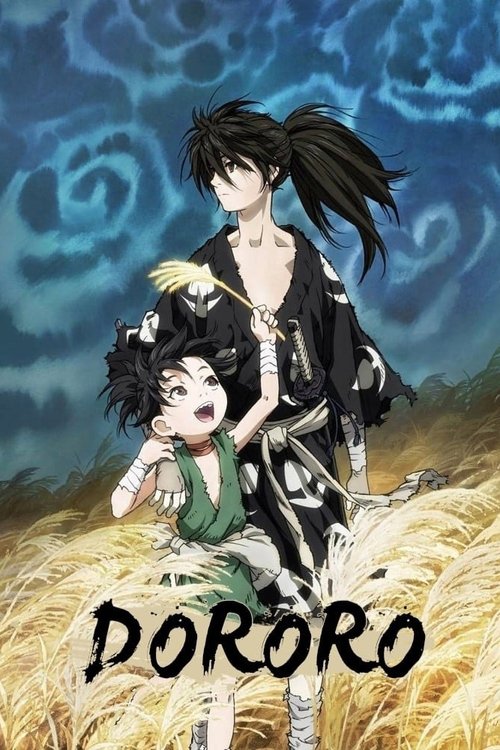
Dororo
A somber action-fantasy painted in muted tones, this series is the harrowing journey of a boy reclaiming his humanity, one demon corpse at a time.
Dororo
Dororo

どろろ

07 January 2019 — 24 June 2019 Japan 1 season 24 episode Ended ⭐ 8.5 (1,253)
Cast: Rio Suzuki, Hiroki Suzuki, Naoya Uchida, Akio Otsuka, Shoya Chiba
Animation Action & Adventure
Humanity vs. Dehumanization Sacrifice and Utilitarianism The Consequences of War and Greed Found Family and Connection

Dororo - Ending Explained

⚠️ Spoiler Analysis

The entire plot of "Dororo" is a journey of literal and figurative self-reclamation. Hyakkimaru, born without 48 body parts (reduced to 12 in this adaptation) due to his father Daigo Kagemitsu's demonic pact, methodically hunts down each demon to regain what is his. The reclamation of his senses is a painful process; gaining his sense of pain makes him vulnerable, and his hearing exposes him to the world's suffering, leading to the pivotal and tragic encounter with Mio. Her murder at the hands of samurai causes Hyakkimaru's first major break, unleashing a rage that nearly turns his soul demonic, a conflict that becomes central to his character.

The central twist reveals that his quest directly unravels the prosperity of his homeland. His family, including his mother Nui no Kata and younger brother Tahomaru, are forced to confront him. Tahomaru, choosing the welfare of the land over his brother, becomes his primary antagonist. In a desperate attempt to surpass Hyakkimaru, Tahomaru and his retainers make their own pact with the last remaining demon, sacrificing their own bodies for power. In the final confrontation in their burning castle, Hyakkimaru defeats his brother. In a moment of tragic reconciliation, a dying Tahomaru gives his own eyes to Hyakkimaru, allowing him to see for the first time. Hyakkimaru then confronts Daigo but chooses mercy, refusing to continue the cycle of violence. He spares his father, breaking the curse and leaving the fate of the land in human hands. He temporarily parts ways with Dororo, embarking on a journey to understand himself as a complete human before their eventual reunion.

Alternative Interpretations

One of the most debated aspects of the series is the ending and the nature of Hyakkimaru's journey. While the primary interpretation is that he succeeds in reclaiming both his body and his humanity, an alternative reading suggests a more ambiguous outcome. This view posits that Hyakkimaru's journey to become "whole" is not entirely triumphant. By choosing to leave Dororo and travel alone, he might be acknowledging that the trauma and rage he experienced have permanently changed him, and he must learn to live with this new, complex identity rather than simply returning to a state of pure humanity. The final scene's time skip leaves their reunion open-ended, allowing for the interpretation that true peace is a continuous journey, not a final destination.

Another interpretation focuses on the political allegory of Daigo's land. Some viewers see the demonic pact not just as a fantasy element, but as a metaphor for a nation-state built on a foundational, hidden crime or an unforgivable sacrifice. Hyakkimaru's quest is therefore the return of the repressed, the living embodiment of a past sin that must be confronted for society to achieve true, sustainable prosperity, rather than the artificial stability offered by the pact.