Dororo
どろろ
Overview
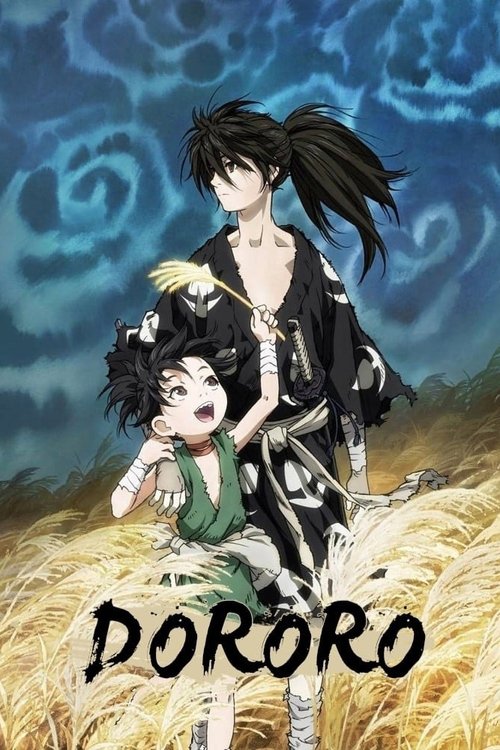
Set in Japan's Sengoku period, "Dororo" (2019) tells the story of Hyakkimaru, a young man whose body was sacrificed to twelve demons by his own father, Lord Daigo Kagemitsu, in exchange for prosperity for his lands. Born without limbs, skin, eyes, or a voice, the infant is abandoned but is found and raised by a kind doctor named Jukai, who equips him with advanced prosthetic limbs and teaches him to fight. Upon discovering that he can reclaim a piece of his original body for every demon he slays, Hyakkimaru embarks on a solitary quest for vengeance and restoration.
His journey takes a pivotal turn when he meets Dororo, a young, resourceful orphan and thief who decides to accompany him. Together, they traverse a war-torn country plagued by both demonic and human evils. As Hyakkimaru slowly regains his senses and body parts, he experiences the world in new, often overwhelming ways—feeling pain for the first time, hearing sounds of both beauty and suffering, and grappling with the rage that threatens to consume him. The series chronicles their bond and Hyakkimaru's struggle to retain his spiritual humanity while physically becoming whole, all while his quest puts him on a collision course with the very family that betrayed him.
Core Meaning
The core meaning of "Dororo" revolves around the profound question of what it truly means to be human. The series posits that humanity is not merely defined by a physical body but by one's capacity for love, empathy, and connection. Hyakkimaru's journey is a powerful allegory for this; as he reclaims his physical form, he risks losing his spiritual self to rage and vengeance. It is through his bond with Dororo that he learns the value of compassion and interdependence, discovering that true wholeness comes from relationships and conscious moral choices, not just from reclaiming what was lost. The series ultimately suggests that true humanity is a continuous, difficult choice to connect with others and show mercy, even in a world defined by suffering and betrayal.
Thematic DNA
Humanity vs. Dehumanization
The central theme of the series is the exploration of what constitutes humanity. Hyakkimaru begins as physically less than human but is arguably more human in spirit than his father, who sacrificed him. As Hyakkimaru regains his body, he is paradoxically tempted by demonic rage, risking the loss of his 'spiritual humanity.' His journey suggests that humanity is defined by empathy, connection (specifically with Dororo), and moral choices, rather than just flesh and blood. Conversely, characters like Daigo and some samurai showcase how greed and ambition can dehumanize a person completely.
Sacrifice and Utilitarianism
The series constantly questions the morality of sacrificing one for the good of the many. Daigo's pact with the demons brings prosperity to his land at the cost of his son's body, a classic utilitarian dilemma. As Hyakkimaru reclaims his body, the land begins to suffer again, forcing the characters and the audience to confront whether one person's right to their own existence outweighs the peace and stability of a whole domain. The show avoids a simple answer, portraying the tragic consequences from all perspectives.
The Consequences of War and Greed
Set against the backdrop of the Sengoku period, the series is a potent parable about the devastating costs of war. It vividly portrays the suffering of common people—famine, poverty, and violence—and how the ambition and greed of lords like Daigo perpetuate this cycle. The demons themselves are a metaphor for the horrors and corruption that thrive in times of conflict. Mio's tragic story is a prime example of how war victimizes the innocent.
Found Family and Connection
While Hyakkimaru is betrayed by his blood relatives, he finds a new form of family and connection with Dororo and his adoptive father, Jukai. Dororo acts as Hyakkimaru's moral compass, grounding him and preventing him from succumbing to his demonic rage. Their evolving bond is the heart of the series, demonstrating that familial ties are forged through loyalty, care, and shared experience, not just blood.
Character Analysis
Hyakkimaru
Hiroki Suzuki
Motivation
Initially, his motivation is primal: to slay the demons that stole his body parts to become whole. This self-serving goal is all-consuming. After meeting Dororo and experiencing love and loss with Mio, his motivation becomes more complex. He still desires his body but also grapples with the consequences of his actions on Daigo's land. His ultimate motivation shifts towards not only reclaiming himself but also preserving his bond with Dororo and finding a way to live as a human in a world full of suffering, choosing a path of peace over vengeance in the end.
Character Arc
Hyakkimaru begins as an almost feral, unfeeling warrior driven by the singular instinct to kill demons and reclaim his body. His world is a simple one of red (demons) and white (humans). As he recovers his senses, his arc becomes a painful and tumultuous journey of self-discovery. He experiences overwhelming physical pain, the emotional agony of loss (notably with Mio), and the corrupting influence of rage. Initially focused solely on his own quest, his bond with Dororo gradually teaches him empathy and interdependence. He evolves from a vengeful killing machine into a person who understands mercy, choosing to spare his father and brother, and ultimately prioritizes his spiritual humanity over complete physical restoration.
Dororo
Rio Suzuki
Motivation
Dororo's initial motivation is survival. As an orphan, they steal and scheme to get by. After meeting Hyakkimaru, their motivation evolves into a fierce loyalty and a desire to protect him, both from demons and from his own inner darkness. They want to see him become whole but fear he will become a demon in the process. Later, learning about their father's hidden treasure, their motivation expands to include creating a just and prosperous future for the common people, using their inheritance for good rather than selfish gain.
Character Arc
Dororo starts as a scrappy, self-reliant thief, wise beyond their years due to a tragic past. Initially tagging along with Hyakkimaru for excitement and personal gain, Dororo's arc is one of opening up and forming a deep, familial bond. Dororo becomes Hyakkimaru's anchor to humanity, teaching him to communicate, feel, and navigate the complexities of the world. While Hyakkimaru physically grows, Dororo matures emotionally, taking on immense responsibility as his guardian and moral compass. The discovery of their family's hidden treasure provides a new purpose: to use that wealth to help people and rebuild, fulfilling the legacy of their parents.
Daigo Kagemitsu
Naoya Uchida
Motivation
His primary motivation is the prosperity and stability of his domain and, by extension, his own power as its ruler. He genuinely believes that his demonic pact was a necessary evil to save his people from famine and war. This conviction drives him to view Hyakkimaru not as a son, but as a threat to that stability. Every action he takes, including attempting to murder Hyakkimaru and sending his second son, Tahomaru, to fight him, is driven by a ruthless, utilitarian desire to maintain the pact and preserve his land's fortune.
Character Arc
Daigo Kagemitsu's arc is a tragic descent into ambition-fueled cruelty. He begins as a desperate lord willing to do anything to save his dying lands. His pact with the demons is a choice he doubles down on throughout the series. Instead of showing remorse for sacrificing his firstborn, he sees Hyakkimaru's return as a threat to his power and prosperity. He actively tries to hunt down and kill Hyakkimaru, choosing his ambition over his family. His arc doesn't involve redemption; rather, it's a reinforcement of his belief that the prosperity of the many, and his rule, justifies any sacrifice. In the end, he is left with nothing—his land is destroyed, his family is dead, and he is spared by the son he discarded, forced to live with the consequences of his choices.
Tahomaru
Shoya Chiba
Motivation
Tahomaru's core motivation is his profound sense of duty to protect his people and his land. He feels the weight of his future leadership and believes that maintaining the prosperity brought by the demons is his primary responsibility. This clashes with his feelings upon discovering he has a brother. His motivation becomes a desperate attempt to reconcile these conflicting duties, but he ultimately concludes that sacrificing Hyakkimaru is the only way to save everyone else. His love for his people becomes the justification for fighting his own flesh and blood.
Character Arc
Tahomaru grows up in his older brother's shadow, feeling the absence of his mother's full affection. He starts as a proud but righteous young lord, dedicated to his people. When he learns the truth about Hyakkimaru and the demonic pact, he is torn between familial duty and his responsibility to the land. He ultimately chooses the land, seeing Hyakkimaru as a threat whose quest for self-fulfillment will bring ruin to thousands. His arc is a tragic corruption; he makes his own pact with a demon, sacrificing his own senses in a desperate bid to defeat his brother, mirroring his father's original sin. In his final moments, he achieves a tragic understanding with Hyakkimaru, returning his eyes before dying.
Symbols & Motifs
Prosthetic Limbs and Body Parts
The prosthetics symbolize Hyakkimaru's incomplete state and his manufactured, rather than natural, connection to the world. They are both tools for survival and a constant reminder of what was stolen from him. Each reclaimed body part represents a step toward physical wholeness but also introduces new vulnerabilities—pain, overwhelming sensations, and complex emotions—highlighting that becoming fully human is a painful and challenging process.
Throughout the series, Hyakkimaru starts with a fully prosthetic body, including blades in his arms which he uses to fight demons. Each time he defeats one of the twelve demons, a part of his body is restored. The return of his nerves brings pain, his ears bring the sounds of suffering, and his voice allows him to form a deeper connection with Dororo.
Demons
The demons are physical manifestations of greed, corruption, and the suffering caused by human ambition. They represent the dark pacts people make for power and prosperity, showing that such bargains come at a terrible, unnatural cost. They also serve as the catalyst for Hyakkimaru's journey, making them symbols of both his curse and his potential for redemption.
Daigo Kagemitsu makes a pact with twelve demons at the Hall of Hell, sacrificing his son to them in exchange for power and the prosperity of his land. Hyakkimaru must hunt and kill each of these demons to reclaim the corresponding body part they consumed. As he does so, the prosperity of Daigo's land begins to wane, showing the direct link between the demonic pact and the land's fortune.
Mio's Rice Seeds
The small bag of rice seeds given to Hyakkimaru by Mio symbolizes hope, dreams, and the potential for a peaceful future. Mio's dream was to create a rice paddy to feed the orphans she cared for, a humble goal of creation amidst widespread destruction. For Hyakkimaru, carrying the seeds becomes a promise and a reminder of a life beyond vengeance, representing the possibility of building a better world.
After Mio and the orphans are tragically killed by samurai, Dororo gives Hyakkimaru a bag of rice seeds that Mio had saved. This event fills Hyakkimaru with an intense rage, but the seeds become a treasured memento. In the series finale, after his journey is over, Hyakkimaru is implied to be fulfilling her dream, with the final scene showing Dororo running towards him in a lush, green field.
Episode Highlights
The Story of Daigo
This episode masterfully establishes the grim premise of the series. Lord Daigo Kagemitsu makes his pact with twelve demons, sacrificing his newborn son for prosperity. The infant, born without body parts, is cast away. The episode sets a dark, foreboding tone and introduces Hyakkimaru as a silent, deadly demon slayer, immediately showcasing his unique fighting style and the central conflict of his existence.
It is the foundational episode that explains the origin of Hyakkimaru's curse and his motivation. It establishes the central moral conflict—the prosperity of a nation built on the suffering of one individual—that drives the entire narrative.
The Story of the Moriko Song, Part 1 & 2
Hyakkimaru, after regaining his hearing, is overwhelmed by the painful sounds of the world. He meets Mio, a young woman who cares for war orphans, and her beautiful singing voice provides him with a rare moment of peace. This two-part arc explores Hyakkimaru's first experience with affection and human connection, which is brutally shattered when Mio and the children are massacred by soldiers who suspect her of being a spy. The event unleashes a terrifying rage within him, marking a critical turning point in his emotional development.
This is arguably the most impactful arc in the series. Mio's death is a pivotal trauma for Hyakkimaru, introducing him to profound grief and rage, and pushing him closer to becoming a demon himself. It solidifies his bond with Dororo and gives him a memento (the rice seeds) that symbolizes a hope for a future beyond revenge. It is frequently cited as one of the best and most tragic storylines in the show.
The Story of Banmon, Part 2
The mid-season climax where Hyakkimaru finally confronts his father, Daigo Kagemitsu, and his brother, Tahomaru, at the last standing border wall, Banmon. The family reunion is a brutal battle, with both sides refusing to yield. Tahomaru makes the definitive choice to side with his father to protect the land, cementing the tragic family conflict.
This episode marks the end of any hope for a peaceful family reconciliation. It firmly establishes Tahomaru as Hyakkimaru's direct antagonist and crystallizes the central moral dilemma of the series. The fate of the land is now directly tied to the outcome of this fraternal war.
The Story of the Demons
The penultimate episode features the climactic battle between Hyakkimaru and his brother. Tahomaru, along with his retainers Mutsu and Hyogo, has offered parts of himself to the remaining demon to gain the power to defeat Hyakkimaru. The fight is emotionally charged and visually spectacular, taking place within Daigo's burning castle.
This episode brings the central sibling rivalry to its tragic conclusion. It showcases how Tahomaru has followed in his father's footsteps, making his own demonic pact. The battle resolves the physical conflict between the brothers, paving the way for the series' emotional and philosophical finale.
Dororo and Hyakkimaru
In the series finale, Hyakkimaru confronts his father. Instead of seeking vengeance, he chooses mercy, sparing Daigo's life. After a final, empathetic exchange with a dying Tahomaru, who gives him back his eyes, Hyakkimaru is finally whole. He parts ways with Dororo, embarking on a new journey to find his place in the world as a complete human. The series ends with a time skip, showing an older Dororo running to greet the returning Hyakkimaru in a prosperous-looking land.
This episode provides a definitive and hopeful conclusion to Hyakkimaru's character arc. His choice to spare his father demonstrates his ultimate triumph in retaining his humanity. The ending solidifies the themes of hope and rebirth, suggesting that a better future, one built by human hands rather than demonic pacts, is possible.
Philosophical Questions
What truly defines humanity?
The series explores this by contrasting physical humanity with spiritual humanity. Hyakkimaru starts as physically incomplete but morally neutral. As he gains his body, he is exposed to sensations that fuel rage and hatred, pushing him toward a demonic state. The story consistently argues that one's body does not define their humanity; rather, it is forged through choices, empathy, and connections with others. Daigo is physically human but acts monstrously, while Hyakkimaru must fight to retain his compassion and soul despite his suffering, proving that humanity is a quality that must be actively chosen and nurtured.
Is it justifiable to sacrifice one person for the greater good of many?
This is the core ethical dilemma of the series, rooted in the philosophy of utilitarianism. Daigo's pact with the demons saves his land from plague, famine, and war, bringing prosperity to thousands at the cost of his son's body. The series masterfully refuses to give an easy answer. While the audience sympathizes with Hyakkimaru's right to his own body, the narrative also shows the tangible suffering that his quest causes for the common people of Daigo's domain. Both Tahomaru and Daigo are positioned as antagonists who genuinely believe they are acting for the greater good, forcing the viewer to question if there is a moral absolute when survival is at stake.
Can one escape a cycle of vengeance?
Hyakkimaru's quest begins as a journey for restoration but is constantly in danger of becoming one of pure vengeance against his father and the world that wronged him. Mio's death, in particular, unleashes a murderous rage that nearly consumes him. His character arc is a battle against this impulse. Dororo serves as his conscience, constantly pulling him back from the brink. His final decision to spare his father's life is the culmination of this struggle, representing a conscious choice to break the cycle of violence and hatred, opting for a future defined by peace rather than retribution.
Alternative Interpretations
One of the most debated aspects of the series is the ending and the nature of Hyakkimaru's journey. While the primary interpretation is that he succeeds in reclaiming both his body and his humanity, an alternative reading suggests a more ambiguous outcome. This view posits that Hyakkimaru's journey to become "whole" is not entirely triumphant. By choosing to leave Dororo and travel alone, he might be acknowledging that the trauma and rage he experienced have permanently changed him, and he must learn to live with this new, complex identity rather than simply returning to a state of pure humanity. The final scene's time skip leaves their reunion open-ended, allowing for the interpretation that true peace is a continuous journey, not a final destination.
Another interpretation focuses on the political allegory of Daigo's land. Some viewers see the demonic pact not just as a fantasy element, but as a metaphor for a nation-state built on a foundational, hidden crime or an unforgivable sacrifice. Hyakkimaru's quest is therefore the return of the repressed, the living embodiment of a past sin that must be confronted for society to achieve true, sustainable prosperity, rather than the artificial stability offered by the pact.
Cultural Impact
The 2019 adaptation of "Dororo" successfully reintroduced Osamu Tezuka's classic, and comparatively dark, 1960s manga to a modern global audience. Created 50 years after the original anime, it was celebrated by critics and fans as one of the best anime of 2019, praised for its mature storytelling, complex moral questions, and high-quality animation by Studio MAPPA. The series delves into timeless philosophical themes of humanity, utilitarianism, and the horrors of war, resonating deeply with contemporary viewers.
By updating the character designs and streamlining the narrative (reducing the number of demons from 48 to 12), the creators made the story more accessible without sacrificing the grim tone of Tezuka's original vision. The series' critical success has cemented its legacy as a model for how to respectfully and effectively readapt a classic work, honoring the source material's core themes while tailoring the execution for a new generation. It stands as a powerful example of dark fantasy and historical drama in anime, contributing to the ongoing popularity of stories set in the Sengoku period.
Audience Reception
"Dororo" (2019) was met with widespread critical acclaim and positive audience reception, frequently cited as one of the best anime of its year. Viewers and critics lauded the series for its compelling and mature narrative, which masterfully explored deep philosophical themes of humanity and morality. The character development, particularly the evolving bond between the stoic Hyakkimaru and the spirited Dororo, was a consistent point of praise. The animation by MAPPA was also highly celebrated, especially the fluid and brutal sword fights and the atmospheric, bleak depiction of feudal Japan.
Some criticism was directed at the pacing, with some viewers feeling that the middle section of the series, which focused on more episodic "demon-of-the-week" plots, was slower compared to the emotionally charged main story arcs. A specific episode, number 15, was singled out by some for a noticeable drop in animation quality. However, the powerful beginning and the climactic, emotionally satisfying conclusion were seen as major strengths that far outweighed these issues, leading to an overwhelmingly positive overall verdict from the audience.
Interesting Facts
- The 2019 anime is the second animated adaptation of Osamu Tezuka's manga; the first was a 26-episode black-and-white series that aired in 1969, exactly 50 years prior.
- The series title is named after the character Dororo. Osamu Tezuka was inspired by a childhood memory of his friends mispronouncing the Japanese word for "thief" (dorobō) as "dororo".
- In the original manga, Hyakkimaru had to defeat 48 demons to regain his body. For the 2019 adaptation, this number was reduced to 12 to fit the 24-episode narrative structure and provide a more focused story.
- The 2019 adaptation was a joint production between MAPPA, known for its high-quality animation, and Tezuka Productions, the studio founded by Osamu Tezuka himself.
- The director, Kazuhiro Furuhashi, was chosen in part because of his experience directing the acclaimed samurai anime "Rurouni Kenshin".
- To emphasize Hyakkimaru's journey of rediscovering his senses, the sound design intentionally uses very few pieces of background music, often letting dialogue, sound effects, and facial expressions carry the emotional weight of a scene.
- A dog that appears briefly in the first episode is a cameo resembling Nota, a canine companion who traveled with the main duo in the 1969 anime but was omitted from the 2019 version.
⚠️ Spoiler Analysis
Click to reveal detailed analysis with spoilers
Frequently Asked Questions
Explore More About This Movie
Dive deeper into specific aspects of the movie with our detailed analysis pages
Comments (0)
No comments yet. Be the first to share your thoughts!